


The Pet Brand That Started on a Napkin and 411 Safety Tests
Fable's founders looked at the ugly wire crate, the noisy puzzle toy, and the leash that ties up both your hands, and decided city dogs deserved better. How a brother-sister design obsession became a cult pet brand.

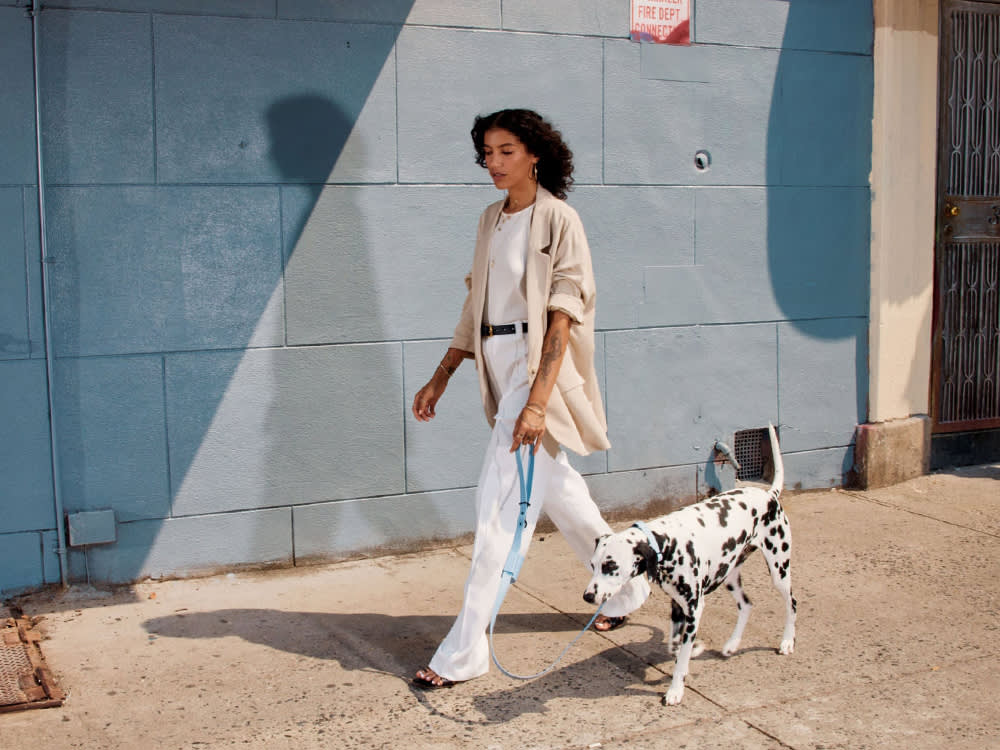
Bringing home a dog in a city apartment turns you into a reluctant product reviewer. Suddenly you are weighing retractable leashes that jerk and jam, puzzle toys that a smart dog cracks in five minutes, and a wire crate the size of a small car that ruins the one nice corner of your living room. The gear that is supposed to make dog ownership easier mostly makes your apartment uglier and your walks more annoying.
That gap — between how good living with a dog feels and how clunky the products for it are — is the entire premise of Fable Pets. The brand, run by siblings Jeremy Canade and Sophie Bakalar, takes the essentials that have looked and worked the same way for decades and asks a blunt question of each one: what is actually the most irritating thing about this, and can we design that away?
Designing from the annoyance, not the category
Fable’s approach starts with the pain point rather than the product type. For every item, the founders drill down on the specific friction of daily life with a dog — is it an at-home headache or an out-in-the-world one, and what is the real technical obstacle to fixing it? — and design backward from there.
Take the crate. The complaint was obvious to anyone who has crammed a wire cage into a studio: they are bulky, institutional, and impossible to make look like anything but a cage. So Fable’s version is built from bent wood with curved, friendly edges and sized, deliberately, to pass for a side table. Canade is quick to note that the point is not to lock a dog away; a crate, used correctly, is meant to be a den, a safe retreat the dog actually wants. Making one that reads as furniture rather than a jail was as much about respecting that idea as about apartment aesthetics. He and Bakalar reportedly sketched the first version on a napkin after measuring the crates of every major wire-cage brand to nail the dimensions.
The toy that had to survive a Border Collie
The clearest example of designing from real life is The Game, Fable’s interactive food toy that dispenses kibble piece by piece as a dog bats at it. It exists because of Canade’s own dog, Ranger, a Border Collie with the attention span and problem-solving drive that breed is famous for.
The brief, as Canade tells it, came straight from frustration. Ranger could blow through an ordinary puzzle toy in five minutes and then go right back to dropping toys at his feet, demanding a throw. Worse, the interactive toys on the market were loud — Ranger would hurl them against the wall like a bowling ball for the sake of one falling pellet. So the design bar was specific and demanding: the toy had to be quiet, and it had to keep a very clever dog genuinely occupied for at least half an hour. Getting there took a long stretch of iteration and, by the company’s count, 411 safety tests before it was ready to sell.
A leash, reimagined for hands-free walks
The Magic Link, Fable’s leash, follows the same logic. Anyone who has tried to manage a phone, a coffee, and a dog on one sidewalk knows the problem it solves: it straps around your waist or slings across the body like a sash, freeing up both hands for an ordinary walk. It is a small change that quietly fixes a daily annoyance, which is more or less the whole Fable thesis in one product.
The brand is the story, literally
Fable leans hard into the idea that a good product deserves a good story around it, beginning with what it’s called. A fable, after all, is a brief moral story usually built around animals, and Canade has said that literary, visual double meaning is exactly why it stuck — any good story is about an adventure, and the main characters here are animals heading out into the world alongside their people.
That framing runs through the branding. Fable commissioned a New Yorker cartoonist for the playful illustrations across its site, betting that its customers are sharp enough to enjoy the wit. And there is a deliberate point of view underneath the whimsy: a gentle push back against treating dogs like babies. Canade tends to describe dogs less as dependents and more as capable partners — animals with real athleticism and instincts of their own — and Fable’s whole aesthetic treats the dog-and-owner relationship as a team going on adventures together rather than a person and a pet.
Why it resonates
Ask Canade what he loves about walking Ranger through the city and the answer is not about gear at all. It is about companionship, and about the way a dog forces you to slow down, get outside, and actually be present in a place where it is easy to get swallowed by the grind. Dogs, as he puts it, live entirely in the moment, and living with one nudges you to do a little more of the same.
That is ultimately what Fable is selling underneath the crates and toys and leashes: not just better-looking objects, but a version of dog ownership where the stuff gets out of the way so the relationship can take center stage. In a market full of pet products that add friction, a brand built entirely around removing it is easy to root for.
References
- Fable Pets — official site. https://fablepets.com/
- Fable Pets on Instagram. https://www.instagram.com/fablepets/
Leila Torres leads our Living coverage, from home life and travel to the products and rescue stories that come with sharing a life with animals. She edits and writes across the section, with a soft spot for pieces about the bond between people and their pets.
Meet our experts ↗Keep reading
 Product PicksA Trend Forecaster Reads Your Shopping. Her Best Dog Advice Isn't About Trends.Nina Vasquez · 6 min
 Living"Dogs Ruin Good Interiors" Is a Lie Told by People With Bad SofasSasha Ford · 6 min
 Product PicksA Designer Dog Collab Lives or Dies on a Hole in the BackSasha Ford · 6 min
 Product PicksHer Fleece Sparks $1,000 Bidding Wars. The Dog Version Is $165.Sara Lim · 5 min
 LivingYour Steam Cleaner Is Baking the Stain InLeila Torres · 8 min
 LivingEverybody Got a Second Dog. Her Order Book Was the First to Know.Jordan Ellis · 6 min