


A Trend Forecaster Reads Your Shopping. Her Best Dog Advice Isn't About Trends.
Dayna Isom Johnson spots what's next for a living. When it comes to her rescue dog Mojo, the most useful thing she's learned has nothing to do with what's cool and everything to do with buying on purpose.

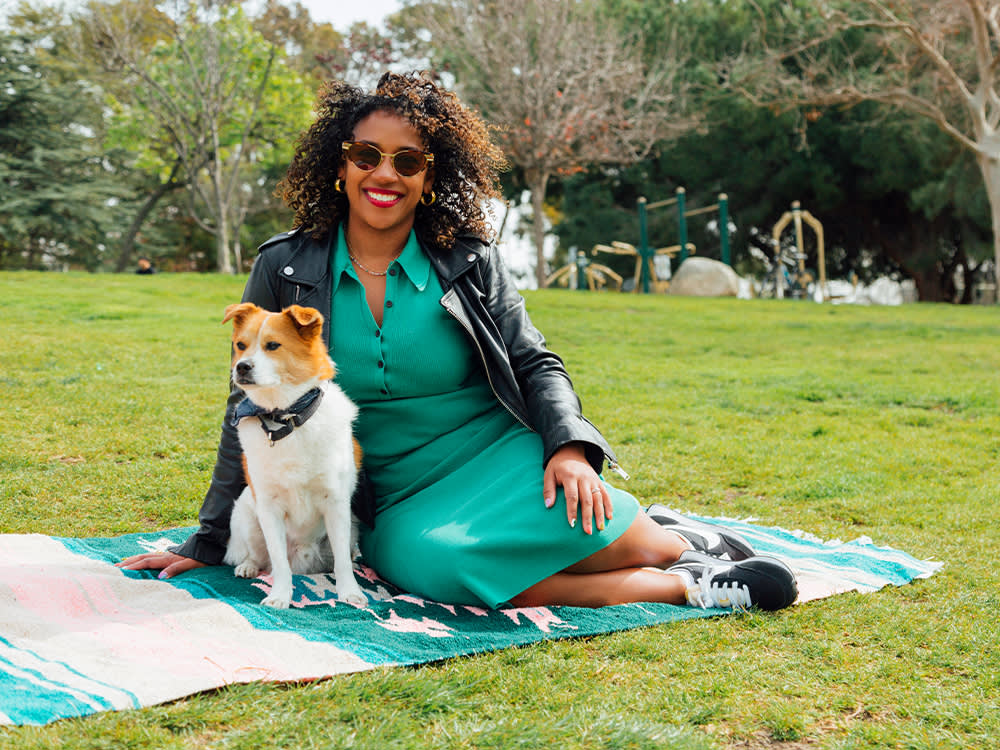
Predicting what people are about to want is a real job, and Dayna Isom Johnson has it. As Etsy’s resident trend expert, she reads live search data to see which way taste is turning before most of us have noticed we’ve turned. She has judged NBC’s crafting competition Making It alongside Simon Doonan, and co-hosted a hit YouTube series on internet fame. Somewhere in all of that, she also became a person who thinks seriously about dog gear.
Her guide through that world is Mojo, a Jindo and Jack Russell mix she adopted in the first weeks of the 2020 lockdown. If you want to know where pet products are heading, she is a useful person to ask. But the more interesting thing about talking to a professional trend-spotter about her dog is how quickly she stops talking about trends.
The real shift isn’t a trend. It’s intent.
Ask Johnson what’s changed in pet products over the past few years and she doesn’t reach for a color of the season or a viral gadget. She points at a change in why people buy. The default used to be grabbing whatever generic bed was stacked by the register at a big-box store. Now people want their dog’s things to match the rest of their home, to reflect a point of view, to look like something they chose rather than something they settled for.
That sounds like a pitch for buying more. In practice it’s closer to the opposite. Buying with intent means buying less often, because you’re replacing “it was there” with “it’s right.” An elevated bowl that eases the strain on a dog’s neck, carved by a woodworker instead of stamped out by the thousand. A bed in a pattern you’d actually live with. The point isn’t luxury. It’s the difference between accumulating pet stuff and choosing it.
What to actually look for: materials, not marketing
Here’s where a trend expert earns her keep, because she can tell you what the search data is quietly rewarding. Shoppers are increasingly filtering for what a product is made of, not just what it looks like. Natural fibers matter, both because they wear better and because a dog who chews everything shouldn’t be gnawing on mystery synthetics. Makers who use fabric offcuts, remnants too small to become clothing, turn waste into toys. Recycled and recyclable materials are no longer a niche request.
If you take one buying rule from a person who watches millions of searches, make it this: read the materials list before you read the reviews. A gorgeous bed made of something you can’t identify is a worse buy than a plain one made of something you can.
The bark-cuterie board, and knowing when to stop
Johnson is not immune to the fun end of all this. She has built Mojo a “bark-cuterie” board, a dog-safe spread on a personalized bone-shaped tray, complete with custom treats stamped with his name and a pile of blueberries and carrots. She invited one of his dog friends over to share it.
It is exactly as extra as it sounds, and it comes with a real caveat worth repeating: she had to slow the dogs down so they wouldn’t inhale the whole thing and end up with sore stomachs. A themed treat spread is a lovely idea and a fast way to overfeed two excited dogs. If you build one, portion it like a snack, not a buffet, keep the total treats well under the “ten percent of daily calories” rule vets use, and skip anything on the never-feed list. Cute is not the same as safe, and the person who made the board is the first to say so.
Adventure gear, used honestly
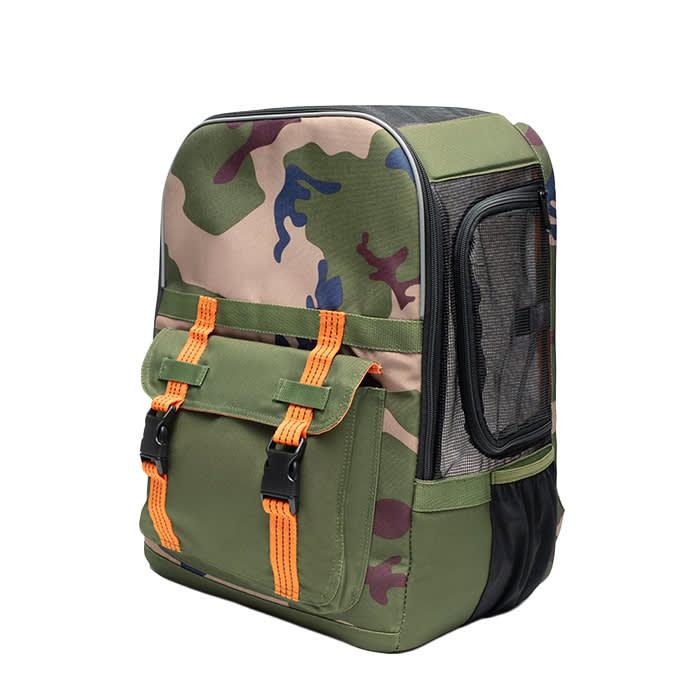
Mojo travels. He has a hooded winter coat, a backpack carrier for bike rides, and paw boots that came in handy on a hot desert trip where the ground was too warm for bare pads. This is where trend-driven gear stops being decorative and starts being protective. Boots aren’t a costume when the pavement can burn a dog’s feet; a coat isn’t a costume when a thin-coated dog is genuinely cold. The test for any piece of “adventure” gear is simple: does it solve a real problem your dog has, in a place you actually go? If yes, buy the good version. If no, you’re buying it for a photo.
The part that isn’t shoppable at all
The most striking thing Johnson talks about can’t be bought on any platform. Before Mojo, there was Paco, the dog who grew up alongside her from age eight weeks to seventeen years, present for college and marriage and every ordinary day in between. Letting him go was, in her telling, the worst pain she has felt. In the grief afterward she started volunteering at New York City shelters, first sitting with senior dogs because they reminded her of him and get overlooked in favor of puppies, later walking the bigger dogs and handing out treats.
That’s how she found her way to adopting again, through a rescue that pulls dogs from the meat trade. Mojo arrived on a rainy day in March 2020, handed over by volunteers in hazmat gear at the height of the pandemic. Six months later he was diagnosed with encephalitis, swelling of the brain, and went through three rounds of chemotherapy. Because his condition means vaccines could trigger dangerous swelling, he can no longer be vaccinated, so his social life is deliberately small and his companions carefully chosen. None of that is a product decision. All of it is what actually owning a dog looks like once the cute part settles.
His name is the tell. She chose it, she says, because he gave her back her mojo after a year when the world felt like it was ending. A trend expert can tell you what’s coming next in bowls and beds and bandanas. What she’ll tell you if you let her keep talking is that the object was never the point.
References
Nina Vasquez writes about life at home with pets and the relationships at the heart of it. Her work covers day-to-day living, people-and-pet stories, and the products that fit into a real household, with a warm, grounded take on everyday pet ownership.
Meet our experts ↗Keep reading
 Product PicksThe Pet Brand That Started on a Napkin and 411 Safety TestsLeila Torres · 6 min
 Living"Dogs Ruin Good Interiors" Is a Lie Told by People With Bad SofasSasha Ford · 6 min
 Product PicksThe Bridgerton Dog Collection Was Supposed to Sell Out. Two Years Later, It's Still Here.Leila Torres · 5 min
 Product PicksA Designer Dog Collab Lives or Dies on a Hole in the BackSasha Ford · 6 min
 LivingYour Steam Cleaner Is Baking the Stain InLeila Torres · 8 min
 Product PicksYour 'Non-Toxic' Houseplant Can Still Land Your Pet at the VetSasha Ford · 6 min