


The Screen Sells You the Dog. The Shelter Gets the Returns.
Every few years a movie turns one breed into a must-have, and a year later that breed floods the shelters. Here is the century-old pattern, and why the John Wick dog and the 'dire wolf' are the latest bait.

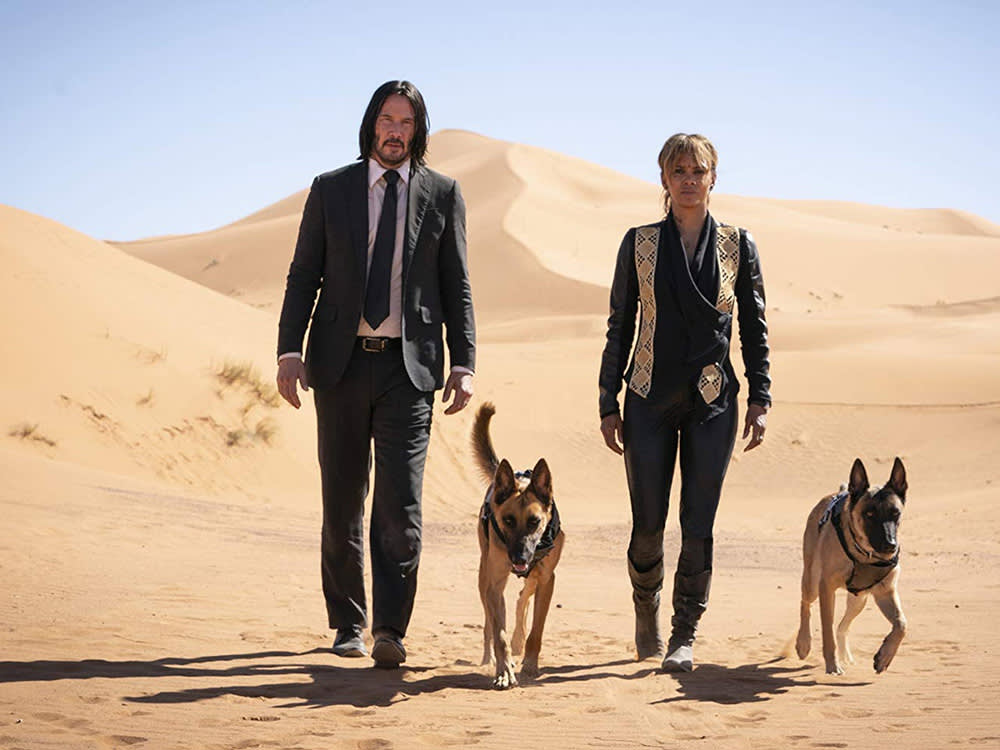
There is a reason a dog dying on screen wrecks an audience more reliably than a human character does. We read pets as our better halves and react accordingly. The trouble starts when that same tenderness gets pointed at a specific breed on screen, because a two-hour movie can make any dog look effortless, heroic, and exactly like the missing piece of your life. What it cannot show you is the six months of drills, the chewed drywall, and the drive that made the animal look so good in the first place.
That gap, between the dog on the screen and the dog in your living room, has been quietly filling shelters for almost a hundred years. It is one of the most predictable patterns in the pet world, and it is worth understanding before the next blockbuster talks you into a decision you are not ready for.
The dog you saw was a professional
Take the breed everyone suddenly wanted after John Wick: Chapter 4, which arrived in theaters in March 2023 and hit streaming that spring. The film introduced a tracker permanently shadowed by a sleek, devoted Belgian Malinois, and the internet fell hard. The dog is genuinely magnificent on screen. That is the problem.
Pull the Malinois out of the movie and you get the American Kennel Club’s actual description: a breed that is intensely intelligent and devoted, but also enormously athletic, with a need for physical and mental work that dwarfs the average family dog. A couple of walks will not touch it. Layer on an extremely high prey drive, one that fixates on anything that moves, including cars, other animals, and children, and you have an animal that demands committed, hands-on training from day one. The screen shows you the finished product of exactly that work. It never shows you the work.
“People fall for the highlight reel and adopt the raw footage,” says Dr. Ravi Mehta. “A working breed like a Malinois isn’t a bad dog, it’s a job applicant with a résumé most households can’t fulfill. Before a breed’s on-screen moment turns into an impulse, I ask families one blunt question: can you give this dog two hours of real work a day, every day, for a decade? If the answer stalls, that’s your answer.”
Trainers saw the wave coming. Saharai Salazar, who runs Wolfmother K9 Rescue Services, publicly warned that these dogs would wind up with profiteering breeders and owners who were in over their heads as demand spiked, and urged people to research breeds honestly against their own schedule, experience, and ability to meet a high-drive dog’s needs. Her fix is a smart one we will come back to.
This is a very old script
If the John Wick effect felt new, it was only the latest run of a script that has been playing since the age of silent film.
The first time the pattern got serious media attention was Disney’s live-action 101 Dalmatians in 1996. The movie did two things. It confirmed that Glenn Close could sell absolutely any role, and, more consequentially, it sent children across the country begging their parents for a spotted puppy. A year later, The New York Times documented a spike in Dalmatians turning up in shelters. Two forces collided: breeders and puppy mills rushing to cash in on the sudden demand, and new owners discovering, too late, that the real breed did not match the cartoon.
A Humane Society of the United States spokesperson at the time, Leslie Isom, laid out the organization’s frustration plainly, noting that the breed demands enormous time and energy and is not always suited to homes with young children, exactly the households that had wanted them most.
The Huskies of Game of Thrones ran the same route a generation later. As the show turned direwolves into cultural icons, shelters across the country began reporting a surge of abandoned Huskies, bought on the fantasy and surrendered on the reality. The pattern was blatant enough that in 2018 one of the show’s own stars, Peter Dinklage, joined PETA in a public plea for fans to think before buying, warning that impulse purchases hurt both the abandoned Huskies and the deserving shelter dogs already waiting for homes, and urging anyone set on a dog to be sure they were ready for the commitment and to adopt from a shelter.
The pattern is real, and measurable
This is not just a collection of anecdotes. In 2014, researchers from the University of Bristol, the City University of New York, and Western Carolina University set out to measure film’s pull on breed popularity directly. They examined 87 movies featuring dogs in prominent roles, released as early as 1927 and as late as 2004, and lined each film’s debut up against American Kennel Club registration records. The result was a clear, statistically significant bump in a breed’s popularity following a successful film, and in some cases that boost lasted a full decade after the credits rolled. Nearly a century of data, one stubborn pattern.
What’s new since this keeps happening
The 2020s handed the pattern a strange new fuel: a dog that is not from a movie at all, but from a headline. In 2025, the biotech company Colossal Biosciences announced it had produced three pups, named Romulus, Remus, and Khaleesi, engineered with traits meant to evoke the extinct dire wolf, and the story went supernova. The imagery landed squarely in Game of Thrones territory, and it reignited the very worry animal welfare groups have been raising for years, that romanticizing wolfish, large, high-drive animals drives people toward breeds and wolfdog hybrids they are not equipped to handle.
It is worth keeping the science honest here. Colossal’s own chief scientist, Beth Shapiro, later described the animals as gray wolves carrying 20 genetic edits, and called the “dire wolf” label a colloquialism rather than a scientific claim. In other words, the creature fueling a fresh round of demand is, biologically, a modified gray wolf living in a secured preserve, not a pet, and certainly not a template for the dog at your local shelter. The hype is real; the shortcut it tempts people toward is the same one that has been failing dogs for decades.
If a breed genuinely calls to you, do this instead
None of this means you should never bring home a Malinois, a Husky, or any headline breed. It means you should earn it with honesty rather than an impulse.
Start by matching the real breed, not the on-screen one, to your actual life: your hours, your energy, your experience with drive and training. Then take the step Salazar recommends and foster first. Fostering lets you live with a breed’s true temperament and daily demands before you commit to a decade of responsibility, and it is temporary and free. If the fit is wrong, you have hurt no one; if it is right, you will know with your whole chest.
And if you have your heart fixed on a particular purebred, remember two things the movies never mention. Roughly a quarter of dogs in shelters are purebred, and breed-specific rescue organizations exist precisely to match those dogs with people who understand them. The great dog for you may already be waiting, minus the soundtrack.
References
- Ghirlanda, Stefano, Alberto Acerbi, and Harold Herzog. “Dog Movie Stars and Dog Breed Popularity: A Case Study in Media Influence on Choice.” PLOS ONE, vol. 9, no. 9, 2014, e106565. https://doi.org/10.1371/journal.pone.0106565
- American Kennel Club. “Belgian Malinois.” https://www.akc.org/dog-breeds/belgian-malinois/
- Chappell, Bill. “A Biotech Company Says It Has Bred Three Pups With Traits of the Extinct Dire Wolf.” NPR, 8 Apr. 2025. https://www.npr.org/2025/04/08/nx-s1-5355686/dire-wolf-extinct-colossal-biosciences
- PETA. “Peter Dinklage Wants You to Adopt, Not Shop.” People for the Ethical Treatment of Animals, 2018. https://www.peta.org/
Nina Vasquez writes about life at home with pets and the relationships at the heart of it. Her work covers day-to-day living, people-and-pet stories, and the products that fit into a real household, with a warm, grounded take on everyday pet ownership.
Meet our experts ↗Keep reading
 LivingPenny Survived Abuse, Lost a Leg, and Still Won the Dog LotteryNina Vasquez · 3 min
 LivingThe Rescue That Stopped Taking the Dog AwayLeila Torres · 7 min
 LivingHe Left Jail After Five Days. One of His Dogs Was Already Dead.Sasha Ford · 4 min
 LivingThe Rescue That Saved His Life Nearly Went Under Without HimJames Okafor · 9 min
 LivingTwo Patients, One Couch: A Musician, His Rescue Dog, and the Lesson BetweenMarcus Webb · 5 min
 LivingRenaming Your Rescue Won't Confuse Her. Keeping a Poisoned Name Might.Dr. Amara Solis · 6 min