


The 'Haunted Victorian Child' Dog Meme Is a Brilliant Adoption Strategy
Shelters keep describing anxious little dogs as cursed Victorian children, and it keeps working. The joke isn't just funny, it's a filter that finds the right adopter for the hardest-to-place pups. Here's the strategy, and the real dog behind it.

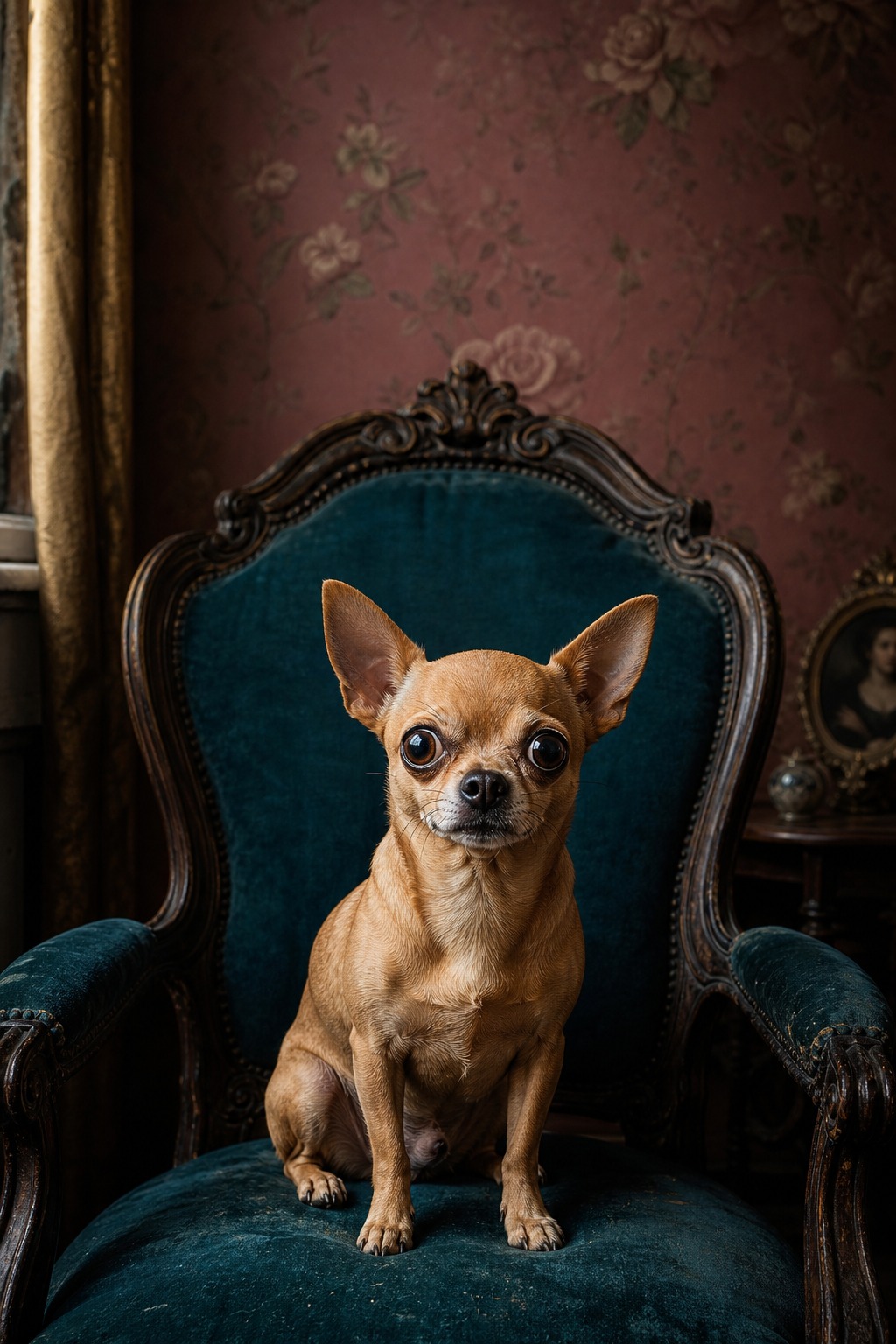
Every viral adoption ad that calls a trembling Chihuahua a “cursed Victorian child” is doing something smarter than being funny. It is filtering. A normal listing (“sweet, shy dog looking for a quiet home”) attracts people who then return the dog three weeks later when it turns out to hate strangers and hide under the couch. A listing that promises “a sentient middle finger wrapped in a cloud of fur” attracts a specific kind of person, one who reads that and thinks yes, that one, that’s my dog. The comedy is not decoration. It is expectation-setting, and for anxious, hard-to-place small dogs, honest expectations are the whole game. That is why the meme keeps working, and why more shelters are leaning into it.
Why radical honesty moves hard dogs
The dogs most likely to languish in a shelter are not the friendly Labs. They are the nervous, quirky, small-breed dogs who present badly to a casual browser: they cower, they growl, they look haunted in photos. A cheerful ad oversells them and sets up a failed adoption. A brutally honest, hilarious ad does the opposite. It tells the truth in a way people can love, and it self-selects for adopters who want a project, not a lap dog. Set accurate expectations up front and you get adopters who stay, which is exactly what a fearful dog needs least disruption of. The joke is the mechanism.
Where the meme came from
If “haunted Victorian child” means nothing to you, back up. Search the phrase and you get old photos of sickly, ghostly-looking children, an effect of hazy 19th-century daguerreotype photography plus the era’s rough childhood nutrition. Around 2020, a “showing things to a Victorian child” format went around, imagining what modern life would do to such a delicate kid, kicked off by a viral post guessing a single sip of a strong canned cocktail would do them in.
With Victorian-child jokes firmly lodged in internet vocabulary, they reached dog people through one legendary 2021 post. A foster mom, out of options, described a bug-eyed Chihuahua named Prancer as “a haunted Victorian child in the body of a small dog that hates men and children,” and confessed her family was living in “the grips of the demonic Chihuahua hellscape he has created.” The blunt honesty won over the whole country. The ad was picked up everywhere, the rescue sold Prancer T-shirts, and, crucially, it worked: Prancer was adopted within two weeks and now has a large following of his own.
Prancer proved the strategy, and shelters noticed. When a Georgia rescue later wrote its own viral ad for a Chihuahua mix named Igor, calling him “a sentient middle finger wrapped in a cloud of fur” and a “cursed Victorian child” who “was not born, he appeared,” the post drew tens of thousands of adoring comments, landed national coverage, and, again, worked. Igor was adopted within weeks. Meanwhile, everyday owners started posting their own eerie pups, especially blue-eyed mini Australian Shepherds who stare in apparent shock or wander the house looking deeply concerned.
The real dog behind the joke
Strip the comedy away and these “haunted” dogs share concrete, explainable traits. They are usually toy breeds and doodle-type mixes bred heavily for looks and small size, which can come bundled with a nervous, sound-sensitive temperament.
Many of these little breeds and Poodle crosses arrive genuinely jumpy about noise, which tends to come out as cowering. Layer stressors on top of that inherited sensitivity, things like being rehomed again and again or shipped long distances, and the piled-up trauma really undercuts a dog’s ability to settle and steady itself.
There is also a plainer reason for the spooky look: a lot of dogs hate a camera in their face. What reads as “possessed” in a photo is often a stressed dog asking for space.
A huge share of these dogs are flashing whale eye, lip-licking, plainly begging for some space. Online, some people deliberately bait that reaction to get the clip, and there’s no telling how many attempts it took to capture the one frame that looks spooky.
The behavior frequently traces back to past trauma plus missed early socialization. Igor’s fuller, less-jokey shelter listing traced him back to a hoarding case and noted his fear of his collar, his leash, and any abrupt noise. Read that way, “haunted” is just an under-socialized, frightened dog wearing a funnier label.
How to actually help a spooked pup settle
If one of these ads gets you, and they are designed to, go in ready to earn the dog’s trust slowly. The single most important rule is to go slower than feels necessary.
Steer clear of holding a long stare, because plenty of dogs read it as a threat. Hold off on strapping them into fresh equipment such as a harness or a set of booties for that first week or two. Let them settle before you bring family and friends around, avoid long stretches away early on, and have a professional trainer or a vet behaviorist lined up before the moment you actually need one.
Space is the currency. A useful tool is the three-second rule for petting: wait for the dog to approach and actively nudge you (not merely settle nearby), pet for three seconds, then stop. If they nudge again, go another three. You are asking consent each time, because a dog may want affection, just not four uninterrupted minutes of it. With patient, consent-based handling and a behavior professional in your corner, most of these “haunted” dogs eventually lose the spooky edge and ease into a steady, grounded routine. As the saying goes, the folks willing to open their homes to these little gremlins are among the very best people around.
The strategy, stated plainly
The meme endures because it is honest and effective at the same time, a rare combination in adoption marketing. It moves dogs who would otherwise wait months, and it moves them into homes that knew what they were signing up for. The only caution is to not let the goofiness obscure the animal underneath: a “spooky” dog is a scared one, and it deserves the slow, gentle handling the joke can accidentally make sound optional. Laugh at the ad. Then read the fine print, and bring patience.
References
- People. “Dog Described as ‘Sentient Middle Finger’ in Viral Adoption Post.” https://people.com/dog-described-as-sentient-middle-finger-viral-adoption-post-11771675
- The New York Times. “Prancer, the ‘Demonic’ Chihuahua, Has Been Adopted.” https://www.nytimes.com/2021/04/28/us/prancer-chihuahua-adopted-connecticut.html
- ASPCA. “Helping a Fearful Dog Adjust to a New Home.” https://www.aspca.org/pet-care/dog-care/common-dog-behavior-issues/fears-and-phobias
Sasha Ford is a certified cat behaviour consultant who has worked with shelters, catteries, and private clients across the country. They review all feline behaviour content at The Pet Times, with expertise in multi-cat households, indoor enrichment, and stress-related disorders.
Meet our experts ↗Keep reading
 TrainingSending Your Dog to Its Crate as Punishment Ruins the One Room That's TheirsDr. Amara Solis · 7 min
 TrainingNo, You Don't Need a Show Dog to Compete in ObedienceTom Hadley · 7 min
 TrainingYour Dog Digs Up Your Sheets. The Timing Tells You Whether to Worry.Dr. Nina Kohl · 7 min
 TrainingYour Dog Doesn't Fail at Restaurants. They Fail in the First 90 Seconds.Dr. Nina Kohl · 7 min
 LivingADHD Doesn't Make You a Bad Dog Parent. Your Reminder App Does.Leila Torres · 8 min
 LivingA Wolfdog Is Not a Fluffier Husky. Nobody Can Tell You What You Actually Own.Dr. Ravi Mehta · 8 min