


Your Dog Is Listening Even When You're Not Talking to Them
A 2025 study found dogs can pluck their own name out of a flat, monotone stream of speech, no sing-song voice required. Which means those conversations you have near your dog aren't as private as you think.

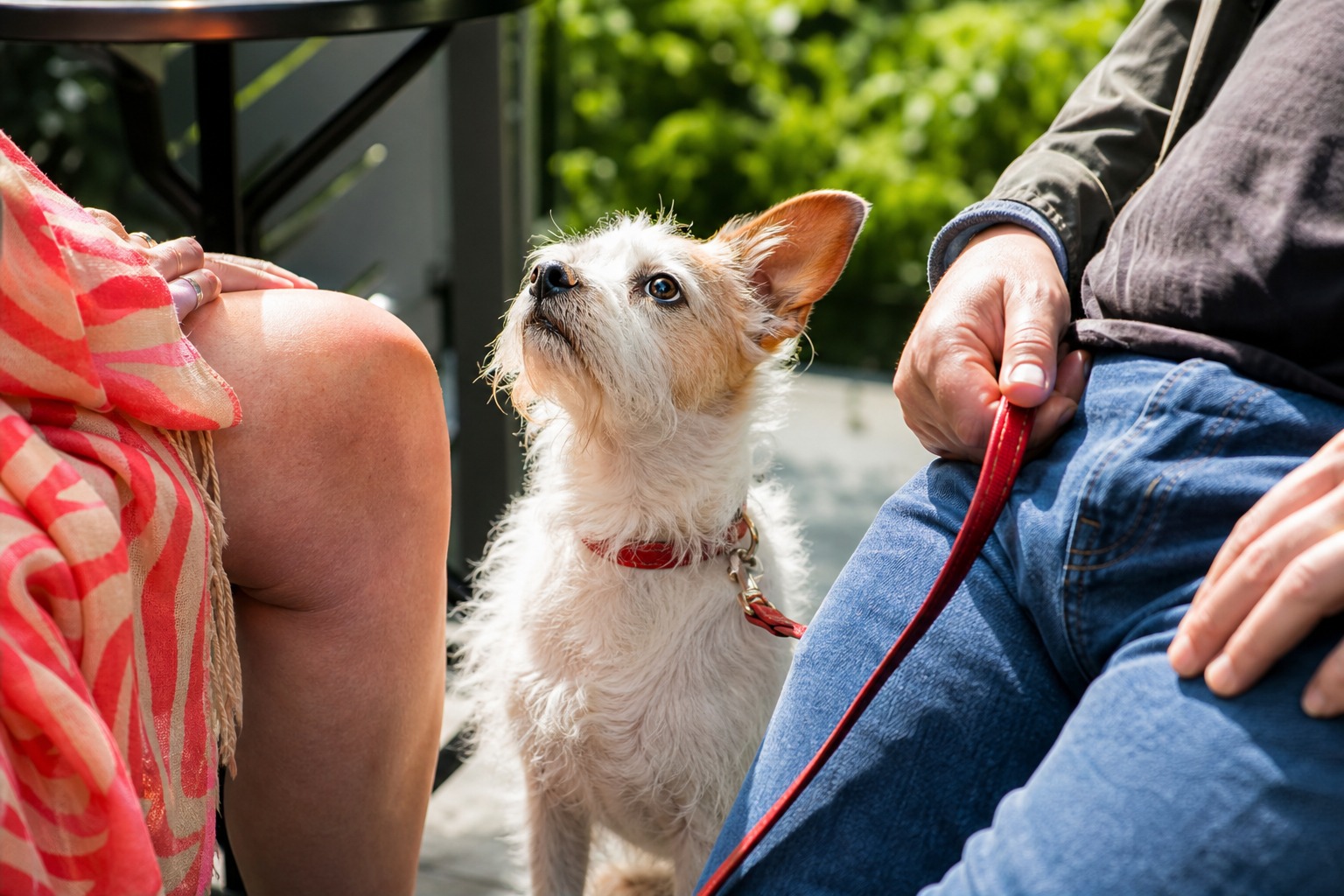
You know the moment. You and a friend are chatting, and somewhere in the middle of an ordinary sentence you mention the word walk, or you say your dog’s name in passing, and two ears swivel toward you like radar dishes. It always feels like your dog is snooping. According to a 2025 study in the journal Animal Cognition, that’s basically what’s happening. Dogs can pick meaningful words out of a running stream of human speech, even when the speech isn’t aimed at them and isn’t dressed up in the special voice we usually use.
The clever part of the experiment
For a while, scientists have known that people instinctively talk to dogs in a distinctive, higher, sing-song cadence, the canine version of baby talk, formally called dog-directed speech. That style grabs a dog’s attention and makes words easier to catch. But the researchers wanted the harder question: can a dog still recognize its own name when you strip all of that away and just drone?
To find out, they had 57 dog owners record themselves reading short passages aloud. Buried inside otherwise unremarkable sentences was a test phrase. The meaningful one was the dog’s own name followed by “come on then!”, chosen because those are among the most frequent things English-speaking owners actually say to their dogs, so they’d carry real meaning. The control phrase used an unfamiliar name and a mundane request, “[Alfie / Bertie], pass me a coffee!” Each owner recorded the passages twice: once in a normal, flat reading voice, and once in the exaggerated sing-song of dog-directed speech.
What the dogs did
The dogs reliably turned toward their owners when they heard their own name. They were a touch more likely to look when the name came wrapped in the sing-song voice, which fits everything we knew before. But the headline result is that they still caught their name in the plain, monotone reading, with none of the intonation cues we normally lean on to get a dog’s attention.
In other words, the special voice helps, but it isn’t required. The dogs were doing something closer to background listening, continuously scanning a wash of otherwise irrelevant sound for the bits that matter to them and surfacing when a relevant word floated by. Lead author David Reby, an expert in animal vocal communication, summed up the takeaway plainly: dogs can identify and recognize words that are relevant to them inside a monotonous stream of otherwise meaningless speech, even without the intonation cues we normally lean on to grab their attention.
This is why I tell owners their dog is always half-listening. A dog isn’t parsing your whole conversation, but it’s running a filter, and its name and a few loaded words like ‘treat’ or ‘vet’ are what trip the alarm. That passive scanning is a real cognitive skill, and it’s part of why living with us comes so naturally to them.
Why it’s more than a fun fact
There’s a practical edge to this beyond the party trick of watching your dog perk up. If your dog can catch its name in a flat, unaddressed stream of talk, then the sentence you say about your dog, in the same room, in your regular voice, is not private. Spell out “V-E-T” all you like; the name attached to the appointment may already have landed. For anxious dogs especially, it’s worth being a little mindful about how and when you discuss stressful events within earshot, because your dog may be tuning in more than the casualness of your tone suggests.
It also reframes the sing-song voice most of us use without thinking. It isn’t silly, and it isn’t only for the dog’s benefit of feeling loved. It genuinely sharpens attention and comprehension, which is useful the next time you actually need your dog to hear and act on something. The everyday version of this finding is simple and a little humbling: your dog followed you into the bathroom, memorized the sound of the treat drawer, and has been quietly monitoring your conversations this whole time. Privacy was never really on the table.
References
Dr. Chen is a small-animal veterinarian who leads health and safety coverage at The Pet Times. She writes and reviews the bulk of our illness, condition, and safety content, translating clinical guidance into clear, practical advice owners can act on at home.
Meet our experts ↗Keep reading
 TrainingYou Can't Quiet a Bark You Haven't DecodedDr. Lena Park · 7 min
 TrainingYour Dog Ignores Its Name. Maybe It's Time to Let Them Pick a New One.Dr. Mara Chen · 5 min
 TrainingYour Dog Has a Favorite Person. Here's How to Make Sure It's You.Dr. Mara Chen · 8 min
 TrainingTell Your Dog to 'Create,' and They Actually CanJordan Ellis · 6 min
 TrainingThe Belly Flop Is a Consent Form, Not a CommandDr. Lena Park · 5 min
 TrainingYour Dog's Pinned-Back Ears Aren't One Message. Here's How to Read Them.Dr. Mara Chen · 7 min