


You Can't Quiet a Bark You Haven't Decoded
Nonstop barking isn't one problem, it's four, and each needs a different fix. Start with a bark diary, figure out what your dog is actually saying, then use the right approach for alert-barking, reactivity, separation anxiety, or demand-barking.


Barking is one of the hardest dog behaviors to decode, which is a problem, because it’s also one of the most maddening to live with. Dogs do plenty of mysterious things, digging to nowhere, shredding a box while ignoring their toys, but at least those don’t echo off the walls at 6 a.m. And barking isn’t only annoying; a sudden uptick can be your dog flagging that something isn’t right.
So before you try to make it stop, you have to figure out what it is. Nonstop barking isn’t a single malfunction to switch off. It’s a message, and there are several different messages, each with its own fix. Silence the wrong one the wrong way and you’ll get nowhere.
Start with a bark diary
It sounds a little precious, but it works: keep a bark diary. For a week or so, jot down each barking episode, what set it off, and what your dog’s body was doing at the time. Were the ears perked forward or pinned back? Was the tail stiff and high, or tucked? Patterns emerge fast once you’re paying attention, and those patterns tell you which of the categories below you’re actually dealing with. From there, you can match the tool to the job instead of guessing.
Here are the four big drivers of excessive barking, and what to do about each.
Alert barking: “Something’s out there!”
If your dog erupts when the mail carrier arrives or someone passes the window, that’s classic alert barking, extremely common and, from your dog’s point of view, extremely effective. Here’s the catch: it’s self-reinforcing. The mail carrier always leaves eventually, so from your dog’s point of view, the barking worked, it scared off the intruder. You don’t have to do a thing to reward it.
The fix starts with management. When you’re not actively training, block the view, close the blinds, use a window film, or gate off the lookout post, so your dog isn’t rehearsing the habit all day. Then set up deliberate practice sessions where you mark and reward your dog for staying quiet as people pass. At first you may be handing out a comical number of treats, one per passerby, but as your dog catches on that calm pays better than barking, you can thin them out.
Reactivity: barking that comes from big feelings
Does your dog erupt at other dogs or people on walks, straining and barking like something possessed? That’s reactivity, and it’s usually powered by fear, over-excitement, or frustration rather than aggression for its own sake. The key concept here is keeping your dog “under threshold,” giving them enough distance from the trigger that they can still think and stay calm. Too close and they tip over into the meltdown; back up until they can cope.
From that manageable distance, use a mark-and-reward routine to shift their focus off the trigger and back to you. They can still glance at the scary thing, you just want them checking in with you regularly and staying regulated. Pay attention to the details, too: not every trigger is equal. A dog walking straight toward you may rattle your pup more than one walking away, so read the situation and adjust your distance accordingly.
Separation anxiety: barking born of panic
When the barking starts the second you leave and continues until you’re back, you’re likely looking at separation anxiety. This is a genuine panic disorder, not stubbornness, to your dog, your departure can feel like the bottom dropping out. Milder cases show up as barking and pacing; severe ones can spiral into destroyed property or dogs injuring themselves trying to escape and find you.
The “under threshold” idea applies here too: at first, don’t leave your dog alone longer than they can currently handle. Then build tolerance in tiny increments. Practice micro-departures, walk to the door, open and close it, come back, and reward. Next, step outside, shut the door, return, and reward. Watch their body language closely and shorten your absences the instant you spot distress. Baby steps are the whole game. A stuffed food toy can give your dog something absorbing to do while you’re gone, and a pet camera lets you monitor how they’re actually coping rather than guessing.
Separation anxiety is also the category most likely to need professional backup. If your dog’s distress stays at a fever pitch despite consistent work, talk to your veterinarian; in some cases, anti-anxiety medication, layered on top of a behavior plan and not as a substitute for one, is part of the answer.
Separation anxiety is the one type of barking I really don’t want people to white-knuckle alone. It’s a panic response, and there’s no shame in it. If the gradual departures aren’t moving the needle, that’s a medical conversation, not a willpower problem. We have good tools now, and the earlier we combine training with the right support, the faster these dogs feel safe.
Demand barking: “Feed me. Now.”
When your dog barks at you because you’re not paying attention, or because dinner is thirty seconds late, that’s demand barking. It is enormously tempting to give in just to make it stop, and that is precisely the trap: caving teaches your dog that barking is the magic button, and the behavior gets louder and more persistent. The way out is largely about prevention. Ramp up your dog’s daily enrichment, puzzle toys, training sessions, real walks, so they’re burning brain and body and simply have less drive to nag you.
And when the barking does start, the most powerful response is often no response at all. If you can read your dog’s body language, you can frequently spot the buildup and redirect before the first bark. If you miss it, resist the urge to scold, because scolding is still attention. Your best tool is a genuine cold shoulder. Sometimes saying nothing says everything, and your dog gets the message that barking no longer opens any doors.
What newer research adds
Two threads of recent work are worth knowing. First, the field increasingly treats separation-related behavior as a welfare and often medical issue, with the strongest outcomes coming from combining behavior modification with veterinary care rather than training alone, so the instinct to loop in your vet early is well supported. Second, as CBD and other calming supplements have flooded the pet market, the evidence has stayed thin: early studies on canine anxiety are small and mixed, product quality varies widely, and none of it is a substitute for addressing the underlying trigger. If you want to try a calming aid for a barker, treat it as a possible small assist alongside a real training plan, and talk to your veterinarian first, especially if your dog is on other medications. The core lesson holds: decode the bark, then fix the cause, not just the sound.
References
- American Veterinary Society of Animal Behavior. “Position Statement on Humane Dog Training.” https://avsab.org/resources/position-statements/
- Sargisson, Rebecca J. “Canine Separation Anxiety: Strategies for Treatment and Management.” Veterinary Medicine: Research and Reports, vol. 5, 2014, pp. 143–151. https://doi.org/10.2147/VMRR.S60424
- Corsetti, Sara, et al. “Bold Personality Makes Domestic Dogs Entering a Shelter Less Vulnerable to Separation-Related Distress.” PLOS ONE, 2019. https://doi.org/10.1371/journal.pone.0214528
Dr. Park is a board-certified emergency and critical care specialist. She reviews our health and safety content for clinical accuracy and contributes guides on recognising urgent conditions. Her focus is helping owners act quickly and correctly when it matters most.
Meet our experts ↗Keep reading
 TrainingA Laser Pointer Isn't a Toy. It's a Job Your Dog Can Never Finish.Dr. Nina Kohl · 7 min
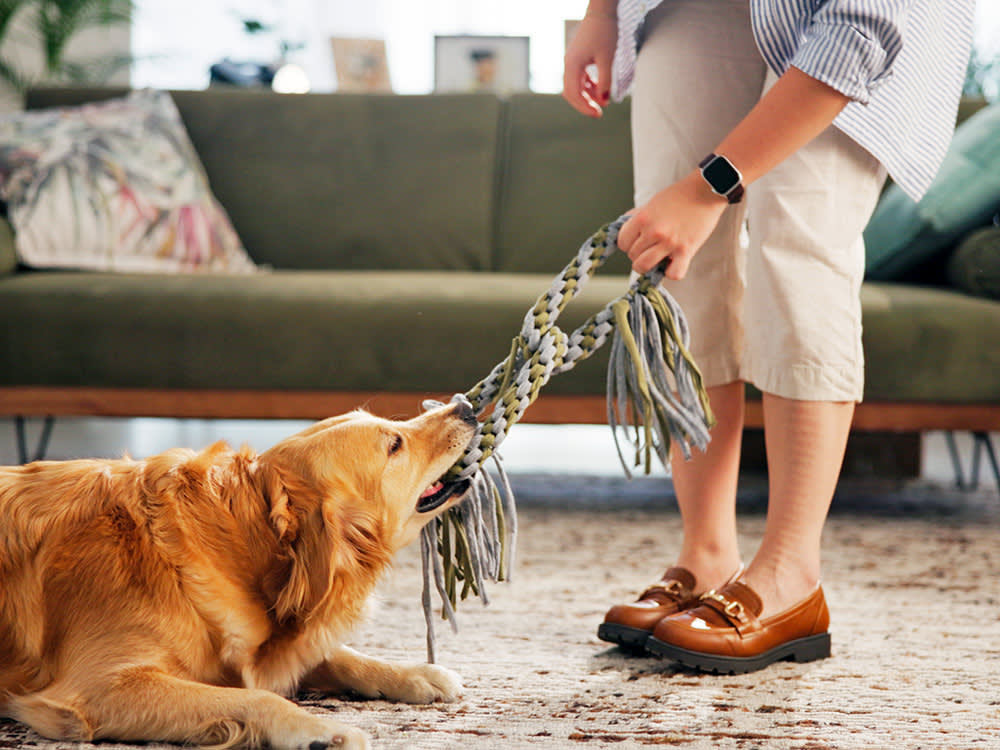 TrainingYour Dog Isn't Being 'Bad' During Play. Their Brain Is Overloaded.Dr. Nina Kohl · 7 min
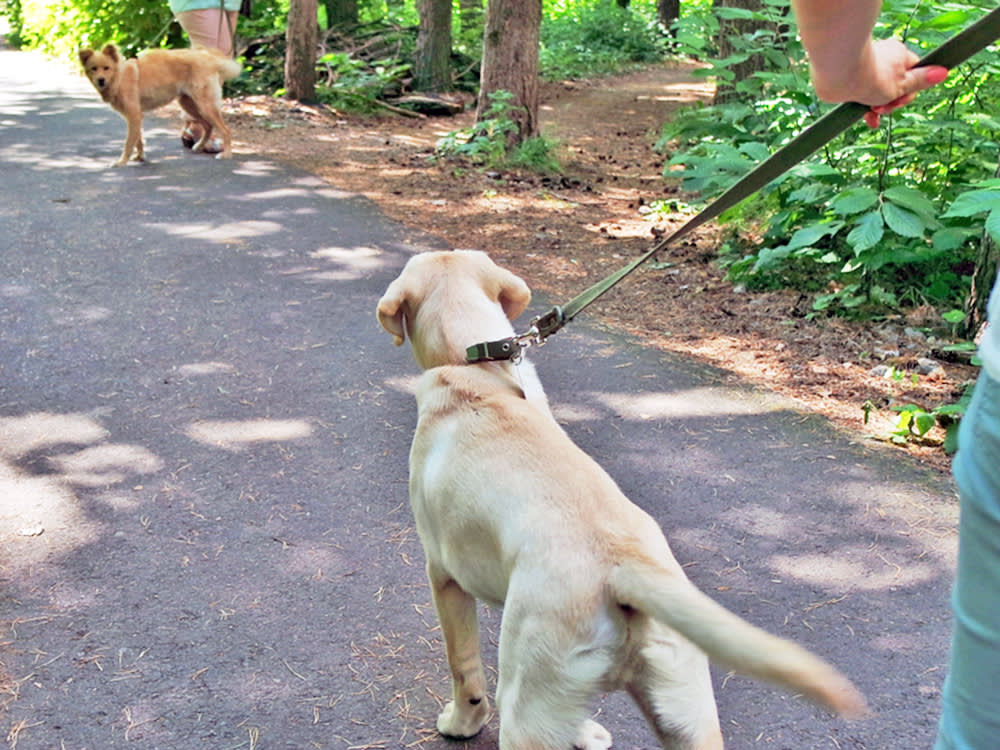 TrainingThe Frozen Stare Isn't the Fight. It's Your Last Few Seconds to Stop One.Dr. Amara Solis · 6 min
 TrainingThat Friendly On-Leash Hello Is Teaching Your Dog to Melt DownDr. Amara Solis · 6 min
 TrainingYour Dog Isn't Rude. Your Dog Is Overstimulated.Dr. Mara Chen · 6 min
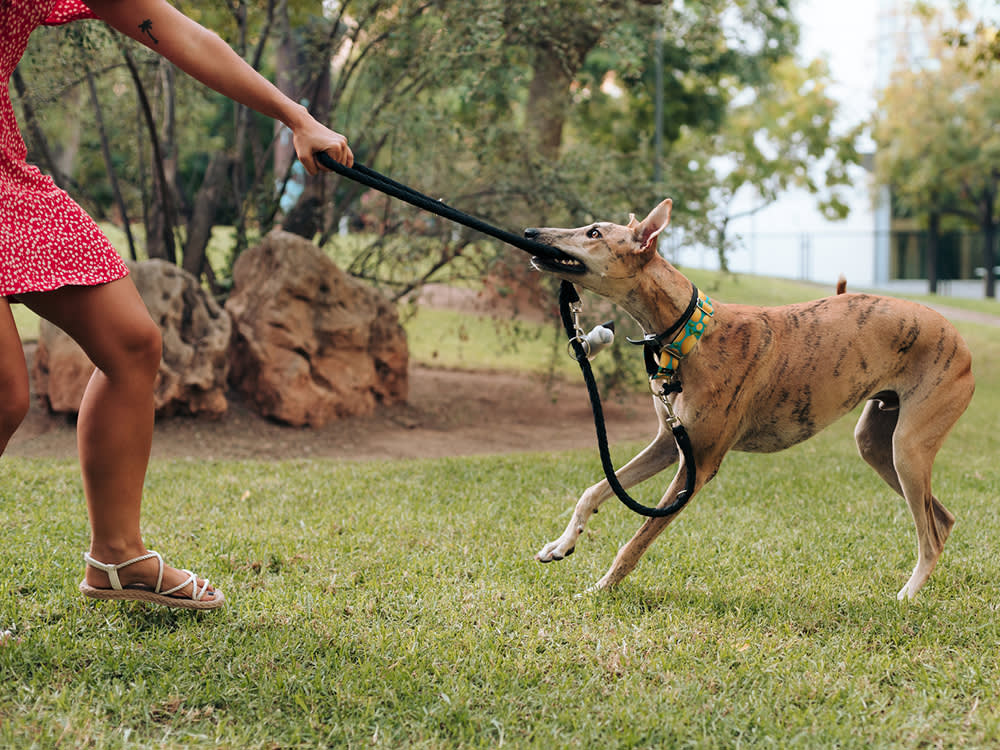 TrainingYour Dog Isn't Being Bad. Leash-Biting Is Excitement With Nowhere to Go.Dr. Ravi Mehta · 5 min