


The Scariest Part of an Apple for Your Dog Isn't the Seeds
Apples are a genuinely great dog treat, and the seed-cyanide panic is mostly overblown. A vet on what actually matters: the core, the skin you shouldn't peel, and the portion size.

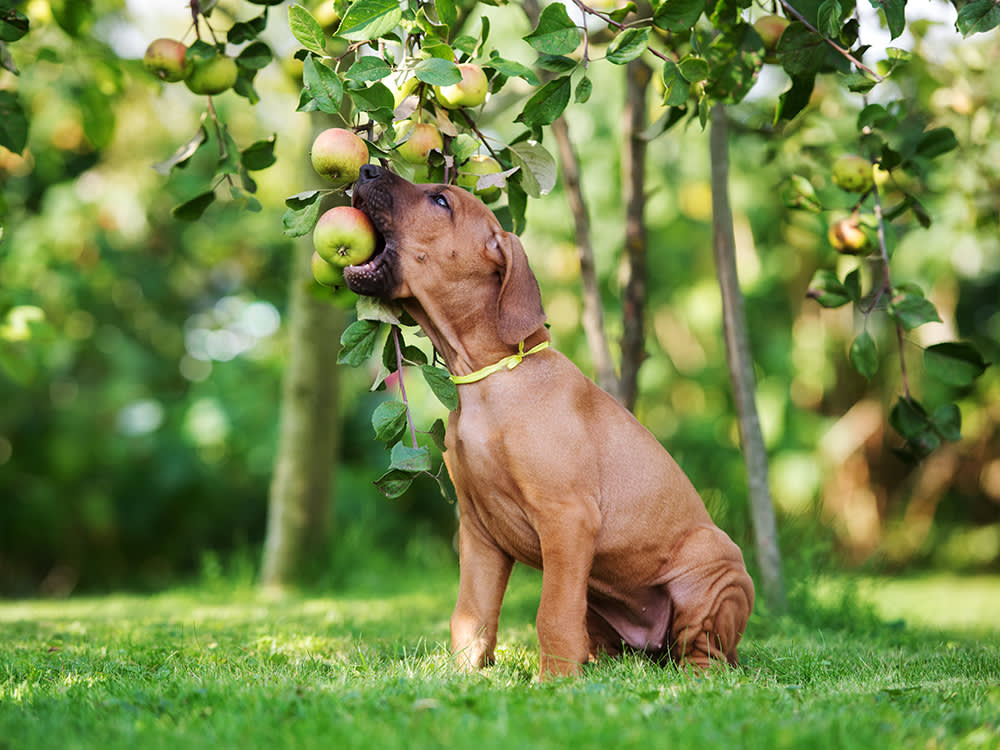
Ask the internet whether dogs can eat apples and you’ll get a wall of warnings about cyanide in the seeds. It’s the detail everyone latches onto, and it’s the least useful thing on the page. Here’s the reframe worth carrying to your fruit bowl: the apple seed is a theoretical hazard your dog will almost never actually run into, while the real, everyday risks, the ones that send dogs to the vet, are the core and the portion size. Get those two right and apples are one of the best cheap, healthy treats you can hand your dog.
So let’s spend our worry where it belongs.
Why apples earn their spot in the bowl
Apples are a legitimately good treat, not just a tolerated one. They’re low in calories and low in fat, which makes them especially handy for senior dogs and any dog watching its weight, and they bring a real nutrient list along.
They deliver vitamins A, C, and K plus minerals like calcium and phosphorus. They contain malic acid, which helps keep teeth clean and breath fresher, a small side benefit while your dog crunches. They’re a solid source of fiber: a medium apple carries over four grams of soluble and insoluble fiber. The soluble part, pectin, slows digestion and the absorption of sugar, which can be a plus for dogs with diarrhea or diabetes, while the insoluble fiber helps keep things regular and can ease constipation. And they carry antioxidants like quercetin, which is being studied for its role in fighting the free-radical damage tied to chronic disease and for helping tamp down inflammation.
Most dogs are enthusiastic about them, too, especially the sweeter varieties, gala, honeycrisp, Fuji, over tart ones like Granny Smith. But taste is the dog’s call. The point is you’re not just indulging your dog; you’re handing over something genuinely wholesome.
The seed panic, in proportion
Now the part everyone worries about, put in its actual size. Yes, apple seeds contain amygdalin, a compound that can release cyanide when broken down. That’s true, and it’s why the standard advice is to remove the seeds. It’s reasonable advice, and there’s no reason not to follow it.
But the leap from “contains cyanide” to “my dog is in danger” skips the numbers, and the numbers are reassuring. An apple seed holds only a tiny amount of amygdalin, and only a fraction of that would ever convert to cyanide. Estimates put a single seed at roughly a tenth of a milligram of potential hydrogen cyanide, while a toxic dose for even a small dog runs into the tens of crushed, fully-metabolized seeds eaten all at once. On top of that, seeds swallowed whole usually pass straight through, their tough coating shielding the amygdalin from digestion entirely, so most of what a dog does swallow never releases anything. In the real world, cases of apple-seed cyanide poisoning in dogs are essentially absent from the veterinary literature.
Translation: remove the seeds because it’s easy and tidy, not because a stray one means a trip to the emergency vet. If your dog snags an apple and gulps a few seeds, watch it and relax. That is not the danger worth your adrenaline.
Where the real risk lives
Here’s what actually lands dogs in trouble with apples, and it’s mundane, which is exactly why it gets overlooked.
The core is a choking and blockage hazard. The fibrous, dense core, especially for a small dog, can lodge in the throat or cause an obstruction on the way down. This is a far more concrete risk than the seeds it contains. Cut the core out every time.
Too much apple upsets the stomach. Apples are safe, but they’re still fruit with sugar and a lot of fiber. Overdo it and you get the predictable result: an upset stomach and diarrhea. This is the injury dogs actually turn up with, an owner who let the dog have “just a bit more” a few too many times, or a dog that got into a bag or picked windfalls off the ground under a tree. If you have apple trees, keep your dog from self-serving.
Prepared apple products hide the trap. Apple in a pie, a pastry, or a fritter comes bundled with sugar, fat, and sometimes worse. This is the same lesson as the cinnamon-roll warning: the fruit is fine, the recipe around it usually isn’t. And any sugar-free apple product, apple-flavored anything labeled diet or sugar-free, could contain xylitol, which is toxic to dogs. Stick to plain apple.
When people ask me about apples, they always ask about the seeds, and I always steer them back to the core and the amount. I’ve treated dogs for a blockage from a swallowed core and dogs for a bad case of the runs after a fruit binge. I’ve never once treated a dog for apple-seed cyanide. The seeds are the famous risk; the boring ones are the real ones.
Keep the skin on
One more spot where common instinct steers people wrong: peeling. Don’t. The skin is where most of the fiber and antioxidants live, so peeling an apple for your dog strips out much of what makes it worth feeding. Just wash the apple thoroughly to cut down on pesticide residue, and choose organic when you can. Leave the peel on.
Easy, safe ways to serve it
Prep is simple once the core, stem, and seeds are out. From there apples are versatile:
Cut them into halves or quarters for a dog that likes to gnaw a bigger piece, or into thin bite-sized slices to lower any choking risk, which is the safer default for small dogs. Freeze slices for a cooling summer treat. Chop or grate apple over your dog’s regular food as a topper. Stuff apple pieces into a rubber chew toy for a longer project. Or make a plain, unsweetened applesauce or purée, no need to peel, and freeze it in an ice-cube tray for a mess-free frozen snack (feed it outside).
However you serve it, apples stay a treat: under about 10 percent of daily calories, alongside a complete and balanced diet, not in place of it.
What’s new since this was written
The practical safety conversation around fruit for dogs has shifted less toward the fruit itself and more toward what it’s served in, and xylitol is the reason. It now turns up in a widening range of sugar-free human foods, some peanut butters, baked goods, and “skinny” snacks, so the current guidance leans harder on one rule: plain fruit is fine, anything processed and sweetened needs a label check first. That’s the update that actually changes behavior. The apple hasn’t gotten more dangerous; the aisle around it has.
There’s also been steady research interest in quercetin, the antioxidant in apple skin, as an anti-inflammatory, sometimes nicknamed “nature’s Benadryl” in wellness circles. It’s a fair reason to leave the peel on, but worth a caution: that’s not license to give your dog quercetin supplements, which are a different, concentrated thing. The amount in a few apple slices is a gentle bonus, not a medicine.
The bottom line
Apples are a low-calorie, high-fiber, vitamin-rich treat most dogs love, and the seed-cyanide fear is far outsized next to the actual math. Remove the core and seeds because it’s easy, leave the skin on because that’s where the good stuff is, wash the fruit, serve it in sensible bite-sized amounts, and skip the sugary apple products. Do that and the old line holds up: an apple a day is a fine idea for your dog, too.
References
Common questions
Are apple seeds poisonous to dogs?
In theory the seeds contain amygdalin, which can release cyanide, but the practical risk is very low. A dog would have to chew a large number of seeds for it to matter, and whole seeds usually pass through undigested. It's sensible to remove them, but a stray seed or two is not an emergency.
Should I peel apples for my dog?
No. The skin holds most of the fiber and antioxidants. Leave it on, just wash the apple well, and choose organic when you can to limit pesticide residue.
How much apple can a dog eat?
A few slices is plenty. Too much apple can cause an upset stomach or diarrhea, and treats overall should stay under about 10 percent of your dog's daily calories.
Not a substitute for your vet. Our guidance is educational. For urgent symptoms, contact a vet or emergency clinic right away. Editorial standards
Dr. Solis is a board-certified veterinary dermatologist with over twelve years of clinical experience. She advises on skin conditions, allergies, and grooming practices that affect coat and skin health. All dermatology and allergy content at The Pet Times is reviewed by her team before publication.
Meet our experts ↗Keep reading
 FoodCoconut Water Won't Hydrate Your Dog. It's a Treat With a Potassium Catch.Dr. Priya Nair · 6 min
 FoodRaw Sesame Seeds Pass Right Through Your Dog. Toast Them or Skip Them.Dr. Nina Kohl · 4 min
 FoodPopcorn Is a Great Dog Treat, Until You Touch the ToppingsDr. Priya Nair · 7 min
 Food10 Human Superfoods for Dogs: The Prep Matters More Than the ProduceDr. Ravi Mehta · 8 min
 FoodChicken Feet Are Safe for Your Dog — Until You Watch How They ChewDr. Mara Chen · 7 min
 FoodWith Peanuts, Read the Jar Before You Read the DogDr. Lena Park · 7 min