


That Cauliflower Bump on Your Dog's Lip Is Usually Harmless. Here's When It's Not
Canine warts look alarming and are almost always no big deal. The real skill is telling a harmless papilloma apart from a growth that needs a vet, and knowing when watch-and-wait should end.

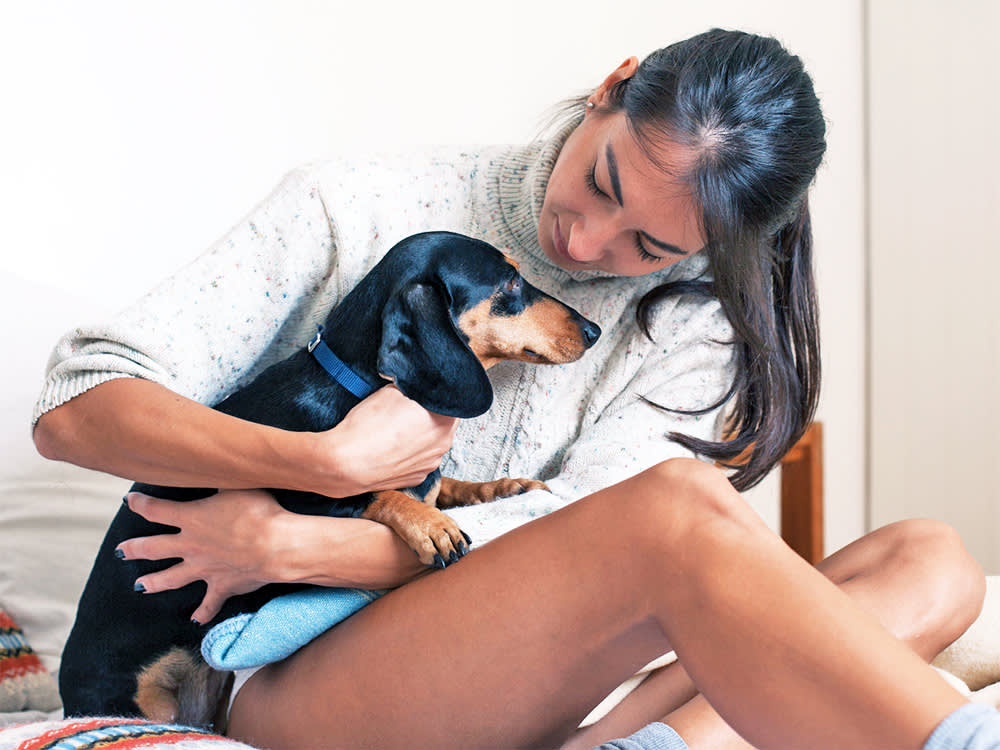
If your dog has sprouted what looks like a tiny cauliflower on their lip, the odds are strongly in your favor: it is almost certainly a viral wart, and almost certainly harmless. These growths are a common sight, especially in younger dogs, and most of the time they are more of a nuisance than a threat.
But “usually harmless” is not the same as “always ignorable.” The genuinely useful skill for a pet parent isn’t learning to treat warts, which often need no treatment at all. It is learning to tell a run-of-the-mill wart apart from a growth that isn’t one, and knowing the point at which watch-and-wait should give way to a vet visit. That is what this guide is really about.
What a dog wart is
A dog wart, known in medical shorthand as a canine viral papilloma, is a benign growth on the skin, and the thing behind it is a virus called canine papillomavirus. Warts look far worse than they behave. Most bring no discomfort or illness at all, though a large one, or one sitting in an awkward spot, can nag at a dog, and plenty of owners simply find them ugly.
They show up in predictable places. Oral warts, on the lips, gums, and inside the mouth, are more common in puppies and young dogs. Warts on haired areas like the paws and legs tend to appear in older, often male, dogs. A dog might have a single wart or a whole cluster.
Where warts show up
A papilloma can crop up almost anywhere on a dog, though certain spots come up again and again: the face, ears, paws, and limbs. Specifically, watch the lips, gums, and area under the tongue, the muzzle, the legs and paws, the belly, the eyelids, and occasionally the genital region.
What causes them, and how they spread
The culprit is canine papillomavirus (CPV), a virus that infects skin and mucosa (the tissue lining places like the gums and inner cheek). Scientists have identified at least seven distinct types. Two dominate: CPV-1, the one usually responsible for facial and mouth warts, and CPV-2, which prefers the paws, legs, and belly. Roughly a fifth of infected dogs turn out to carry both at once.
It passes from dog to dog by direct contact, or indirectly through contaminated items like shared bowls and toys, and it can linger in the environment for several weeks. The virus gains a foothold most easily when a dog’s defenses are immature or run down, which is why puppies, seniors, and dogs on immunosuppressive medication are the most vulnerable, though a break in any dog’s skin can let it in. Breeds that turn up more often in the literature include Pugs, Cocker Spaniels, and Miniature Schnauzers. Group settings like dog parks and daycare are classic exposure points, which is worth weighing but not a reason to skip socialization, which matters enormously for young dogs.
Warts don’t show up the moment a dog is infected. The virus incubates for roughly one to two months first, and then the dog settles into one of three states: a latent one, where the virus simply lies low and causes nothing; a subclinical one, in which the dog looks wart-free but may still shed virus; or a clinical infection, in which visible warts appear and the dog can pass it on.
How to recognize a papilloma, and how to tell it isn’t something else
Classic viral papillomas usually begin as flat, pale bumps and often progress into the fleshy, hairless, cauliflower-textured lumps most people picture. Some stay flat; some become pedunculated, meaning they dangle on a little stalk. A less familiar form is the inverted wart, which looks like a rounded cup with a dark center made of packed dead skin cells, typically on the paws, limbs, or belly. Most warts are small, but they can reach up to three centimeters across.
Here is the part that matters most. Not every bump on a dog is a wart, and a few things that masquerade as warts do need attention. Loop in your vet, rather than assuming, if a growth:
Grows quickly, changes color, or starts to look angry or ulcerated. Bleeds repeatedly, oozes, or seems painful. Appears in an older dog that has never had warts before, since new growths in seniors deserve a closer look. Is firm, fixed to deeper tissue, or doesn’t fit the soft cauliflower pattern. Doesn’t behave like a wart should, meaning it’s not resolving on the usual timeline.
Skin tags, histiocytomas, cysts, and, less commonly, mast cell tumors or melanomas can all be mistaken for warts by eye. Many papillomas are diagnosed on physical exam and history alone (a young dog who frequents daycare is a giveaway), but if there’s any doubt about what a growth is, your vet can take a sample for cytology or histopathology. That is exactly when you want them to.
Most warts I see need nothing but time, and I’m happy to say so. But the growth I worry about is the one an owner assumed was a wart for six months. If a bump doesn’t act like a wart, don’t wait it out. Get it checked.
When a wart becomes a problem
Even a benign papilloma can cause trouble in the wrong spot. A mouth wart that gets big enough may start interfering with a dog’s ability to eat and drink comfortably, trigger noticeably bad breath, or bleed if the dog bites down on it. A wart on the ear or face that gets scratched constantly can bleed and become irritated. A wart on a paw can change how a dog walks. Any of these is a reason to move from watching to treating.
How dog warts are treated
Plenty of owners agonize over removing warts that, frankly, may not need removing at all. If the growths aren’t bothering your dog, doing nothing is often the right call. When treatment is warranted, these are the options:
Watch and wait. In most cases, papillomas clear on their own within a couple of weeks to a few months, shrinking as the immune system kicks in, and dangly ones may simply fall off. If warts aren’t causing discomfort, it’s reasonable to wait and see. Many vets suggest intervening if they haven’t resolved after about three months, and inverted warts generally won’t go away on their own.
Removal. Warts that are bothersome, become infected, or refuse to resolve can be removed surgically with a scalpel (excision), with liquid nitrogen (cryosurgery), or with a laser.
Medication. A handful of drug categories have been tried against these warts, among them certain antibiotics, antiviral agents, immune modifiers, and retinoids, delivered orally, by injection, or applied topically depending on the choice.
Reducing immunosuppressants. For a dog on immune-suppressing medication, easing that dose (when medically possible) can let the dog mount a better response to the virus. This isn’t an option for every dog, since many need those drugs long-term.
How to keep warts from spreading
Because the virus can linger in the environment and inside a dog’s body for weeks, total avoidance is nearly impossible, and socialization is too important to sacrifice over it. Focus on the reasonable precautions: steer clear of dogs known to be infected, and if a dog at the park or daycare has warts on the face or feet, treat them as contagious. Don’t let your dog share toys, bedding, or water bowls with an affected dog. And if the growths turn up on your own dog, keep them home until the warts clear or your vet takes them off.
One reassuring note to end on: canine papillomas are not zoonotic. They can’t jump to humans. If kissing your dog is your thing, a wart is no reason to stop.
What newer research adds
Two developments are worth knowing about if your dog has stubborn warts. First, there is real clinical-trial evidence behind an old idea: a randomized, placebo-controlled study found that the antibiotic azithromycin, given once daily for 10 days, cleared oral papillomas in most treated dogs within about 10 to 15 days, with no recurrence over an eight-month follow-up and no notable side effects. It is not a first-line treatment for every wart, but it is a documented option your vet may consider for cases that won’t resolve.
Second, for refractory (persistent) oral papillomatosis that doesn’t respond to anything else, researchers have developed an experimental recombinant canine oral papillomavirus vaccine. In one published series, roughly 47 percent of treated dogs had complete regression without recurrence. There is still no FDA-approved commercial wart vaccine for dogs, so this remains a specialty-level tool rather than a routine one, but it points to more options ahead for the small subset of dogs whose warts just won’t quit.
This article is educational and not a substitute for a hands-on exam. Any growth you can’t confidently identify, or one that bleeds, grows fast, or changes, deserves a look from your veterinarian.
References
- Lane, Heather E., et al. “Canine oral papillomavirus outbreak at a dog daycare facility.” The Canadian Veterinary Journal 58.7 (2017): 747–749. ncbi.nlm.nih.gov
- Mulherin, Brenda L. “Oral Papillomas in Dogs.” MSD Veterinary Manual, Nov. 2024. msdvetmanual.com
- Munday, John S., et al. “Papillomaviruses in dogs and cats.” The Veterinary Journal 225 (2017): 23–31. pubmed.ncbi.nlm.nih.gov
- Yağcı, B. B., et al. “Azithromycin therapy of papillomatosis in dogs: a prospective, randomized, double-blinded, placebo-controlled clinical trial.” Veterinary Dermatology (2008). onlinelibrary.wiley.com
Common questions
Will my dog's warts go away on their own?
Usually, yes. Most viral papillomas regress within a couple of weeks to a few months once the dog's immune system clears the virus. Many vets recommend stepping in if warts haven't resolved after about three months, and inverted warts typically won't disappear without treatment.
Can I remove a dog wart at home?
No. Don't cut, freeze, or pick at a growth yourself. If a wart bleeds, gets infected, interferes with eating, or you're unsure it's even a wart, have your vet look at it.
Not a substitute for your vet. Our guidance is educational. For urgent symptoms, contact a vet or emergency clinic right away. Editorial standards
Dr. Nair is a veterinarian focused on diet and feeding. She covers everyday nutrition, treats, and the many "can they eat this?" questions owners ask, grounding each answer in what is actually safe and sensible for dogs and cats.
Meet our experts ↗Keep reading
 Product PicksStop Shopping for an Itch Shampoo. Start Shopping for the CauseDr. Ravi Mehta · 10 min
 Health & WellnessYour Dog Has Fleas Long Before You Ever See OneDr. Amara Solis · 8 min
 Health & WellnessYour Dog's Paws Smell Like Fritos. Here's the Bug Behind It.Dr. Lena Park · 6 min
 Health & WellnessThat Red Rash on Your Dog's Belly Is Trying to Point SomewhereDr. Nina Kohl · 6 min
 Health & WellnessYour Dog Can't Catch Poison Ivy. But It Can Hand It to You.Dr. Priya Nair · 6 min
 Health & WellnessMost 'Natural' Fly Repellents for Dogs Are Useless or Toxic. Here's What Isn't.Dr. Amara Solis · 8 min