


Your Dog's Paws Smell Like Fritos. Here's the Bug Behind It.
That corn-chip smell coming off your dog's feet isn't a coincidence and it isn't a conspiracy. It's a specific set of bacteria, and the only thing that matters is whether yours is the normal amount or a warning.

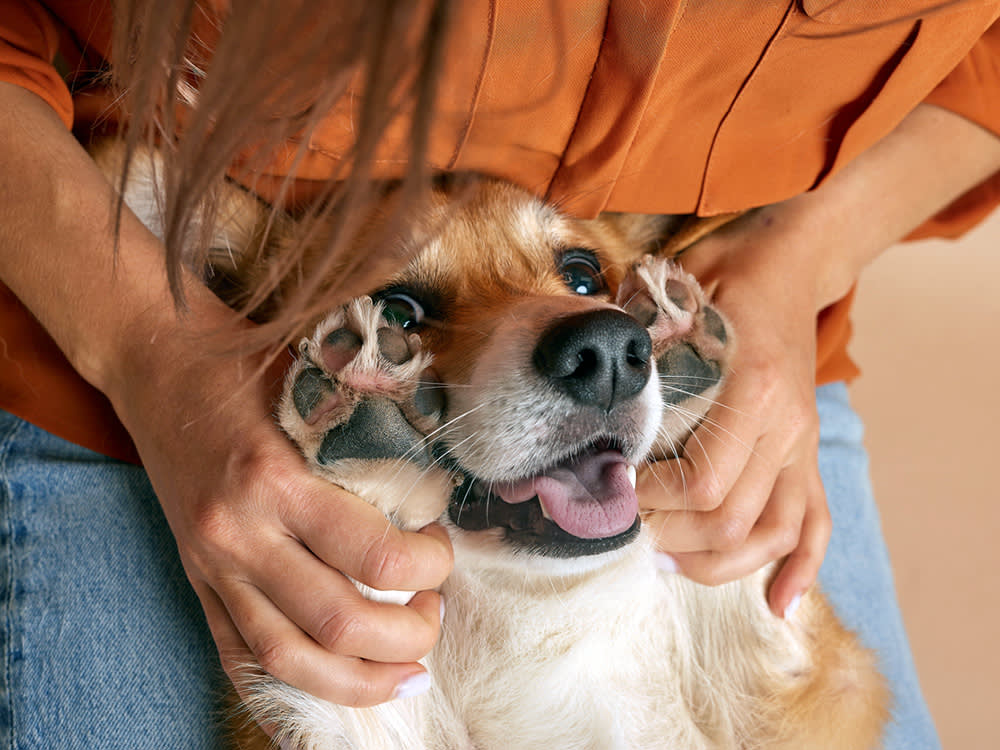
You notice it once and then you cannot un-notice it. You lean down to your dog, catch a whiff of their feet, and there it is, unmistakable: corn chips. Fritos, specifically. It sends every dog owner down the same little spiral. Is this normal? Is it a problem? And, at the bottom of the spiral, the unsettling thought, what exactly is in Fritos?
Relax on that last one. Your snack is safe and so, probably, is your dog. The corn-chip smell is not a coincidence and it is not a conspiracy. It is a real, identifiable thing living on your dog’s paws, and once you know what it is, the only question that matters gets simple: is this the normal amount, or too much?
The actual bug behind the smell
Here is the part most explainers hand-wave and this one will not. That corn-chip aroma comes from specific bacteria that naturally live on your dog’s skin, chiefly Proteus and Pseudomonas species. On their own, these microbes happen to smell like corn tortillas. As they metabolize the sweat and oils on the paw, they throw off aromatic compounds, including one called 2-aminoacetophenone along with butyric and isovaleric acids, and that specific chemical bouquet is the “Frito” smell. It is not the corn chips smelling like paws or the paws smelling like corn chips. It is two different things producing overlapping molecules.
Often a third player joins in: Malassezia, a yeast that also lives on the skin and adds its own muskier, yeasty note to the mix. Together, a small colony of these organisms on a warm paw is the baseline. A faint corn-chip smell means your dog’s paws are doing exactly what dog paws do.
Why paws are a microbe paradise
Feet are the perfect real estate for this crowd. Dogs sweat through their paw pads, so the pads run warm and slightly damp, which is the exact environment bacteria and yeast love. Add a dog who licks their feet, and every swipe of the tongue lays down more moisture. Fluffier dogs with long hair between the toes have it worse still, because that fur traps humidity and gives the microbes more surface to cling to. None of this is abnormal. It is just biology, and a low-level smell is the receipt.
The line between normal and a problem
So when should the smell actually worry you? The tell is not the presence of the odor but its intensity and its company. A mild whiff is fine. What is not fine is a strong, sour smell, or a corn-chip smell that arrives alongside other signs that the microbes have overgrown.
The most common trigger for that overgrowth is allergies. Environmental and food allergies irritate the skin, an itchy dog licks and chews at their paws, and all that extra moisture tips the balance so the normal microbes bloom into an overgrowth. Watch for the supporting cast: excessive paw-licking and itching, redness between the toes, and saliva staining, where the fur around the paws turns rusty reddish-brown from constant nibbling, most visible on light-coated dogs. And the itch is rarely loyal to the feet alone. A dog who is scratching all over, or shaking their head because their ears are bothering them, is showing you skin irritation that can involve the paws too.
The smell is a smoke alarm, not the fire. By the time a paw smells strongly of corn chips and looks pink between the toes, something upstream has already changed on that skin, and it’s almost always an allergy. Treat the odor and you’ve unplugged the alarm. Find out why the skin gave way in the first place, and you actually fix it.
Why you shouldn’t just wait it out
It is tempting to file a smelly paw under harmless quirk, and when it is mild, it is. But an overgrowth left alone tends to feed itself. The dog feels itchy, so they lick and chew, which adds moisture and damages the skin, which lets the microbes spread further, which makes the dog itchier. That self-reinforcing loop is how a faint odor becomes a genuine skin problem, and it can progress to pododermatitis, an inflammation of the paws that leaves the skin swollen, red, and painful. Surplus bacteria or yeast can turn from harmless residents into a real infection, and once an infection is established it is harder to clear than the mild version would have been. Milder skin issues are simply easier to treat than advanced ones, which is the whole argument for acting early rather than sniffing and shrugging.
What actually helps
For a mild case, basic paw hygiene goes a long way. Bathe your dog with a gentle, hypoallergenic shampoo, then rinse and, crucially, dry the paws thoroughly, since a damp foot is where the trouble grows. For fluffier dogs, your groomer is an ally: ask for “poodle feet,” where the fur is clipped short around the pads and especially between the toes so the skin can breathe and hold less moisture. That alone strips the microbes of a lot of their habitat.
But if the smell is strong, or you are seeing redness, greasy residue, saliva staining, or constant licking, that is a vet visit, not a grooming fix. The point of going is not to deodorize the paw. It is to find the underlying reason the skin changed, most often an allergy, and treat that, because the odor is a symptom and the allergy is the disease. Caught early, these are far more forgiving to manage.
The bottom line
A gentle corn-chip smell off your dog’s feet is normal, the honest byproduct of Proteus and Pseudomonas bacteria and a little Malassezia yeast doing their everyday work on a warm, slightly sweaty paw. Keep the feet clean and dry and clip the fur between the pads, and you keep it in check. When the smell gets loud or picks up companions, redness, licking, rusty staining, treat it as an early signal of an overgrowth, usually driven by allergies, and get your vet involved before the itch cycle digs in. The nose knows something is up. It is just up to you to figure out what.
References
- Duclos, David. “Canine Pododermatitis.” Veterinary Clinics of North America: Small Animal Practice. https://pmc.ncbi.nlm.nih.gov/articles/PMC4982575/
- “Why Do Dog Paws Smell Like Fritos?” PetMD. https://www.petmd.com/dog/general-health/why-do-dog-paws-smell-like-fritos
Common questions
Is the Frito smell dangerous?
On its own, no. A mild corn-chip odor is just your dog's normal paw microbes doing their thing. It becomes a concern when the smell turns strong or sour, or comes with redness between the toes, greasy residue, rusty saliva stains, or constant licking, which point to an overgrowth.
What causes an overgrowth of paw bacteria and yeast?
Most often allergies. Environmental or food allergies make paws itchy, dogs lick and chew them, and the added moisture creates a warm, damp environment where bacteria and Malassezia yeast multiply beyond their normal levels.
How do I get rid of the smell?
If it's mild, keep paws clean and thoroughly dry, and ask your groomer to clip the fur short between the pads so the skin can breathe. If it's strong or paired with redness or licking, see your vet, because the real fix is treating the underlying cause, usually allergies, not masking the odor.
Not a substitute for your vet. Our guidance is educational. For urgent symptoms, contact a vet or emergency clinic right away. Editorial standards
Dr. Park is a board-certified emergency and critical care specialist. She reviews our health and safety content for clinical accuracy and contributes guides on recognising urgent conditions. Her focus is helping owners act quickly and correctly when it matters most.
Meet our experts ↗Keep reading
 Product PicksThat 'Fresh Groom' Smell Is the Problem, Not the PerkSasha Ford · 5 min
 Health & Wellness'Natural' Dog Shampoo Isn't a Safety Claim. Nobody Is Checking.Dr. Priya Nair · 7 min
 Health & WellnessAnti-Itch Shots Chase the Symptom. Immunotherapy Goes After the Cause.Dr. Nina Kohl · 8 min
 Product PicksStop Shopping for an Itch Shampoo. Start Shopping for the CauseDr. Ravi Mehta · 10 min
 Health & WellnessYour Dog's Yeast Infection Won't Surrender to Coconut OilDr. Priya Nair · 7 min
 Health & WellnessA Dog Who Keeps Shaking Their Head Is on a ClockDr. Priya Nair · 8 min