


Your Dog's Eyes Are Darting and They Can't Stand Up. It's Usually Not a Stroke.
Canine vestibular disease, a dizziness disorder of the inner ear, hits suddenly and looks terrifying, often mistaken for a stroke or seizure. Here's how to tell the benign version from the serious one, and what treatment looks like.

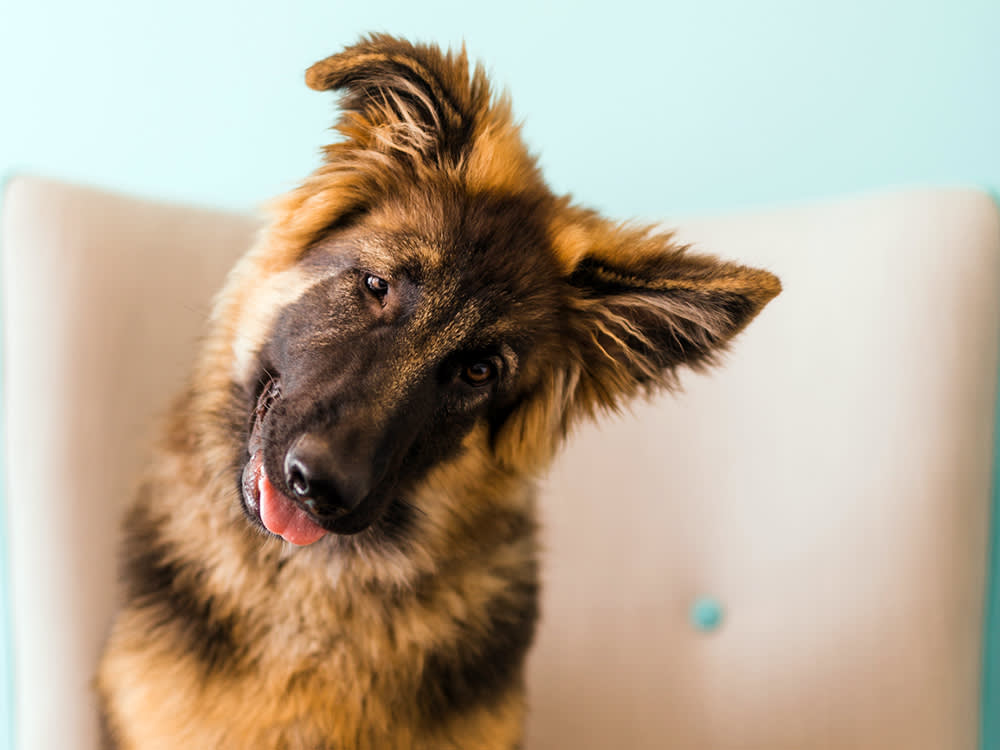
There is a specific kind of 3 a.m. panic reserved for the dog owner who wakes to find their pet unable to stand, stumbling in circles, maybe vomiting, with their eyes flicking rapidly back and forth. It looks exactly like the worst-case scenario. Most of the time, it is not. What you are almost certainly watching is canine vestibular disease, a sudden failure of the balance system, and the good news buried in the terror is that the most common version is benign and burns itself out. The whole trick, for an owner, is learning to read which version you are dealing with.
What is actually happening
Vestibular disease is dizziness, that sickening sense of motion when you are holding perfectly still. In dogs it stems from a glitch in the vestibular system, the balance apparatus centered in the inner ear, and it typically brings nausea and a real struggle to stand or walk. Dogs cannot narrate the spinning-room feeling, so “vestibular disease” is the clinical name for what a human would simply call vertigo.
Before anyone panics about a stroke, I want to reassure them that the classic sudden-onset case in an older dog is usually the inner-ear type, and it is on our side. My job is to confirm it is not the rarer brain version, and then mostly to keep the dog safe and comfortable while their own system recalibrates.
The two kinds, and why the distinction is everything
Vestibular disease splits into two broad categories, and telling them apart is the single most useful thing you and your vet will do.
Peripheral disease originates outside the brain, in the middle or inner ear. This is the more treatable, better-prognosis type, and it includes the famous “old dog” syndrome, also called idiopathic vestibular disease, the most frequent presentation of all. “Idiopathic” means no clear cause, and this form tends to strike older dogs out of nowhere, then quietly resolve on its own with nothing more than supportive care and comfort. The next most common driver of peripheral disease is infection, notably Rocky Mountain spotted fever, or inflammation.
Central disease starts inside the brain, at the brain stem, and it is the one that warrants concern. Its causes track with a dog’s size and age. In small breeds, Maltese, Yorkies, Pugs, and Pomeranians, it is usually a non-infectious brain-stem inflammation, a condition sometimes labeled inflammatory brain disease, and it shows up mostly in dogs under two years old. In larger breeds, central disease more often traces to a brain tumor pressing on the brain stem, or to head trauma. Tellingly, central cases often come on more gradually and with subtler signs, rather than the dramatic overnight crash of the classic inner-ear episode.
The signs to watch for
Search for videos of affected dogs and you will see the hallmark trio, which is worth recognizing before you are living it at 3 a.m. There is the head tilt, the drunken, uncoordinated walk clinicians call ataxia, and the darting eyes, known as nystagmus, a rapid involuntary flicking side to side, or less often up and down.
Nystagmus is the detail worth memorizing. It does not appear in every case, but it is common, and it usually eases as the dog adjusts to the strange sensation. In old-dog vestibular disease it can be dramatic, then fade over a couple of weeks at most. Crucially, if nystagmus is present, the diagnosis is far more likely to be vestibular disease than a seizure, which is exactly the mix-up that sends terrified owners to the emergency line.
How it gets diagnosed
Diagnosis leans heavily on the signs, ideally on a vet actually watching an episode, which is why filming one if you safely can is genuinely helpful. Whether the nystagmus runs horizontal or vertical, together with which way the head tilts, gives a neurologist clues to separate peripheral from central disease. When warranted, imaging like a CT scan or MRI checks for tumors or brain swelling, and an EEG can help distinguish a vestibular event from seizure activity. A vet will also rule out an ordinary ear infection if the signs persist.
Treatment, and the waiting game
For central disease, treatment depends entirely on the cause. Brain-stem tumors can often be removed, inflammation and fluid can be drained surgically if needed, and antibiotics or antifungals address infection. When the cause is vascular, a temporary or permanent interruption of blood supply, the dog frequently improves on their own. Toxins deserve a special mention: certain medications, including metronidazole (Flagyl), can cause toxicity that produces vestibular signs, and switching the dog off that medication onto a different one often clears it up.
For peripheral disease, the picture is usually a sudden onset of acute signs with no other abnormal findings. In that situation, you and your vet may reasonably decide to give it a few days and watch for improvement before pursuing extensive testing. Some vets prescribe corticosteroids to bring down swelling, plus antibiotics as insurance in case the problem is central. Ultimately, the label of old-dog vestibular disease is confirmed in hindsight, by the fact that it resolves on its own. Expect most dogs to steady within a few days and recover over a couple of weeks; about 5 to 10 percent may have another episode down the road.
What newer research adds
Idiopathic vestibular disease remains, by definition, a condition without a pinned-down cause, and that has not fundamentally changed. What is reinforced by ongoing veterinary experience is how good the prognosis usually is for the inner-ear form, and how worthwhile it is to check for treatable contributors. Hypothyroidism, for instance, can be linked to vestibular signs, so bloodwork after an episode is a reasonable step. The broader lesson holds: if a diagnosis does not sit right with you, trust what you are seeing at home and ask for a second opinion. Nobody knows your dog the way you do.
This is general information, not a substitute for veterinary care. Sudden loss of balance, collapse, or persistent vomiting always warrants a call to your vet or an emergency clinic.
References
- American College of Veterinary Internal Medicine. “Vestibular Disease in Dogs.” https://www.acvim.org/
- Merck Veterinary Manual. “Vestibular Disease in Animals.” https://www.merckvetmanual.com/nervous-system/vestibular-disease
- Cornell University College of Veterinary Medicine. “Neurology.” https://www.vet.cornell.edu/
Common questions
How can I tell it apart from a seizure?
The rapid, involuntary side-to-side eye movement called nystagmus points strongly toward vestibular disease rather than a seizure. If you can safely film an episode, that footage helps your vet or a neurologist tell the difference.
Will my dog recover?
Most dogs with the peripheral (inner-ear) form improve within days and recover over a couple of weeks. Roughly 5 to 10 percent may have another episode later. The central (brain) form has a more variable outlook that depends on the underlying cause.
Not a substitute for your vet. Our guidance is educational. For urgent symptoms, contact a vet or emergency clinic right away. Editorial standards
Dr. Mehta is a board-certified veterinary nutritionist who evaluates pet food formulations, ingredient quality, and the science behind dietary trends. He writes and reviews all nutrition content at The Pet Times, including our food rankings and feeding guides.
Meet our experts ↗Keep reading
 Health & WellnessThe Dog-Killing Liver Fluke Just Crossed Into California. The Map Is the Real StoryDr. Ravi Mehta · 5 min
 Health & WellnessThe Vet Specialty Nobody Mentions, Until Your Dog Won't Stop ScratchingDr. Amara Solis · 6 min
 Health & WellnessA Warm, Dry Nose Tells You Nothing. Here's How to Actually Know Your Dog Has a Fever.Dr. Priya Nair · 6 min
 Health & WellnessThe Old Advice Was to Starve the Pancreas. The Evidence Says Feed It.Dr. Ravi Mehta · 7 min
 Health & WellnessMichigan's 'Mystery Dog Illness' Was Parvo All Along. The Test Was the Liar.Dr. Lena Park · 7 min
 Health & WellnessYou'd Expect Giant Breeds to Get the Most Cancer. A Big Study Says It's the Middle.Dr. Mara Chen · 6 min