


The Old Advice Was to Starve the Pancreas. The Evidence Says Feed It.
Pancreatitis puts dogs in the ER after every holiday, and the standard treatment has quietly flipped. Here's what the disease actually does, the symptoms that mean go now, and why 'rest the pancreas' is no longer the plan.

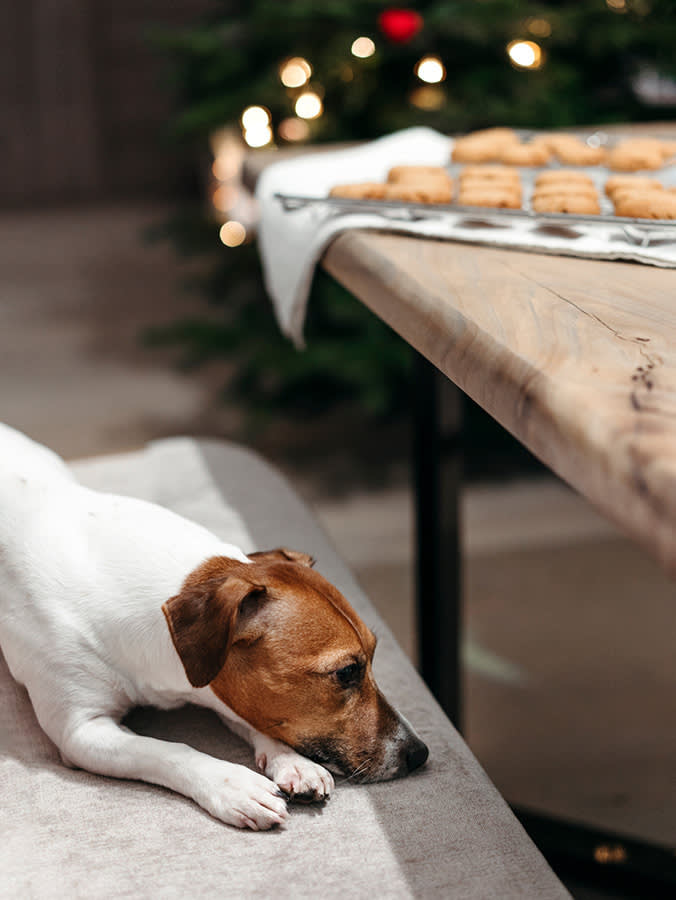
Every ER vet can tell you which weeks are the busy ones. Not the ones with fireworks. The ones with gravy.
Pancreatitis is the disease that turns a generous scrap of turkey skin into a four-day hospital stay, and the holiday table is its favorite delivery system. But the thing worth knowing about it in 2026 is not the old warning about fatty food. It is that the treatment has quietly reversed itself. For decades, the instruction was to rest the pancreas by withholding food, sometimes for days. The evidence no longer supports that, and most hospitals have moved on. If your dog gets pancreatitis, the modern plan is to get calories back in early, not to starve the organ into submission.
That change matters to you even before your dog gets sick, because it tells you what this disease actually is: not a punishment for one bad snack, but a whole-body inflammatory event that your dog needs fuel to survive.
What is actually happening in there
The pancreas sits tucked under the stomach along the first stretch of the small intestine, and it holds down two jobs. It makes the digestive enzymes that break food apart, and it makes insulin and glucagon, the hormones that keep blood sugar in range.
Pancreatitis is an accident involving the first job. The digestive enzymes are supposed to switch on after they reach the intestine. In pancreatitis they switch on too early, inside the organ, and begin digesting the pancreas itself. Inflammation follows, then tissue damage, and the damage does not stay put. It spreads to the liver, and the toxins released along the way can push the whole body into a systemic inflammatory response. If enough of the pancreas is destroyed, the insulin-producing side gets taken out too, and the dog comes out of the episode diabetic.
The disease comes in two shapes. Acute pancreatitis arrives fast and hard. Chronic pancreatitis smolders, flaring and settling over months, which makes it far harder to spot and far easier to dismiss as a picky stomach.
The good news, and it is real: in most acute cases the inflammation stays confined to the pancreas and liver, and with prompt veterinary care most dogs recover completely.
The symptoms, and the one posture that should make you move
The classic signs are appetite loss, vomiting, nausea, diarrhea, fever, abdominal pain, and depression, which is to say a flat, withdrawn dog who has stopped being themselves.
The tell that owners miss is postural. A dog in acute pancreatic pain will often hunch their back, or drop into what looks like a permanent play bow: chest and head on the floor, rear in the air. It looks like an invitation to play. It is a dog trying to relieve pressure on an inflamed organ. If the bow will not resolve and the dog will not get up and play, that is a phone call to a vet, not a game.
Difficulty breathing and signs of shock, including pale gums and collapse, put this firmly in emergency territory. Untreated pancreatitis can kill a dog. There is no home version of this. Nothing in your kitchen treats it.
The posture is the part people talk themselves out of. A dog with their chest on the tile and their tail up looks playful for about ten seconds, and then you notice they have not moved and they will not eat. That is not a mood. That is pain with a specific shape to it, and it buys you nothing to wait until morning.
What sets it off
In most dogs, the honest answer is that nobody knows. But the known triggers are worth memorizing, because half of them live in your house.
A big hit of fat. A high-fat diet, or one large greasy serving of human food: poultry skin, bacon, gravy, a marbled offcut of meat. This is the classic holiday mechanism.
Dietary indiscretion. The technical term for eating whatever is on the sidewalk. Scavengers get pancreatitis.
Duct problems. Reflux or an outright blockage of the pancreatic ducts, which strands the enzymes where they can do damage.
Hormonal and metabolic disease. Most commonly diabetes, hypothyroidism, and high blood calcium.
Drugs and toxins. Some chemotherapy agents and the anti-seizure drug potassium bromide have been implicated, as has exposure to organophosphate insecticides. Steroids were long blamed and appear to be innocent.
Physical trauma. Blunt force. A car strike is the usual culprit, and occasionally the organ is bruised during surgery.
Genetics. Miniature Schnauzers, who often carry an altered fat metabolism, plus Cocker Spaniels, Miniature Poodles, and several terrier breeds. Older dogs and overweight dogs sit at higher risk regardless of breed.
Getting the diagnosis right
Two tools do most of the work.
The SPEC cPL blood test, run overnight by a reference lab, is the specific canine pancreatic lipase assay. It picks up roughly 83 percent of pancreatitis cases and excludes other diseases in about 98 percent. It should not be confused with the in-hospital snap test, which returns only “normal” or “abnormal” and can be thrown off by liver or gastrointestinal disease that has nothing to do with the pancreas.
Abdominal ultrasound catches about 68 percent of cases on its own, and its real value is peripheral vision: it shows the organs around the pancreas. Because a mass near the pancreas can accompany or mimic pancreatitis, an ultrasound is what finds the complication nobody was looking for.
The treatment that changed
Here is the part that has moved.
The old rule was to let the organ idle. Food traveling down the intestine stimulates the pancreas, so nothing went in by mouth, for two or three days in serious cases, while the dog was carried on IV fluids and electrolytes. That logic sounds airtight and turned out to be thin.
Withholding food does not prevent the enzymes from doing their damage, and it costs the dog a great deal. Fasting a systemically ill patient worsens ileus, feeds inflammation, starves the intestinal lining of the fuel it uses to maintain its own barrier, and drives protein breakdown at exactly the moment the body needs to repair tissue. A retrospective study of dogs hospitalized with pancreatitis found that feeding within 48 hours of admission improved the return to voluntary eating and, contrary to the whole premise of pancreatic rest, was associated with fewer episodes of gastrointestinal intolerance, not more. The 2024 nutrition guidance in the Journal of the American Veterinary Medical Association reflects the same position: early enteral nutrition is the default now, and prolonged fasting needs a justification.
What has not changed: IV fluid support, aggressive pain control, anti-nausea medication, and 24-hour monitoring in critically ill dogs, with plasma transfusion held in reserve for the worst cases. Pain control is not a comfort measure here. Untreated pain suppresses immune function and has been shown to raise mortality. Antibiotics are often given, not because pancreatitis is a bacterial disease, but to head off bacterial translocation from a compromised intestine.
Recovery typically begins two to three days in, once the dog starts eating. A low-fat diet is the standard follow-up, and for many dogs it becomes permanent, because a pancreas that has inflamed once is a pancreas that can inflame again.
Prevention is a kitchen-management problem
There is no vaccine and no supplement. Prevention is entirely about what your dog can reach.
- Keep counters bare. The best-behaved dog in the world is still a dog, and a cooling rack of drippings at nose height is not a fair test of character.
- Secure the garbage. Take it out to a closed outdoor bin. The grease-soaked roasting bag in the kitchen trash is one of the most reliable pancreatitis triggers there is.
- Keep your dog lean and moving. Body condition and a sane diet are the only levers that lower baseline risk.
- Brief your guests. The person who slips your dog “a little bit of skin, it’s just one piece” is not being cruel. They are being uninformed, and they are the ones who need the sentence, not the dog.
What newer research adds
The biggest update is the one above: the fasting rule is gone. If your dog is hospitalized for pancreatitis and someone mentions getting food back in on day one, that is not a shortcut. That is current practice, and it is on your dog’s side.
The second update is about how confidently anyone can say “it was the bacon.” Newer reviews of what causes canine pancreatitis have made the picture more humbling, not less: a single high-fat meal is a real trigger, but a lot of dogs who develop pancreatitis never had one, and underlying metabolic disease is doing more of the work than we used to think. That is not a reason to hand over the turkey skin. It is a reason to take a vomiting, hunched, off-food dog seriously even when nobody raided the counter.
References
- Harris, J. P., et al. “Retrospective evaluation of the impact of early enteral nutrition on clinical outcomes in dogs with pancreatitis: 34 cases (2010-2013).” Journal of Veterinary Emergency and Critical Care, 2017. pubmed.ncbi.nlm.nih.gov/28510290
- “Nutritional management of pancreatitis and concurrent disease in dogs and cats.” Journal of the American Veterinary Medical Association, vol. 262, no. 6, 2024. avmajournals.avma.org
- “Treatment of Acute Pancreatitis in Dogs.” Today’s Veterinary Practice. todaysveterinarypractice.com
Common questions
Should I withhold food if my dog has pancreatitis?
Not on your own, and increasingly not in the hospital either. The old protocol of two to three days of nothing by mouth has been replaced in most practices by feeding within roughly 48 hours, because studies show earlier feeding is tolerated well and speeds the return to normal eating. Your vet makes that call, not you.
Which dogs are most at risk?
Miniature Schnauzers, Cocker Spaniels, Miniature Poodles, and several terrier breeds are predisposed, as are dogs who are older, overweight, or diabetic. Any dog who raids a garbage can full of grease can develop it.
How is pancreatitis diagnosed?
Usually a SPEC cPL blood test sent to a reference lab, which detects about 83 percent of cases and rules out other diseases in about 98 percent, often paired with an abdominal ultrasound that catches roughly 68 percent of cases and shows the surrounding organs at the same time.
Not a substitute for your vet. Our guidance is educational. For urgent symptoms, contact a vet or emergency clinic right away. Editorial standards
Dr. Mehta is a board-certified veterinary nutritionist who evaluates pet food formulations, ingredient quality, and the science behind dietary trends. He writes and reviews all nutrition content at The Pet Times, including our food rankings and feeding guides.
Meet our experts ↗Keep reading
 Health & WellnessCooked Salmon Is a Gift. Raw Fish From a Lake Can Kill Your Dog.Dr. Priya Nair · 5 min
 Health & WellnessParvo in Dogs: Two Levers Decide Whether Your Puppy LivesDr. Priya Nair · 7 min
 Health & WellnessBlood From Your Dog's Rear: How to Read It in the First 60 SecondsDr. Priya Nair · 8 min
 Health & WellnessYour Dog Keeps Gagging but Nothing Comes Up. Don't Wait It Out.Dr. Lena Park · 8 min
 Health & WellnessThe Worm You Can See Isn't the One That KillsDr. Amara Solis · 7 min
 Health & WellnessYour Dog's Poop Is a Daily Health Report. Here's How to Read ItDr. Lena Park · 8 min