


You'd Expect Giant Breeds to Get the Most Cancer. A Big Study Says It's the Middle.
Bigger animals should get more cancer, and dogs mostly follow that rule, until the very largest breeds. A study of body size and cancer found the risk climbs, then plateaus, for a reason that's genuinely sad, and it reshapes how to watch your own dog.

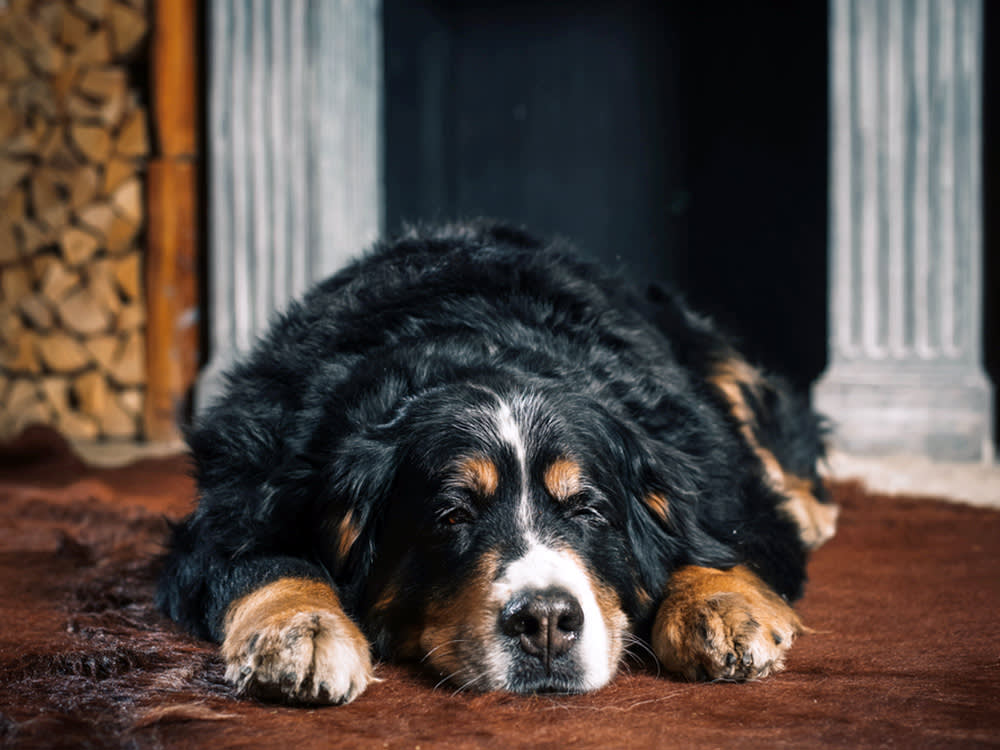
Start with a rule that holds across the animal kingdom: within a species, bigger bodies tend to get more cancer. More cells mean more chances for one to turn malignant, and dogs, which range from a three-pound Chihuahua to a two-hundred-pound Mastiff, are an unusually clean natural experiment for testing it. So you would expect the giant breeds to top the cancer charts.
They do not, quite. A large analysis of body size and cancer mortality across dog breeds found the expected climb, and then a twist right where the rule should peak. The risk rises with size, then flattens out among the very biggest dogs, and the reason it flattens is one of the more poignant facts in canine health. Understanding it changes which dogs you worry about, and when.
The size-cancer curve, and where it breaks
The study, led by evolutionary biologist Dr. Leonard Nunney and published in Royal Society Open Science, set out to test the multi-stage model of cancer against real breed data. As expected, lifetime cancer mortality increased with breed size, but only up to a point, roughly 30 to 40 kilograms of body weight. Beyond that, in the heaviest breeds, the risk stopped climbing and leveled off.
Nunney had shown the size-cancer relationship in humans before, and dogs offered a far wider size range to test it. The premise is textbook multi-stage theory: more body means more cells and more cell divisions, and every division is another ticket in a bad lottery, so bigger should mean more cancer. The surprise was not that mid-to-large dogs carried high risk. It was that the very largest did not carry the highest.
The explanation is grim, and it is the key to the whole finding. Cancer is largely a disease of old age. Very large breeds, the Mastiffs and Great Danes and Saint Bernards, often live only six to twelve years, while small breeds like Chihuahuas and Dachshunds frequently reach their mid-to-late teens. Giant dogs, tragically, often do not live long enough to develop the cancers their size would otherwise predispose them to. Their short lifespans mask their cancer risk. The middle and larger-but-not-giant breeds get both the cellular risk of size and enough years to express it.
“The instinct is to watch the giant breeds hardest for cancer, but the biology says the sweet spot of risk sits a notch below them, in the dogs big enough to be predisposed and long-lived enough to get there. It reframes vigilance around a dog’s expected lifespan, not just their size,” says Dr. Ravi Mehta.
Which breeds the data flagged
The numbers vary enormously from breed to breed, which is the practical heart of this. In one dataset the study drew on, Miniature Pinschers had a cancer mortality risk of about four percent, while Bernese Mountain Dogs faced a 55 percent chance of dying of cancer. That is not a subtle spread.
Among the 85 breeds that appeared in more than one dataset, the flat-coated retriever stood out with significantly elevated cancer mortality. Scottish Terriers, which carry a particular risk of bladder cancer, along with Bernese Mountain Dogs and Bullmastiffs, showed notable risk, running more than 50 percent above what was expected. Terriers as a group tended toward elevated cancer mortality.
At the low end, the smallest dogs came off best: Chihuahuas, Pomeranians, and Pekingese all had cancer mortality at or below ten percent. No breed showed a significantly reduced risk after accounting for size, though Dalmatians and Bulldogs ran consistently low for their size, and a couple of breeds hinted at lower risk in limited data.
Some of these breed differences trace to the specific cancers that certain body plans invite. Many large breeds are prone to osteosarcoma, a bone cancer possibly linked to the long stretch of bone growth that comes with being bred for size. The breed-specific patterns are not random; they reflect what each breed’s body was selected to be.
What it says about purebred versus mixed
The study also poked at a popular belief. Inbreeding, the reasoning goes, should raise cancer risk. Nunney’s analysis did not find that inbreeding increased cancer mortality per se. But it did surface a real and meaningful longevity gap: on average, mixed-breed dogs lived about 1.2 extra years compared with purebred dogs of similar size.
That is worth holding carefully. It is not “purebreds get more cancer.” It is that mixed-breed dogs tend to live somewhat longer, a difference that shows up in the aggregate without a single tidy cause. If you have a purebred dog you love, this is not a verdict on them; it is population-level data, and your individual dog’s care matters far more than the average.
What to actually do with this
The clinical advice lands in the same place regardless of your dog’s breed or size, but this study sharpens the reasoning behind it.
See your vet once or twice a year for a routine check, and do not let a big, seemingly healthy dog skip visits just because they look fine. If your dog is one of the flagged higher-risk breeds, or sits in that middle-to-large, long-lived size band, that regular schedule is doing real work.
Learn your dog’s body and check it. If you find a lump or bump, do not panic, but do get it looked at promptly. Vets are blunt on this point: an exam and a needle sample can clear a lot of frightening possibilities quickly, but nobody, however experienced, can diagnose a hard marble under the skin by eye. It needs a slide, not a guess. Early detection is the single biggest lever you have.
What newer research adds
The body-size finding has held up as a reference point in canine cancer discussion since it was published, and it dovetails with a broader shift in the field toward lifespan-aware risk rather than size alone. Large-scale efforts like the Dog Aging Project are now tracking tens of thousands of dogs over time, which should eventually sharpen these breed- and size-specific risk estimates and clarify how much lifespan, genetics, and environment each contribute.
There is also active work on the aging side of the equation itself. Companies are developing drugs aimed at extending the healthy lifespan of large dogs specifically, which is notable because, if giant breeds could live longer, this study implies their currently hidden cancer risk might become more visible, a reminder that lifespan and cancer risk are tangled together rather than independent. For now, the takeaway for owners is unchanged and evidence-based: know your breed’s risk profile, keep up regular vet checks, and act fast on lumps.
References
Not a substitute for your vet. Our guidance is educational. For urgent symptoms, contact a vet or emergency clinic right away. Editorial standards
Dr. Chen is a small-animal veterinarian who leads health and safety coverage at The Pet Times. She writes and reviews the bulk of our illness, condition, and safety content, translating clinical guidance into clear, practical advice owners can act on at home.
Meet our experts ↗Keep reading
 Health & WellnessYour Dog's Scooting Isn't Funny. It's a Message From the Other End.Dr. Mara Chen · 7 min
 Health & WellnessThe Biggest Dog Cancer Study Ever Run Found Something Better Than a CureDr. Ravi Mehta · 10 min
 Health & WellnessSomething's Wriggling in the Poop. A Straight-Talk Guide to the 5 Worms Puppies Get.Dr. Lena Park · 7 min
 Health & WellnessChronic Kidney Disease in Dogs Is a Race Against Time. How to Win GroundDr. Lena Park · 7 min
 Health & WellnessThe Great Impersonator: Why You Can't Eyeball a Mast Cell TumorDr. Mara Chen · 7 min
 Health & Wellness"Kennel Cough" Isn't a Disease. That's Why Every Outbreak Feels Like the End of the World.Dr. Ravi Mehta · 8 min