


Plan Your Dog's Pool Party Like a Lifeguard, Not a Caterer
The decorations are the easy part. A great dog pool party is built on the guest list, the exit ramp, and the feeding schedule, and this plan puts those first.

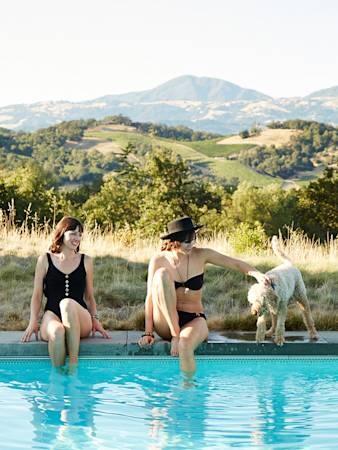
Here is the thing nobody puts on the invitation: a dog pool party is a lifeguarding event with snacks. The tropical toys and the matching towels are the fun 20 percent. The other 80 percent is a guest list, an exit ramp, and a feeding schedule, and if you get those three right, everything else is just decoration.
So plan it in that order.
1. Build the guest list around swimming ability, not friendship
The first cut is simple: does this dog actually enjoy water, and can they handle it? Dogs are not born knowing how to swim, and assuming otherwise is how pool parties go wrong. Flat-faced breeds like Bulldogs, Pugs, and Boxers struggle to keep their airways clear in the water, and long-bodied, short-legged dogs like Corgis, Dachshunds, and Basset Hounds tire fast and sink low. Those dogs are not banned from the party. They are kiddie-pool guests, and they will have a wonderful time splashing at ankle depth.
The second cut is temperament. Invite dogs who already like each other and stay relaxed in groups, and leave out any dog with a history of guarding toys. A floating ball in a crowded pool is a resource-guarding test nobody signed up for.
“Two things send pool-party dogs to the ER: fights over floating toys, and dogs who gulp water for an hour straight while playing fetch. Both are completely preventable with a guest list and a timer,” says Dr. Mara Chen.
2. Set up the water like dogs are coming, because they are
If you do not have a built-in pool, a sturdy kiddie pool is honestly the better tool for most parties. Look for the rigid, claw-resistant kind made for dogs rather than an inflatable that one enthusiastic paw will end. Minnidip makes stylish non-inflatable options sized for pets, and one or two of them create a splash zone that non-swimmers can share safely.
If you are using a full-size pool, two bits of prep save you grief. First, stuff clean socks into the skimmer baskets so the filters do not choke on dog hair. Second, set up a hose or a few buckets of plain water for an after-swim rinse, because chlorinated water left to dry in a coat can irritate some dogs’ skin.
3. Teach every dog where the exit is
This is the single most important safety step of the day, and it takes five minutes. Even a strong swimmer can panic and drown if they cannot figure out how to get out. When each dog arrives, walk them into the pool at the steps or ramp, then guide them back out. Repeat it two or three times until the dog exits on their own. Now they have a map.
Life vests raise the safety margin further, especially for first-timers, seniors, and the enthusiastic-but-inefficient swimmers. And keep a human in the water with the dogs the whole time. Not poolside. In the water.
4. Run the schedule like a swim coach
Food and water timing is where a fun day quietly goes sideways, so put it on an actual schedule:
- No meals for about three hours before swimming, and give every dog a potty break before they get in. Skip either step and you may learn why pool filters and dog digestion are a bad combination.
- No treats while a dog is in the water. Swimming is hard exercise, and eating mid-swim is a reliable way to make a dog vomit.
- Enforce rest breaks every 15 or 20 minutes. Dogs do not self-regulate around water and excitement.
Those breaks do double duty, because they protect against something most hosts have never heard of: water intoxication. A dog who repeatedly retrieves toys from the water, or bites at hoses and sprinklers, can swallow enough water to dilute the sodium in their blood. The result, called hyponatremia, makes cells swell, including brain cells, and it can turn deadly in hours, with small dogs at the highest risk. Watch for vomiting, wobbliness, bloating, glazed eyes, or sudden weakness after heavy water play, and treat any of those as an emergency. Prevention is exactly what the schedule already gives you: mandatory breaks, and an end to fetch sessions before they become marathons.
One more scheduling note: host in the morning or early evening. Midsummer midday heat is hard on dogs even with a pool, and hot pool decking can burn paw pads.
5. Now, and only now, the fun stuff
With the safety architecture in place, spend freely on delight. Floating toys and pet-specific pool floats give strong swimmers a job. A shaded cabana or big umbrella gives everyone a recovery zone, and heat-sensitive dogs will camp there. Frozen dog treats, such as blended frozen blueberry bites, make great post-swim refreshments once dogs have rested. P.L.A.Y.’s tropical-themed plush toys make on-theme party favors, and a stack of cheap towels near the exit will save your house.
For the humans: snacks, cold drinks, and one firm rule. The adults in charge of dog supervision stay sober until the last dog is toweled off. A pool full of wet, excited dogs deserves at least one clear-headed lifeguard, and today that lifeguard is you.
Common questions
Do I need ground rules for a dog pool party?
Yes. The big three: every dog gets a potty break before entering the water, no unsupervised swimming at any point, and any dog showing tension gets a calm break away from the pool before things escalate.
Does the party need a shade area?
Absolutely. Set up a spot out of direct sun where dogs can dry off and cool down. A patio, a big umbrella, or a fabric cabana all work, and heat-sensitive dogs will spend most of the party there.
What if two dogs start to squabble?
Watch for the early warnings: stiff posture, hard staring, growling, or lip lifting. Separate the dogs at the first sign, calmly and without drama, rather than waiting to see if it blows over.
What do the humans get out of it?
The same courtesy you planned for the dogs: snacks, cold drinks, and shade. A pool party where the people are comfortable is one where the dogs get watched properly.
Leila Torres leads our Living coverage, from home life and travel to the products and rescue stories that come with sharing a life with animals. She edits and writes across the section, with a soft spot for pieces about the bond between people and their pets.
Meet our experts ↗Keep reading
 LivingIt Was Never Really About Pets vs. KidsSasha Ford · 10 min
 LivingPhotograph Your Dog Like a Portrait, Not a Snapshot: Lessons From Winnie AuJordan Ellis · 9 min
 LivingIn Most States, Your Dog Is Legally a Couch. A Few Are Finally Changing That.Jordan Ellis · 7 min
 LivingThe West Village Dog Isn't a Breed. It's a Budget.Nina Vasquez · 6 min
 LivingOnly 15% of Dogs on Earth Are Purebred. This Book Draws the Other 85%.Sara Lim · 5 min
 LivingThis Viral Dog-City Ranking Measures Hype, Not Livability. Check This InsteadLeila Torres · 6 min