


Everyone Gives Their Dog Melatonin for Sleep. That's the One Thing It's Worst At
Melatonin's reputation is backwards. The evidence is thinnest for the sleep problems owners use it for, and strongest for situational stress like fireworks and vet visits. Here's how to match the tool to the job, plus real weight-based dosing.

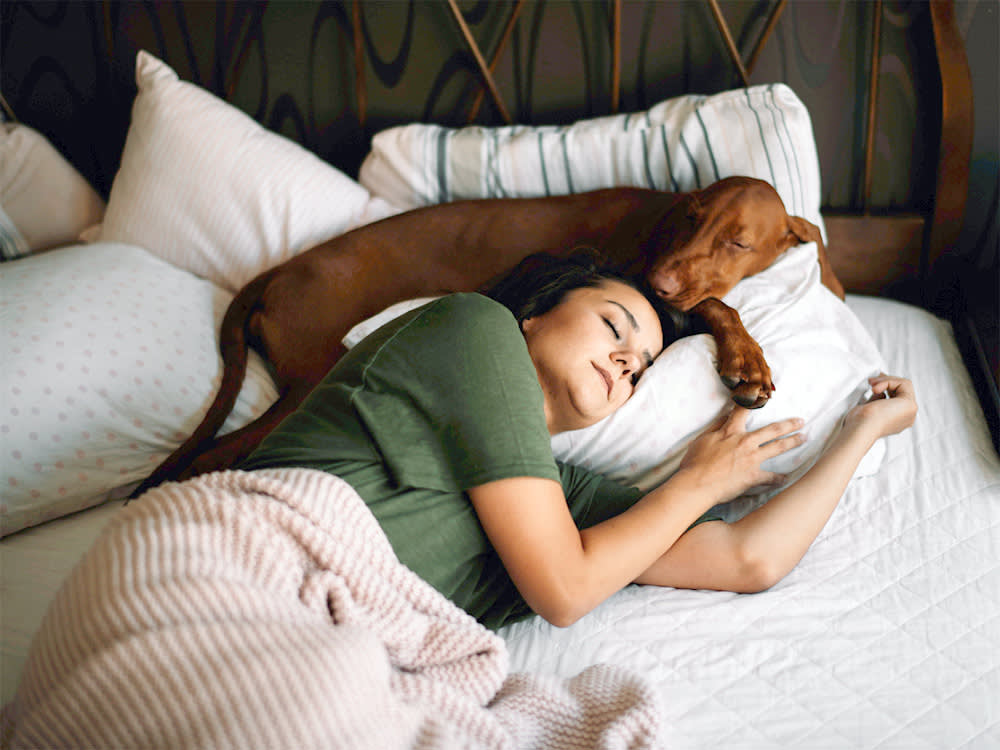
Almost every dog owner who buys melatonin buys it for the same reason: to help a restless dog sleep. It is the natural assumption, because that is what we use it for ourselves. And it is the one job melatonin does worst.
That is not a knock on melatonin. It is a case of a genuinely useful supplement having a reputation pointed in exactly the wrong direction. Once you flip it around, once you understand what melatonin is actually good at, it becomes a smart, low-risk tool. So let’s throw out the sleep-aid framing and sort this by what the evidence really supports.
Where melatonin earns its keep: short, stressful events
The best evidence for melatonin in dogs clusters around situational, event-based stress, the acute spikes rather than the chronic conditions. This is where you should be reaching for it.
Studies have found that puppies given melatonin before long, hot road trips showed fewer physical signs of stress. Dogs given it around the time of spay or neuter surgery had smaller stress-hormone swings, and some needed less anesthetic to go under, because they were already calmer walking in. Out in the real world, vets most often use it for the predictable stress bombs of dog life: thunderstorms, fireworks, car rides, and vet visits. For noise phobias in particular, situational melatonin has a reasonable track record.
The common thread is that these are all short, foreseeable events. You know the Fourth of July is coming. You know the vet appointment is Tuesday. Melatonin fits that shape: give it ahead of a known stressor and let it take the edge off.
Where it disappoints: the very thing you bought it for
Now the uncomfortable part. Despite melatonin being the go-to home remedy for a dog who won’t settle at night, it has not performed well in studies for actual sleep disorders. Plenty of owners swear it settles their dog, and that experience is real, but it has been hard to reproduce in controlled research. The likely reasons are a mess of dosing inconsistency, timing, and the fact that “sleep problems” in dogs lump together very different issues, from a young dog with too much unspent energy to an old dog with cognitive decline.
Results are similarly mixed for other hopeful uses. Melatonin sometimes helps with seasonal hair thinning (the fall-and-winter kind) but does not reliably regrow hair. In an immune condition called immune-mediated thrombocytopenia, where a dog’s body attacks its own platelets, it may help boost platelet production. For canine cognitive dysfunction and seizures, the evidence is thin. None of these are reasons to avoid melatonin, but they are reasons not to expect it to be a sleeping pill.
If your dog’s real problem is nighttime restlessness, especially in a senior dog, the more useful move is to ask your vet about cognitive dysfunction (sometimes called sundowner syndrome) rather than to keep bumping the melatonin dose.
Melatonin is one of the gentler tools we have, but people aim it at the wrong target. They want it to knock a dog out at night, and it’s mediocre at that. Where it actually shines is taking the edge off a fireworks night or a car ride. Use it for the event, not the insomnia, and you’ll be a lot happier with it.
Dosing: the numbers, and why your vet still sets them
Here is more specificity than the old advice offered, with the honest caveat attached. A commonly cited veterinary starting point is about 0.1 mg per kilogram of body weight, or roughly 1 mg for every 10 pounds. In practical by-size terms, that tends to look like:
- Small dogs (under about 25 lb): around 1.5 mg
- Medium and large dogs (about 25 to 100 lb): around 3 mg
- Very large dogs (over about 100 lb): up to about 6 mg
Dosed no more often than roughly every 8 hours. Those are starting reference points, not a prescription, because the research itself has not settled whether melatonin should be dosed strictly by weight or given as a flatter dose the way it is in people. Given the range of dog sizes, weight-based dosing will probably win out, but until it is nailed down, your vet’s job is to set the actual amount based on your dog and the reason you are using it, and to start low and increase gradually while watching the response.
For timing, give it 30 to 90 minutes before the stressful event. Peak effect arrives within about 30 minutes and lasts several hours. For a big, predictable event, your vet may have you start a day or two ahead.
The two safety issues that matter most
Melatonin’s side effects are usually mild, an occasional upset stomach, mild drowsiness, or a faster heart rate, and most dogs tolerate it well. But two cautions deserve real attention, and they get glossed over constantly.
The gummy trap. Many melatonin gummies and chewables contain xylitol, which is toxic to dogs and can cause a dangerous blood-sugar crash and liver failure. Read the label of any product before use, and re-read it with every new bottle, because formulations change without warning. Plain tablets are the safer default. A canine-specific product is often worth it because it comes in lower, dog-appropriate doses, even though it faces the same supplement-regulation gaps.
Drug interactions. This is the one to raise with your vet before you start: melatonin can amplify the effects of sedatives and anti-anxiety medications like benzodiazepines. If your dog is already on a calming drug, stacking melatonin on top without oversight can over-sedate them. Pregnant or nursing dogs and dogs with diabetes also need closer supervision.
One more reliability note worth knowing: because melatonin is sold as a supplement in the U.S., it skips rigorous testing, and one analysis of 25 human melatonin products found only three contained an amount within 10 percent of the label claim. If you find a specific product that works for your dog, stick with it rather than switching brands.
The bottom line
Melatonin is a low-risk, genuinely useful tool that most people point at the wrong problem. It is at its best for short, predictable stressful events, fireworks, storms, car rides, vet visits, surgery prep, and at its weakest for the chronic sleep trouble people usually buy it for. Dose it roughly 1 mg per 10 pounds under your vet’s guidance, give it ahead of the event, avoid xylitol gummies, and never stack it with other sedatives on your own.
References
- Cook, N. J., et al. “Effects of Melatonin on the Concentrations of Inflammatory Cytokines… in Ovariohysterectomised Female Dogs.” Veterinary Medicine and Science, 2023. https://onlinelibrary.wiley.com/journal/20531095.
- “Impact of Road Transportation on Physiological and Oxidative Stress Biomarkers in Puppies: Beneficial Effect of Melatonin.” Animals, 2021. https://www.mdpi.com/2076-2615/11/4/1100.
- “Gabapentin, Melatonin, and Acepromazine Combination Prior to Hospital Visits Decreased Stress Scores in Aggressive and Anxious Dogs.” JAVMA, 2023. https://avmajournals.avma.org/view/journals/javma/261/11/javma.23.02.0067.xml.
- Cohen, P. A., et al. “Quantity of Melatonin and CBD in Melatonin Gummies Sold in the US.” JAMA, 2023. https://jamanetwork.com/journals/jama/fullarticle/2804077.
- FDA. “Paws Off Xylitol; It’s Dangerous for Dogs.” https://www.fda.gov/consumers/consumer-updates/paws-xylitol-its-dangerous-dogs.
Common questions
How much melatonin can I give a dog?
A common veterinary starting point is roughly 0.1 mg per kilogram, or about 1 mg per 10 pounds. Rough by-weight guidance is about 1.5 mg for small dogs under 25 pounds, 3 mg for medium and large dogs, and up to 6 mg for very large dogs, usually no more often than every 8 hours. Confirm the exact dose with your vet, because the right amount depends on your dog's health and the reason you are using it.
When should I give my dog melatonin before a stressful event?
Give it about 30 to 90 minutes ahead so it has time to take effect, and for a big predictable event like fireworks your vet may suggest starting a day or two early to build a calmer baseline. Peak effect lands within roughly 30 minutes and lasts several hours.
Is melatonin safe to combine with other calming medications?
Not without veterinary oversight. Melatonin can amplify the effects of sedatives and anti-anxiety drugs like benzodiazepines, so stacking them on your own can over-sedate your dog. Pregnant or nursing dogs and diabetic dogs also need closer supervision.
Not a substitute for your vet. Our guidance is educational. For urgent symptoms, contact a vet or emergency clinic right away. Editorial standards
Dr. Mehta is a board-certified veterinary nutritionist who evaluates pet food formulations, ingredient quality, and the science behind dietary trends. He writes and reviews all nutrition content at The Pet Times, including our food rankings and feeding guides.
Meet our experts ↗Keep reading
 Health & WellnessThe Dog CBD Study Everyone Cites Validated a Protocol, Not a ProductDr. Lena Park · 5 min
 Health & WellnessSound Baths for Dogs Sound Like Woo. The Research Isn't.Dr. Lena Park · 6 min
 Health & WellnessDo Calming Pheromones Actually Work? An Honest Look at DAP for Anxious DogsDr. Priya Nair · 6 min
 Health & WellnessYour Dog's Anxiety Might Start in the Gut, Not the BrainDr. Mara Chen · 5 min
 Health & WellnessYour Dog Isn't Licking His Leg Raw Out of Boredom. X-Ray What's Under It.Dr. Nina Kohl · 8 min
 Health & WellnessThe Middle Path Between 'Wait and See' and Surgery for Your DogDr. Ravi Mehta · 7 min