


Hot Spots Are Wounds Your Dog Builds Themselves. Stop the Machine.
A hot spot can go from a dime-sized red patch to an oozing, painful mess in a day, because your dog's own tongue is the engine. Here's how to break the cycle, when to call the vet, and why it's not ringworm.

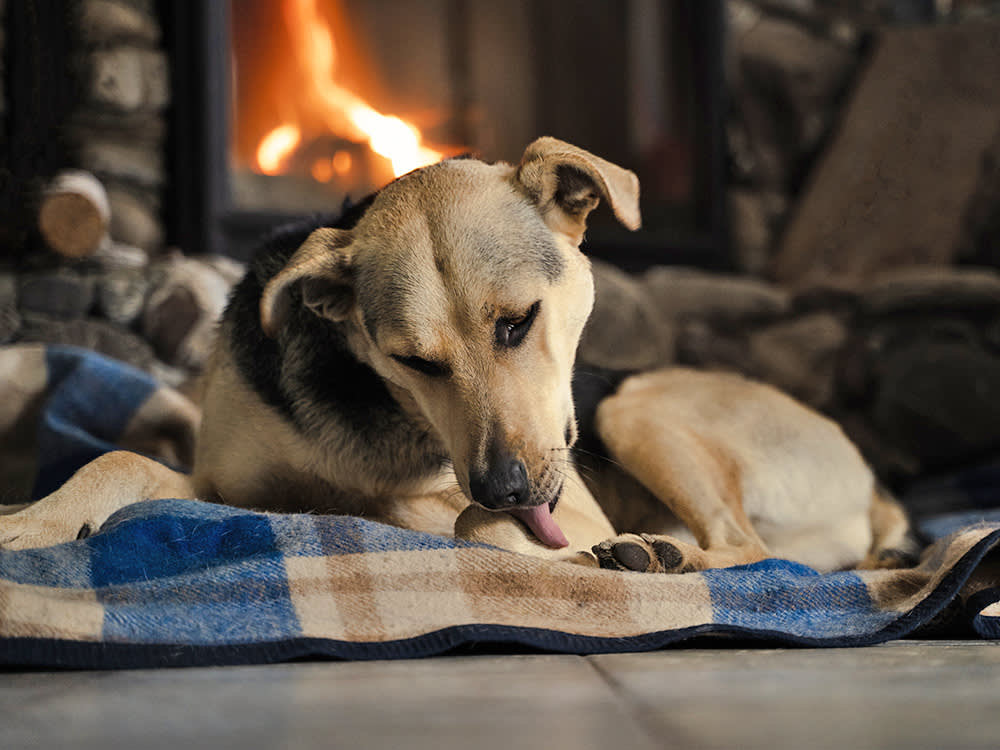
Hot spots have a talent for terrible timing. On Friday evening you notice your dog worrying at a small red patch. By Saturday morning it is a raw, oozing, angry circle three times the size, and the vet is closed. The medical names, acute moist dermatitis or pyotraumatic dermatitis, both contain the tell: “acute” and “traumatic.” A hot spot moves fast because it is not just a rash your dog has. It is a wound your dog is actively making, tongue and claws doing the work, and it grows exactly as fast as they keep at it.
That is the single most useful thing to understand about hot spots, because it hands you the treatment priority: whatever else you do, stop the licking. Everything after that is cleanup and detective work.
“Every hot spot has two problems stacked on top of each other: whatever started the itch, and the tongue that won’t let it heal,” says Dr. Amara Solis. “The cone feels unkind in the moment. It’s the kindest thing in the room.”
What you’re looking at
A hot spot starts as a small red, inflamed area, warm to the touch, and escalates quickly. The classic signs:
- A localized red, inflamed patch that feels warm
- A moist, shiny, sometimes oozing surface
- Fur loss over the spot, complete or partial
- A foul smell once bacteria move in
- Swelling, scabbing, or crusty edges as it matures
They can appear anywhere, but the head, limbs, and rear end are favorite real estate, and the first symptom most people notice is not the spot at all. It is the dog, suddenly obsessed with one patch of skin.
Why the itch started in the first place
The licking is the engine, but something lit the fuse. Common instigators:
- Allergies. The biggest category. Pollens from grasses, trees, and weeds, dust mites, mold spores, dander, fragrances and cleaning products, smoke, plus flea, food, contact, and drug allergies. Anything that makes skin itch can seed a hot spot.
- Bites and parasites. Fleas, ticks, mites, and other insect bites irritate one spot, and the dog takes it from there.
- Trapped moisture. A coat that stays damp, after swimming, a bath, or a rainy walk, creates a warm, wet pocket where bacteria thrive. Humid climates raise the baseline risk for the same reason.
- Breed and coat type. Thick- and long-coated breeds hold moisture against the skin: Golden and Labrador Retrievers, German Shepherds, Rottweilers, Saint Bernards, Newfoundlands, Bernese Mountain Dogs, and Cocker Spaniels all show up on the hot spot roster more than their share. Floppy ears add their own humid microclimate.
- Gear rub. Collars and harnesses can chafe a spot raw in some dogs.
- Matted or dirty fur. Trapped debris irritates skin and shelters bacteria.
- Boredom and stress. A dog without enough to do may turn grooming into an outlet, and overworked skin pays for it.
Finding the instigator is not academic. Skip that step, and the hot spots come back on a schedule.
Hot spot or ringworm? People mix these up constantly
They are almost nothing alike, which is what makes the confusion risky, because treating one like the other makes things worse. Both involve skin, redness, and hair loss. The overlap stops there.
- Cause: a hot spot is self-trauma plus opportunistic bacteria. Ringworm is a fungal infection of skin, hair, or nails.
- Look: a hot spot is moist, inflamed, often oozing, and can smell bad. Ringworm is nearly always a dry, scaly, circular patch, red at the rim, calmer in the center.
- Feel: hot spots itch ferociously and arrive fast. Ringworm itches mildly and spreads gradually.
- Location: hot spots appear wherever the dog can reach with tongue or claws. Ringworm can show up anywhere on the body, reachable or not.
- Contagion: hot spots spread to no one. Ringworm spreads readily to other pets and to people, through contact or contaminated surfaces.
- Diagnosis: hot spots are mostly diagnosed on sight; ringworm requires a fungal culture, a Wood’s lamp screen (imperfect), or microscopic exam of hair and skin samples.
- Treatment: hot spots get cleaning, antibiotics, and anti-inflammatories. Ringworm gets antifungals and environmental decontamination. Antibiotics do nothing for a fungus; antifungals do nothing for a lick wound.
If a “hot spot” is dry, scaly, ring-shaped, and slow-growing, stop and ask your vet about ringworm before treating anything.
Treating a hot spot at home
Caught early and still mild, a hot spot is a manageable home project.
- Clip the fur over and around the spot. This is the step people skip and should not. Exposing the area releases trapped moisture and lets you actually see the wound’s edges.
- Clean gently. Warm water with iodine or diluted chlorhexidine. Then pat it as dry as you can, since moisture is the hot spot’s best friend.
- Soothe. Pure aloe vera gel, a chamomile tea compress, or a light layer of coconut oil can calm the surface.
- Break the cycle. Cone or soft recovery collar, non-negotiable, until the skin is healed over. This is the step that determines whether the other three worked.
- Hunt the trigger. Check for fleas, mats, and damp undercoat while you are at it.
When it’s a vet problem
Go in rather than wait it out if:
- The spot is spreading rapidly or already large
- Your dog is in obvious distress
- There is a foul odor, significant pus, or swelling
- It sits near the eyes, ears, or genitals
- Two or three days of home treatment have produced no visible progress
- Your dog gets hot spots repeatedly
The vet’s version of treatment starts the same way, clip, clean, dry, cone, then adds prescription firepower: topical or oral antibiotics, anti-inflammatories, and, if needed, a bacterial culture to match the drug to the bug. For repeat offenders, expect a deeper workup aimed at the underlying cause: skin scrapings, cytology, allergy testing (blood or intradermal), fungal culture to rule out ringworm, and bloodwork to screen for hormonal or autoimmune conditions.
The supporting cast: diet, supplements, and daily habits
None of these replaces treatment, but together they lower the odds of the next hot spot.
Feed the skin. A balanced diet with quality protein and omega fatty acids supports the skin barrier. Dogs with confirmed food sensitivities may do better on a limited-ingredient or hypoallergenic diet. Supplements with some evidence behind them include omega-3s, probiotics, vitamin E, zinc, biotin, turmeric (curcumin), collagen, and coconut oil, but run any supplement and its dose past your vet first.
Groom like it matters, because it does. Brush daily or at least several times a week. Bathe on a sensible schedule, roughly every four to six weeks with a gentle, hypoallergenic, or medicated shampoo, and dry thoroughly afterward, every time, including after swims and rainstorms. Keep moisture-prone zones trimmed (ears, tail, belly), clean ears and skin folds, stay on year-round flea and tick prevention, and use grooming sessions as skin inspections to catch redness early.
Manage the environment. Wash bedding and toys regularly, vacuum often, control indoor humidity with fans or a dehumidifier, keep up yard pest control, and give your dog real daily exercise and mental work, because a busy dog has better things to do than excavate their own skin. And keep the stress level down where you can: routine, enrichment, and one-on-one time are skin care too, oddly enough.
What’s new since this was written
The forces behind hot spots are not fading. In Nationwide’s 2025 analysis of more than 3.3 million pet insurance claims, skin allergies ranked as the single most common medical condition in insured dogs for the fifteenth consecutive year, and skin allergy claims run nearly 10 percent higher in spring and summer. Since allergic itch is the leading spark for hot spots, that seasonal spike is worth translating into practice: the months when your dog is wettest and itchiest are exactly the months to be strictest about drying the coat, staying on flea prevention, and checking the usual hot spot zones during grooming.
References
- Cornell University College of Veterinary Medicine, Riney Canine Health Center: Hot Spots
- Ihrke, P. J. “An Overview of Bacterial Skin Disease in the Dog.” British Veterinary Journal, vol. 143, no. 2, Mar. 1987, pp. 112-118. doi:10.1016/0007-1935(87)90002-9
- Veterinary Practice: Pyotraumatic Dermatitis (Acute Moist Dermatitis, Hot Spot)
- Nationwide: Chronic Conditions Dominate this Year’s List of Most Common Pet Health Problems
Common questions
Are hot spots contagious to people or other pets?
No. Hot spots are self-inflicted skin trauma plus opportunistic bacteria, not a transmissible disease. Ringworm, which people often confuse with hot spots, is the contagious one.
How long does a hot spot take to heal?
A mild-to-moderate hot spot treated properly usually settles in about seven to ten days. A severe, infected one can take two to three weeks.
Not a substitute for your vet. Our guidance is educational. For urgent symptoms, contact a vet or emergency clinic right away. Editorial standards
Dr. Kohl is a board-certified veterinary dentist with a particular interest in preventive oral care. She reviews all dental health content at The Pet Times and contributes practical guides on home dental routines, professional cleaning, and oral disease prevention.
Meet our experts ↗Keep reading
 Health & WellnessYour Dog's Ear Infection Keeps Coming Back for One Reason Most Owners MissDr. Priya Nair · 6 min
 Health & WellnessYour Dog's Red Eye: When to Treat It as an Allergy, and When to Assume the WorstDr. Amara Solis · 6 min
 Health & WellnessThe Vet Specialty Nobody Mentions, Until Your Dog Won't Stop ScratchingDr. Amara Solis · 6 min
 Health & WellnessDog Losing Hair? One Question Splits It Into Two Different ProblemsDr. Mara Chen · 8 min
 Health & WellnessThere's No 'Best' Food for Dog Allergies. Here's How to Actually Find YoursDr. Nina Kohl · 13 min
 Health & WellnessYour Dog's Skin Is Turning Gray or Black. It's Trying to Tell You Something.Dr. Priya Nair · 7 min