


Dog Losing Hair? One Question Splits It Into Two Different Problems
Whether your dog's hair loss is itchy or not tells you more than the bald spot itself. A vet-backed guide to alopecia in dogs — the causes, the at-risk breeds, and newer treatments.

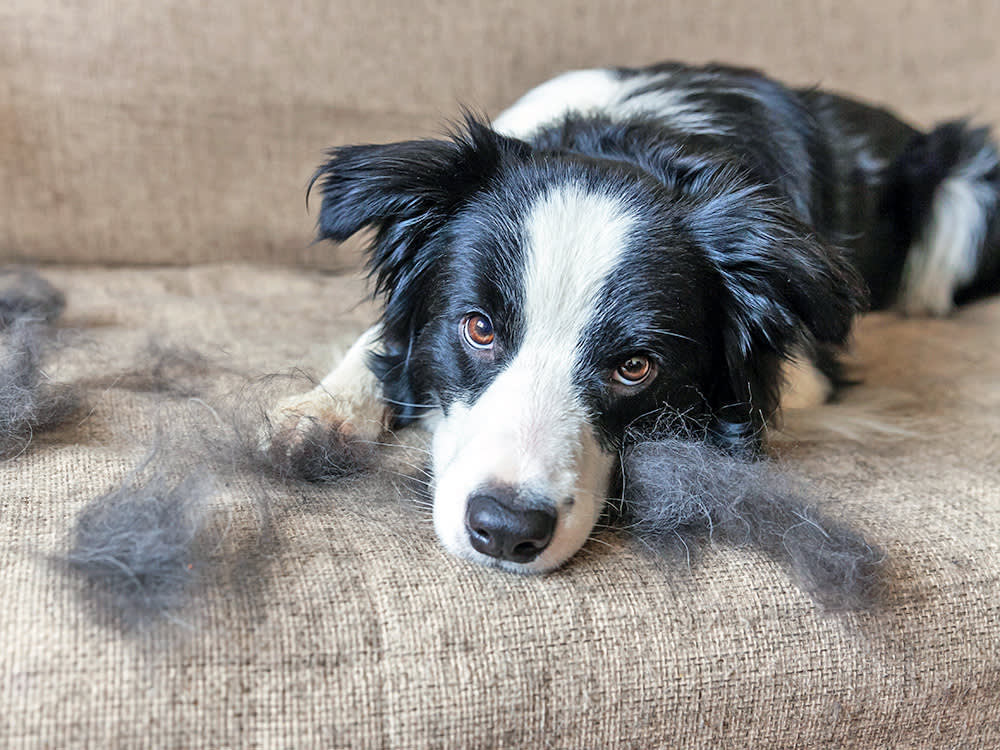
When a bald patch appears on your dog, the instinct is to stare at the spot itself — its size, its shape, where it sits. But the bald patch is rarely the most useful clue. The question that actually tells you what you’re dealing with is one a good vet asks in the first thirty seconds: is it itchy?
That single question splits alopecia, the medical term for hair loss, into two largely separate worlds. Itchy hair loss and non-itchy hair loss come from different causes, carry different odds of regrowing, and call for different investigations. Knowing which side of the line your dog is on is the difference between a quick fix and a frustrating guessing game, and it’s the frame every section below is built on.
Why “is it itchy?” matters so much
Vets formalize this split into two categories, and the distinction does real diagnostic work.
Pruritic alopecia is hair loss with itch. Here the dog is usually the one removing the hair — scratching, chewing, licking, and rubbing the area raw. The fur isn’t falling out so much as being taken out. The culprits in this group are the irritants: parasites, allergies, and the secondary bacterial or yeast infections that pile on once skin is damaged. The encouraging part is that this category generally responds well. Treat the underlying itch, and the hair typically comes back.
Non-pruritic alopecia is hair loss without itch, and it’s the trickier of the two. The dog often isn’t bothered at all, so owners may not notice for weeks. Because nothing is irritating the skin from outside, the problem usually lies deeper — in the hair follicles themselves, in hormones, or in a disrupted growth cycle. This is the category that more often requires bloodwork and sometimes a skin biopsy reviewed by a veterinary pathologist to reach a firm answer, and it’s also where some causes turn out to be permanent.
The first thing I want to know isn’t where the hair is missing, it’s whether the dog is trying to remove it. An itchy dog and a comfortable dog with the same-looking bald spot are almost never dealing with the same disease.
One reassuring footnote before the causes: for a few breeds, sparse or absent hair is simply the genetic design, not a disorder. The Xoloitzcuintli (pronounced “show-low-eats-QUEENT-lee,” the Mexican Hairless), the Chinese Crested, the American Hairless Terrier, and the Peruvian Inca Orchid all come in hairless varieties by breed standard. Each also produces coated individuals — so yes, there are furry American Hairless Terriers out there.
The itchy side: causes you can usually fix
These are the causes that come with scratching, and the good news is they’re the more treatable group.
Allergies are among the most common reasons for itchy, localized hair loss. The trigger might be food, something the skin contacts directly, insect bites, or inhaled pollens and dust. The inflammation itches intensely, the dog self-traumatizes, and damaged skin then invites bacterial and yeast infections that make everything worse.
Parasites — fleas, ticks, mange mites, and lice — cause hair loss either by damaging follicles directly or by driving the kind of relentless itch that ends with a dog scratching themselves bald. Fleas are usually visible; mange mites need a skin scraping to find. Modern monthly preventatives have made this whole category far easier to control than it used to be.
Skin infections from bacteria or fungi can establish themselves either by spreading (ringworm, which is contagious to other pets and people) or by exploiting already-broken skin (hot spots). Most clear with topical or oral medication, and hair regrows once the infection is gone.
The non-itchy side: when the cause is hidden
When a dog is losing hair but isn’t bothered, the investigation turns inward — to hormones and follicles.
Endocrine (hormonal) disorders are the heavyweights here. Hypothyroidism and Cushing’s disease (excess cortisol) classically produce symmetrical hair loss on both flanks or widespread thinning. A telltale sign of hypothyroidism is a triangular bald patch just behind the nose leather, along with a dull, coarse coat. A shared red flag for both: the coat fails to grow back properly after clipping.
Cyclic flank alopecia follows the calendar. Affected dogs shed hair along their flanks in autumn or spring, leaving darker, thickened skin, then regrow it in summer or winter — sometimes in a slightly different shade. For some dogs it happens once; for others it recurs and intensifies yearly.
Hair follicle disorders are a cluster of conditions where the follicle structure, its hormonal response, or the developing hair shaft goes wrong. This group includes Alopecia X, post-clipping alopecia, color dilution alopecia, black hair follicular dysplasia, bald thigh syndrome, and pattern baldness — most of them concentrated in particular breeds.
Alopecia X: a diagnosis of exclusion
Alopecia X deserves a closer look, because it’s both common and widely misunderstood. It mainly affects plush-coated breeds — Pomeranians, Chow Chows, Keeshonds, Samoyeds — and produces symmetrical, non-itchy hair loss along the trunk while sparing the head and legs. Crucially, it is not caused by hypothyroidism, Cushing’s, or allergies. It’s diagnosed by ruling those out, which is exactly why the non-itchy workup leans so heavily on bloodwork: the goal is to clear the treatable hormonal diseases before landing on this one.
The encouraging development is on treatment. Melatonin remains a safe, inexpensive first-line option, and newer slow-release melatonin implants — placed under the skin much like a microchip — offer continuous dosing without a daily pill. For dogs that don’t respond, deslorelin implants have shown real promise: in one documented case, a neutered female who failed melatonin grew her coat back profusely after a deslorelin implant. None of these are guaranteed, and Alopecia X is cosmetic rather than dangerous, but owners now have options that didn’t exist a decade ago.
What you’ll see alongside the hair loss
“Alopecia” covers hair loss from any normally haired part of the body, which for a dog is most of the body. A small patch jumps out on a short-coated dog and can hide for weeks under a long coat — so any bald spot deserves a look regardless of coat type. Beyond the missing fur, watch for:
- Changes in hair color
- Skin crusting or scaling
- Darkening or lightening of the skin
- Visible itchiness (or its telling absence)
- Inflammation
- Discharge
- Open wounds or sores
To sort it out, your vet weighs the pattern and location of the loss, your dog’s age and history, bloodwork, skin cytology, and skin scrapings — with a biopsy held in reserve for the tougher non-itchy cases.
Breeds prone to alopecia
Because so many forms are genetically linked, certain breeds turn up for this far more than others. The full list is long, but higher-susceptibility breeds include:
- Pomeranians (Alopecia X especially)
- Chow Chows and Keeshonds
- Standard Poodles
- Boston Terriers
- Dachshunds
- Chihuahuas
- Greyhounds (bald thigh syndrome)
- Siberian Huskies
- Boxers
- Bulldogs
- Doberman Pinschers
When to get your vet involved
A bare patch is rarely a true emergency, but it earns a visit rather than a wait. Shifts in coat color, texture, density, or shine can be the first visible sign of a systemic disease like a thyroid or adrenal disorder — meaning the hair loss is the messenger, not the message. Your vet can run the right tests, determine which side of the itchy/non-itchy line your dog is on, and start treatment where one exists.
And for dogs whose alopecia has no effective fix, comfort is its own kind of care: sun shirts protect bare skin from burns, sweaters handle the cold, and most of these dogs, it must be said, look genuinely excellent in a good outfit.
References
- Frank, Linda A. “Comparative Dermatology — Canine Endocrine Dermatoses.” Clinics in Dermatology, vol. 24, no. 4, 2006, pp. 317–325, doi:10.1016/j.clindermatol.2006.04.001.
- Welle, Monika M. “Canine Noninflammatory Alopecia: An Approach to Its Classification and a Diagnostic Aid.” Veterinary Pathology, vol. 60, no. 6, 2023, pp. 748–769, doi:10.1177/03009858231170295.
- Brunner, Magdalena A. T., et al. “Bald Thigh Syndrome in Sighthounds — Revisiting the Cause of a Well-Known Disease.” PLOS ONE, vol. 14, no. 2, 2019, e0212645, doi:10.1371/journal.pone.0212645.
- “Alopecia (Hair Loss) in Dogs.” Merck Veterinary Manual, www.merckvetmanual.com/dog-owners/skin-disorders-of-dogs/hair-loss-alopecia-in-dogs.
Common questions
Will my dog's hair grow back?
It depends entirely on the cause. Hair loss from parasites, allergies, or infection almost always regrows once the underlying problem is treated. Hair loss from genetic follicle disorders may be permanent, though some forms respond partially to treatment.
Is hair loss in dogs an emergency?
A bald patch itself rarely is. But because hair loss can be the visible tip of a systemic disease like a thyroid or adrenal disorder, it's worth a vet visit rather than a wait-and-see — especially if the coat is also changing in color, texture, or luster.
Not a substitute for your vet. Our guidance is educational. For urgent symptoms, contact a vet or emergency clinic right away. Editorial standards
Dr. Chen is a small-animal veterinarian who leads health and safety coverage at The Pet Times. She writes and reviews the bulk of our illness, condition, and safety content, translating clinical guidance into clear, practical advice owners can act on at home.
Meet our experts ↗Keep reading
 Health & WellnessThat Red Rash on Your Dog's Belly Is Trying to Point SomewhereDr. Nina Kohl · 6 min
 Health & WellnessThat Crusty Nose Isn't the Problem. It's the ReceiptDr. Amara Solis · 8 min
 Health & WellnessThere's No 'Best' Food for Dog Allergies. Here's How to Actually Find YoursDr. Nina Kohl · 13 min
 Health & Wellness"I Didn't See Any Fleas" Is the Most Misleading Thing to Say About an Itchy DogDr. Mara Chen · 10 min
 Health & WellnessYour Dog's Paw Licking Is a Symptom. Investigate It in This OrderDr. Priya Nair · 11 min
 Health & WellnessHot Spots Are Wounds Your Dog Builds Themselves. Stop the Machine.Dr. Nina Kohl · 9 min