


In the UK, Dogs Go to the Movies Every Week. American Dogs Are Still Waiting
What started as a one-off stunt screening of Strays is now a weekly dog-friendly cinema program across the UK. Here's how it happened, and why the US hasn't caught up.

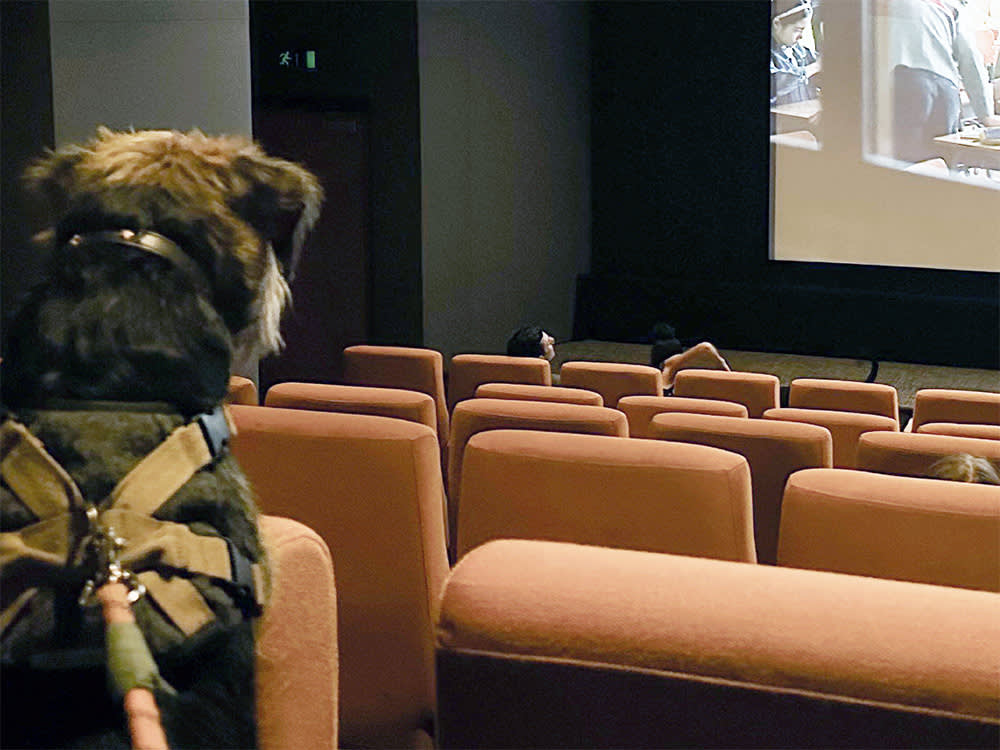
Somewhere in London this Sunday morning, a terrier is watching a movie. Not a novelty reel, not a pet-store screen loop, but an actual theatrical release in an actual cinema, sound lowered slightly for sensitive ears, its human eating popcorn one seat over. This is now a routine weekly event in the United Kingdom, and it started as a publicity-friendly experiment that nobody was sure would survive its first matinee.
American dog owners, meanwhile, are still mostly explaining to their pups why they smell like the multiplex.
From stunt to institution
The experiment began in the late summer of 2023, when the UK arthouse chain Curzon launched a program it called Dog Day Afternoons, letting dogs attend selected screenings with their owners. The opening film was almost too on the nose: Strays, the R-rated comedy about an abandoned terrier voiced by Will Ferrell. Curzon’s head of publicity reported that the first screening went off without incident, the dogs seemed to enjoy themselves and behaved, and the humans had a good time too, and the chain committed to regular dog screenings drawn from its normal programming rather than just dog-themed titles.
The rules Curzon set then still govern: dogs stay on the floor, or on a lap for the small ones, never on the seats. Bring your own toys. Clean up any accidents. And, in the program’s most quietly funny line, only well-behaved dogs may attend, a standard every dog owner believes their own dog meets.
Curzon was not actually first. The Picturehouse chain had been running dog-friendly screenings of new indies and old classics, One Hundred and One Dalmatians, naturally, and around the 2018 release of Wes Anderson’s Isle of Dogs, theaters on both sides of the Atlantic briefly encouraged canine plus-ones. Texas even had K9 Cinemas, a dedicated dog-and-movie venue in Plano, which has since closed. What Curzon added was persistence: a branded, recurring program at a mainstream chain, rather than a themed one-off.
Why it works over there
Part of the answer is cultural. British public life is broadly more dog-tolerant, with pubs, trains, and shops that admit dogs as a matter of course, so a cinema was less a leap than a logical extension. Part is programming: Sunday-morning slots mean quieter theaters, and modestly lowered sound makes the experience gentler for canine ears without ruining it for humans. And part is simple commercial honesty: dog owners are a loyal, underserved audience who will absolutely buy a ticket, a coffee, and a pastry to spend a rainy Sunday with their dog and a film.
For the dogs, the appeal is mostly the outing itself, proximity to their person, novel smells, other dogs. Though anyone who has watched their dog lock onto a screen knows some genuinely watch: one film writer noted her dog’s favorite movie, judged by sustained attention, was The Great Muppet Caper. Dogs contain multitudes.
The American almost
The closest the US has come to the Curzon model was a 2023 charity event in New York, when Animal Lighthouse Rescue, an organization that rehomes stray dogs from Puerto Rico, hosted a dogs-allowed screening of Strays at the AMC Lincoln Square. The event doubled as a fundraiser and adoption showcase, complete with a popcorn-and-drink deal, and organizers described both the theater and attendees as thrilled, with other moviegoers pleasantly surprised by the dogs and curious about the adoptable-dog profiles. It was framed as a trial, and the organizers openly hoped to repeat it.
But a repeatable program never materialized. Major American chains admit service animals only, and the liability, allergy, and cleaning questions that UK chains simply absorbed have so far kept US exhibitors on the sidelines. The drive-in remains the loophole, your car, your rules, your dog, and dog-friendly outdoor movie nights pop up seasonally in many cities. A weekly indoor program at a national chain, though, still does not exist in America.
What’s new since this was written
Dog Day Afternoons did not just survive, it scaled. As of 2026, Curzon runs the screenings as a weekly Sunday-morning fixture across at least nine venues, including Aldgate, Camden, Hoxton, Kingston, Victoria, Sheffield, Canterbury, Colchester, and Knutsford, with sound lowered for canine comfort and dogs welcome in the cinema café for an hour before and after the film. The program even picked up a sponsor, Animal Friends Pet Insurance, which pairs the screenings with its animal-charity giving.
That trajectory, from one-off stunt to sponsored weekly institution in under three years, is the strongest argument that the American theatrical dog date is a business plan waiting for a chain brave enough to try it. The audience exists, the template is proven, and the popcorn margins do not care who is holding the leash.
References
Sasha Ford is a certified cat behaviour consultant who has worked with shelters, catteries, and private clients across the country. They review all feline behaviour content at The Pet Times, with expertise in multi-cat households, indoor enrichment, and stress-related disorders.
Meet our experts ↗Keep reading
 LivingThe Dog Picked Me. My Partner Did the Work. I Have No Regrets.Nina Vasquez · 4 min
 LivingYour Dog Doesn't Love Grandma Because She's Family. Here's What They Respond ToLeila Torres · 6 min
 LivingA Disabled Girl's Service Dog Got Her Family Kicked Off a Flight. The Culprit Was One Checkbox.James Okafor · 4 min
 LivingConan's Cohost Let Her Husband Cut the Dog's Hair. Once.Leila Torres · 8 min
 LivingTraining Service Dogs Slowed These Veterans' Aging. At the Cellular Level.Dr. Nina Kohl · 4 min
 LivingThe Illustrator Who Built a Career on the One Thing Most Pet Portraits MissClaire Sutton · 5 min