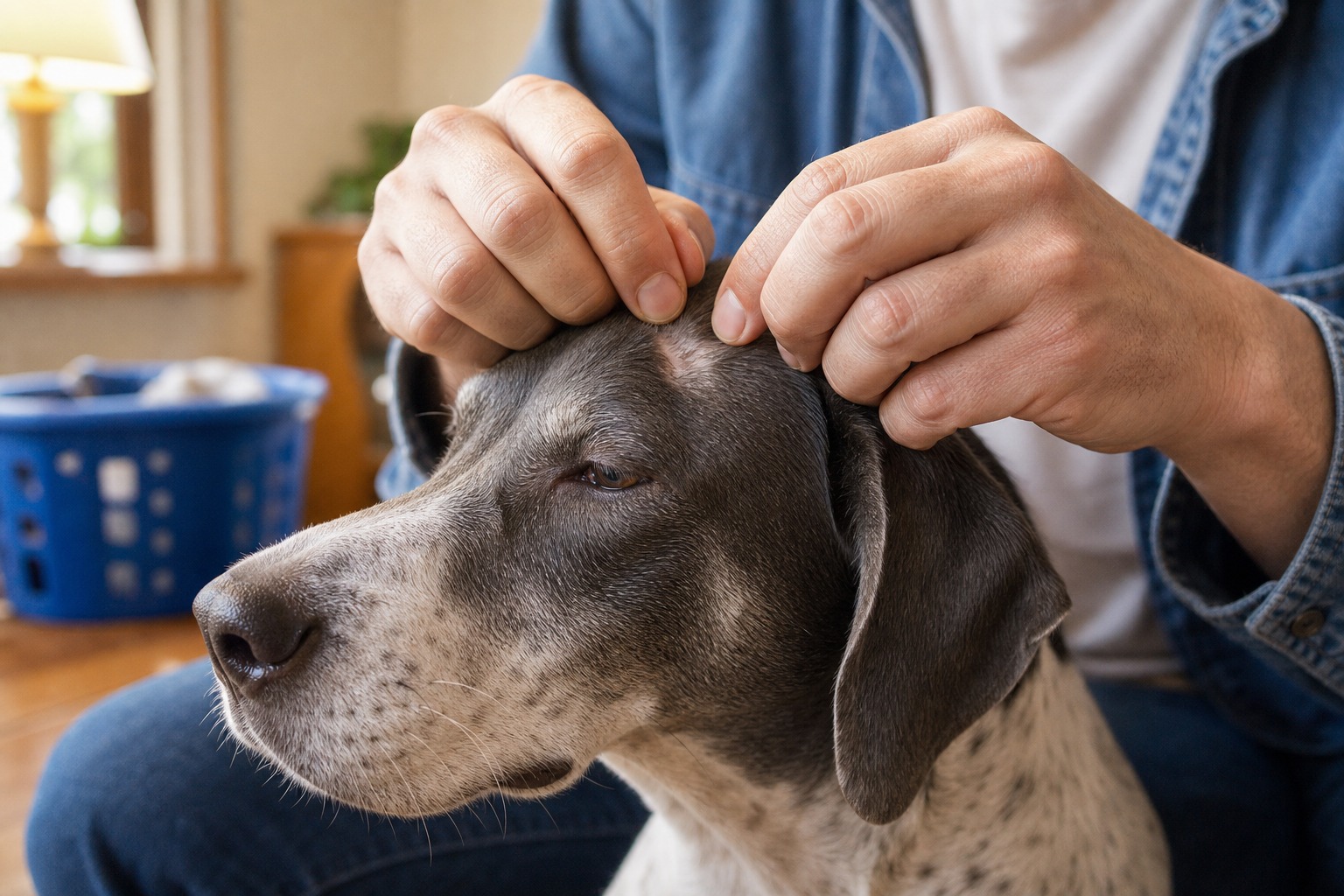

A dog gets clipped by a car, tumbles off the deck, or takes a hard shake in a scuffle, then trots off looking basically normal. That “looks fine” moment is the most dangerous part of a head injury, because the worst damage in a dog’s skull is often the damage you cannot see from the outside. Dogs absolutely get concussions and other head trauma, and the single most important thing to understand is this: after a significant blow to the head, the absence of obvious symptoms is not the same as the absence of injury. That is why the rule is not “watch and see.” It is “go now.”
What a concussion is, and what it isn’t
A concussion has a specific meaning: a temporary loss of consciousness caused by the brain moving rapidly inside the skull during trauma, with no visible damage to the skull or brain tissue. That makes it a mild brain injury, and usually not life-threatening on its own.
The problem is that the same force can cause much worse, and early on it all looks alike. Head trauma can mean skull fractures, brain swelling (edema), bleeding in or around the brain, or damage to the brain tissue itself. From the outside, a concussion and a brain bleed can present with the same first signs. Without advanced imaging like a CT scan, even a vet often cannot say for certain which one you are dealing with, and that uncertainty is exactly why every serious head injury gets treated as potentially serious until proven otherwise.
How dogs end up with head injuries
It takes real force to injure a brain, though less force in puppies and small-breed dogs. The common causes:
- Car accidents. Dogs hit by cars, or riding unsecured inside a car during a collision, are at high risk not just for concussion but for skull fractures, bleeds, and swelling.
- Dog fights. Head trauma is a real risk when there is a size mismatch and a larger dog can bite or violently shake a smaller one.
- Falls. A long fall from a balcony or deck is an obvious danger, but small dogs can also be hurt falling off a couch or counter or down the stairs inside the home.
- Freak accidents. Being stepped on, caught in a reclining chair or sofa bed, or other high-force mishaps.
The through-line is force. Any event with enough of it to snap a dog’s head around can injure the brain, whether or not there is a mark to show for it.
The warning signs
After a significant trauma, you or your vet may notice signs that point to head injury, though again, they rarely tell you which injury without testing:
- Loss of consciousness. With a concussion, a dog is typically out for 30 minutes or less. Longer suggests something more serious.
- Unequal pupil sizes (anisocoria). A potential sign of head or neck trauma, though it has other causes too.
- Rapid, flicking eye movements (nystagmus). Usually points to trouble in the balance centers of the brain.
- Pupils that don’t respond to light or movement. Head trauma can cause temporary or lasting blindness.
- Changes in gait. Falling, stumbling, circling, or being unable to walk at all.
- Lethargy. From altered consciousness, pain, shock, or other injuries.
- Vomiting. Common when balance is disrupted and the dog feels dizzy and nauseated.
- Seizures. Head trauma raises seizure risk both immediately and long-term.
“The mistake I see is an owner deciding their dog ‘seems okay’ an hour after a real hit and skipping the visit,” says Dr. Lena Park. “Brain swelling and bleeding can build slowly. A dog that walked away from a car strike can crash a few hours later. If the force was significant, I want to see them the same day even if they look normal, because normal-looking is not the same as uninjured.”
Why this is always a vet visit
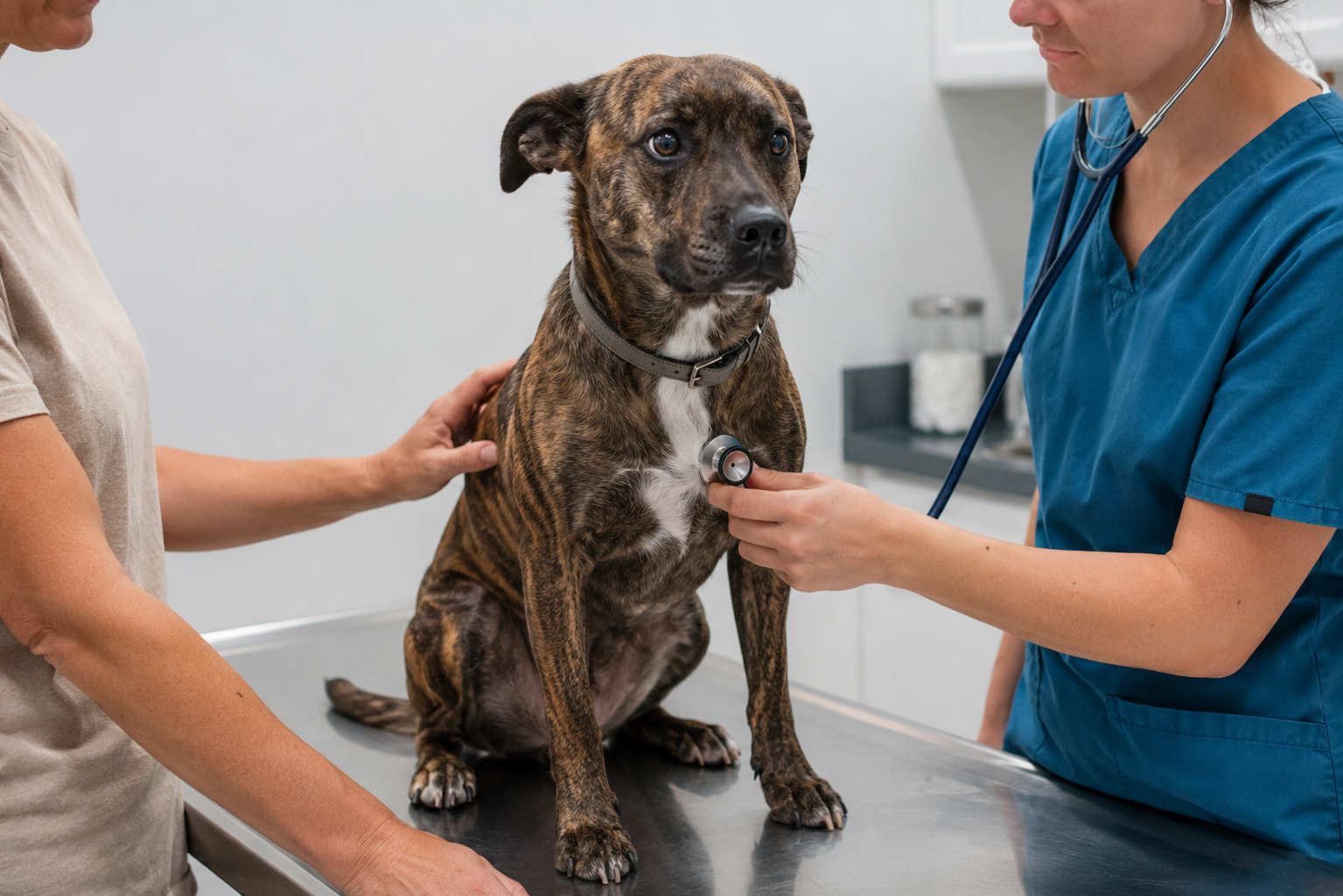
Two reasons. First, a dog hit hard enough to risk a concussion is often hurt in other ways too, bruised lungs, internal bleeding, broken bones, and those can be silent at first and deadly if missed. Second, the treatments that matter for head trauma, supplemental oxygen, strong pain control, anti-seizure medication, and measures to reduce brain swelling, require equipment and drugs no one has at home. Stabilizing and properly evaluating a head-injured dog simply has to happen at a clinic.
There is a related point worth holding onto: if you ever see neurological signs, changes in consciousness, stumbling, inability to walk, seizures, sudden vision loss, get your dog checked right away even if there was no obvious injury. Those signs signal a problem that needs attention regardless of whether a concussion is the cause.
Getting your dog there safely
Once you have decided to go, and you should, a few things make the trip safer:
- Elevate the head gently. If you can, have your dog lie on their side and raise the head about 30 degrees with a towel or blanket to help blood flow and limit swelling. Keep the neck straight, not kinked, and extend the head and neck gently if the dog allows.
- Reduce stimulation. Head-injured dogs are often sensitive to light and sound. Keep the car quiet and dim.
- Nothing by mouth. If your dog is not fully conscious, do not offer food, water, or medication; they could choke.
- Assume other injuries. If your dog cannot walk or is not fully alert, they may have fractures you cannot see. Handle them as little and as gently as possible, and move them with a carrier, a firm blanket, or a sling.
The reassuring part
Here is the good news buried in all the caution. Dogs with mild head trauma, a true concussion, tend to bounce back quickly, often within 24 to 48 hours. If your dog is examined, cleared of the more serious injuries, and shows steady improvement over that first day or two, the odds of a full recovery are good. The urgency is not because concussions are usually fatal; it is because you cannot know from the couch whether it is “just” a concussion, and the injuries that hide behind the same symptoms are the ones that kill.
The bottom line
Yes, dogs get concussions, and yes, they recover well from mild ones. But because head trauma can hide serious damage that looks identical at first, any significant blow to the head is a same-day emergency, even if your dog seems fine. Watch for the neurological warning signs, move an injured dog gently and calmly, and let a vet do the ruling-out that you cannot do at home. When it comes to a dog’s brain, “seems okay” is a reason to go, not a reason to wait.
References
- Sande, Amy, and Cheryl West. “Traumatic Brain Injury: A Review of Pathophysiology and Management.” Journal of Veterinary Emergency and Critical Care, vol. 20, no. 2, 2010, pp. 177-190, https://doi.org/10.1111/j.1476-4431.2010.00527.x.
- DiFazio, Jennifer, and Daniel J. Fletcher. “Updates in the Management of the Small Animal Patient with Neurologic Trauma.” Veterinary Clinics of North America: Small Animal Practice, vol. 43, no. 4, 2013, pp. 915-940, https://doi.org/10.1016/j.cvsm.2013.03.002.
- Centers for Disease Control and Prevention. “About Traumatic Brain Injury.” CDC.gov. Accessed 2 July 2026, https://www.cdc.gov/traumatic-brain-injury/about/.