


Homemade Dog Toothpaste Is Solving the Wrong Problem
People obsess over what to put on the brush. But for a dog, the paste is a garnish, and a DIY one can be poison. The brush is the medicine. Here's what actually cleans your dog's teeth, and the ingredients that can hurt them.

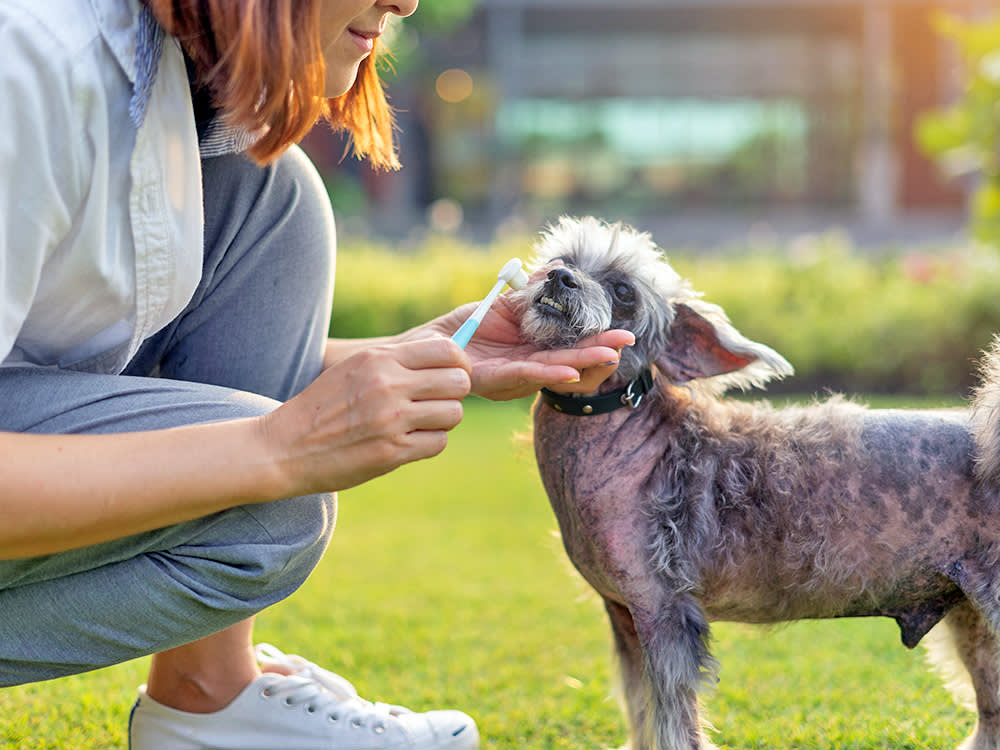
Search “homemade dog toothpaste” and you’ll fall into a rabbit hole of recipes, coconut-oil this and baking-soda that, each promising fresher breath and whiter teeth. It’s an appealing project. It’s also aimed at the wrong target.
Here’s the reframe that makes the whole question simpler: toothpaste is the least important part of brushing your dog’s teeth. Store-bought or homemade, it’s a garnish. The brush is the medicine. And once you understand that, the case for whipping up a DIY paste mostly collapses, because you’d be taking on real risk to improve the one ingredient that matters least, while the free, safe thing that matters most, the brushing itself, is already sitting in the drawer.
Dogs don’t actually need toothpaste
Straight answer: no, dogs don’t need it. In fact, very few dog toothpastes have been tested to prove they reduce plaque or slow gum disease, so a lot of them aren’t especially effective or necessary in the first place.
What the research does strongly support is brushing. Running the bristles along the teeth and gumline works mainly through mechanical action, the friction of the brush physically scrubbing plaque away, and that friction is what protects your dog’s mouth. Which means you can brush your dog’s teeth with a dry brush and no paste at all and still be doing the thing that counts.
The brush is doing ninety percent of the work, and the paste is doing the flavoring. When people tell me they’ve stopped brushing because they ran out of dog toothpaste, I want to gently shake them, because they had the important part the whole time.
Why homemade paste is a risk, not a hack
The appeal of a DIY paste is control over the ingredients. The problem is that homemade recipes have never been studied in dogs for safety, effectiveness, or toxicity, and plenty of things humans happily brush with are dangerous to a dog. Never assume a recipe meant for a human mouth is fine for a canine one.
Remember, too, that when we brush, we spit and rinse. Dogs don’t spit, gargle, or rinse on command, or at all, so every ingredient you put on that brush gets swallowed. Whatever you use has to be safe to eat and safe against the tissues of the mouth and throat. On top of that, homemade pastes usually skip the preservatives that keep a product shelf-stable, which leaves them open to contamination by bacteria and fungi that can make your dog sick.
The ingredients to keep out of your dog’s mouth
Homemade recipes typically pair an abrasive to scrub the teeth with something to freshen breath or whiten. Several common ones are genuinely hazardous if swallowed or irritating to the delicate mouth and throat:
- Baking soda can cause vomiting, diarrhea, and neurologic signs if enough is ingested.
- Salt, in enough quantity, is toxic.
- Essential oils like wintergreen and peppermint can be toxic to dogs.
- Xylitol, the artificial sweetener, is dangerous to dogs even in small amounts (much more on this below).
- Coconut oil, a popular recipe base, is fine in modest amounts for certain dogs, but as a high-fat oil it can trigger digestive upset, from vomiting and diarrhea up to more serious pancreatitis in susceptible dogs.
How to choose a store-bought toothpaste instead
If you want a paste, buy one with evidence behind it rather than mixing your own. The Veterinary Oral Health Council (VOHC) runs a review system for dental products; to earn the VOHC Accepted seal, a product has to pass specific trials showing it controls plaque and tartar without ingredients that cause harm. Looking for that seal is a reliable way to know a product cleared a real bar, though the review is voluntary, so plenty of products on the shelf have never been rigorously tested at all.
Beyond the seal, read the ingredient list for anything unsafe to swallow, and skip flavors your dog is allergic to. Finding a flavor your dog actually likes can take trial and error, so buying a couple of sample sizes to test is worth it.
What makes brushing work: showing up
The most effective brushing comes down to two things, consistency and cooperation. Daily brushing delivers the biggest benefit, and daily only happens if you build it into your routine so it doesn’t slip, ideally at a set time each day.
Cooperation is arguably the harder half. Brushing has to be a positive experience, or your dog will bolt the moment the brush appears. Many dogs dislike the sensation at first, which also makes it tough to do a thorough job, so go slow, build up gradually, and make it as pleasant as you can.
How to actually brush your dog’s teeth
When you first brush your dog’s teeth, start before the brush ever goes in the mouth: let them sniff, taste, and gently mouth the brush and paste. If they hate the taste of the paste, drop it and work with the brush alone. If the brush itself is a hard sell, tempt them by dabbing something tasty on it, a thin smear of xylitol-free peanut butter, a little wet dog food, or any soft treat they love, and if needed, start with just your finger and graduate to the brush over several sessions. The basic routine:
Step one. Let your dog sniff and lick the brush and paste, rewarding each interaction. Don’t push if they seem nervous or fearful. This might be as far as you get for the first few days, and that’s fine; end on a positive note. A few minutes a day, repeated, adds up to progress.
Step two. Bring the brush, or just your fingertip, to touch the teeth and gums gently, beginning at the upper canines, the big teeth toward the front. If your dog is okay with that area being touched, brush the tooth and gumline in small circles, layering on praise and treats so it reads as fun.
Step three. As your dog relaxes into it, expand to all the teeth, working around the mouth and focusing on the outer surfaces and the gumline where tooth meets gum. Always use gentle pressure to avoid hurting the mouth. If your dog has existing dental problems or reacts to certain spots, check with a vet on how to work with them.
How often, and what brushing can’t do
Daily is the goal, both to maximize the benefit and to help your dog get used to the routine, and lots of repetition plus positive reinforcement speeds the adjustment. That said, even a few times a week makes a real difference, so do your best.
Be clear-eyed about the limits, though: home brushing does not replace professional dental care. Nearly all dogs develop some dental disease over time even with regular brushing, and some, especially small breeds, are more prone to gum disease and may still need frequent professional cleanings. Heavy chewers can wear down, chip, or fracture teeth on hard objects, which also needs professional care. And many problems simply can’t be seen in a routine exam, because a thorough oral evaluation means probing every tooth and reading dental X-rays for trouble hiding below the gumline. What home brushing buys you is preventive: healthier teeth and gums for longer, fewer professional cleanings, and when your dog does need one, often a less invasive and less expensive visit.
What’s new: the peanut butter trap has a new name
Here’s a current wrinkle that makes the “keep xylitol out” warning more urgent than it used to be, and it hooks directly into the trick above of using peanut butter to win a dog over. Xylitol is increasingly labeled as “birch sugar” on ingredient lists, along with other stealth names like wood sugar and birch bark extract, and it turns up in some specialty and “healthier” peanut butters, the exact product people reach for to coat a toothbrush. A label that says “birch sugar” is telling you there’s xylitol inside, even though the scary word never appears.
This isn’t a fringe worry. Xylitol was among the most common dog-poisoning calls to helplines in both 2024 and 2025, with case numbers running well above where they were at the start of the decade. So before any peanut butter goes near your dog’s brush, read the full ingredient list and rule out xylitol under all its aliases. The safest peanut butters are plain ones whose only ingredients are peanuts and maybe salt.
Bottom line
Homemade dog toothpaste is unproven at helping and capable of hurting if it carries a toxic ingredient. The good news is the same as it’s always been: brushing your dog’s teeth is highly effective even with no paste at all. Either brush with a VOHC-Accepted product, or skip the paste entirely and just brush, daily, with a plain brush and a lot of patience.
References
- Allan, R.M., et al. “Prospective Randomised Blinded Clinical Trial Assessing Effectiveness of Three Dental Plaque Control Methods in Dogs.” Journal of Small Animal Practice, vol. 60, no. 4, 2019, pp. 212–217.
- Veterinary Oral Health Council. “Accepted Products and Submission Protocols.” vohc.org.
- U.S. Food and Drug Administration. “Paws Off Xylitol; It’s Dangerous for Dogs.” fda.gov.
- American Kennel Club. “The Dangers of Xylitol (Birch Sugar) for Dogs.” akc.org.
Common questions
Is baking soda safe for dogs?
No. If a dog swallows enough baking soda it can cause vomiting, diarrhea, and neurologic signs like tremors and seizures, and dogs swallow whatever you brush with.
Is human toothpaste safe for dogs?
No. Human toothpaste is made to be spat out, which dogs can't do, so they ingest all of it. Many human toothpastes contain ingredients toxic to dogs, including baking soda, xylitol, and fluoride.
What can I use instead of toothpaste for a dog?
A dry toothbrush and nothing else cleans teeth effectively. If you need to entice your dog, smear on a little xylitol-free peanut butter, some wet dog food, or any soft treat they love.
Not a substitute for your vet. Our guidance is educational. For urgent symptoms, contact a vet or emergency clinic right away. Editorial standards
Dr. Park is a board-certified emergency and critical care specialist. She reviews our health and safety content for clinical accuracy and contributes guides on recognising urgent conditions. Her focus is helping owners act quickly and correctly when it matters most.
Meet our experts ↗Keep reading
 Health & Wellness'Dog Breath' Isn't Normal. It's the First Symptom of a Disease You Can PreventDr. Lena Park · 9 min
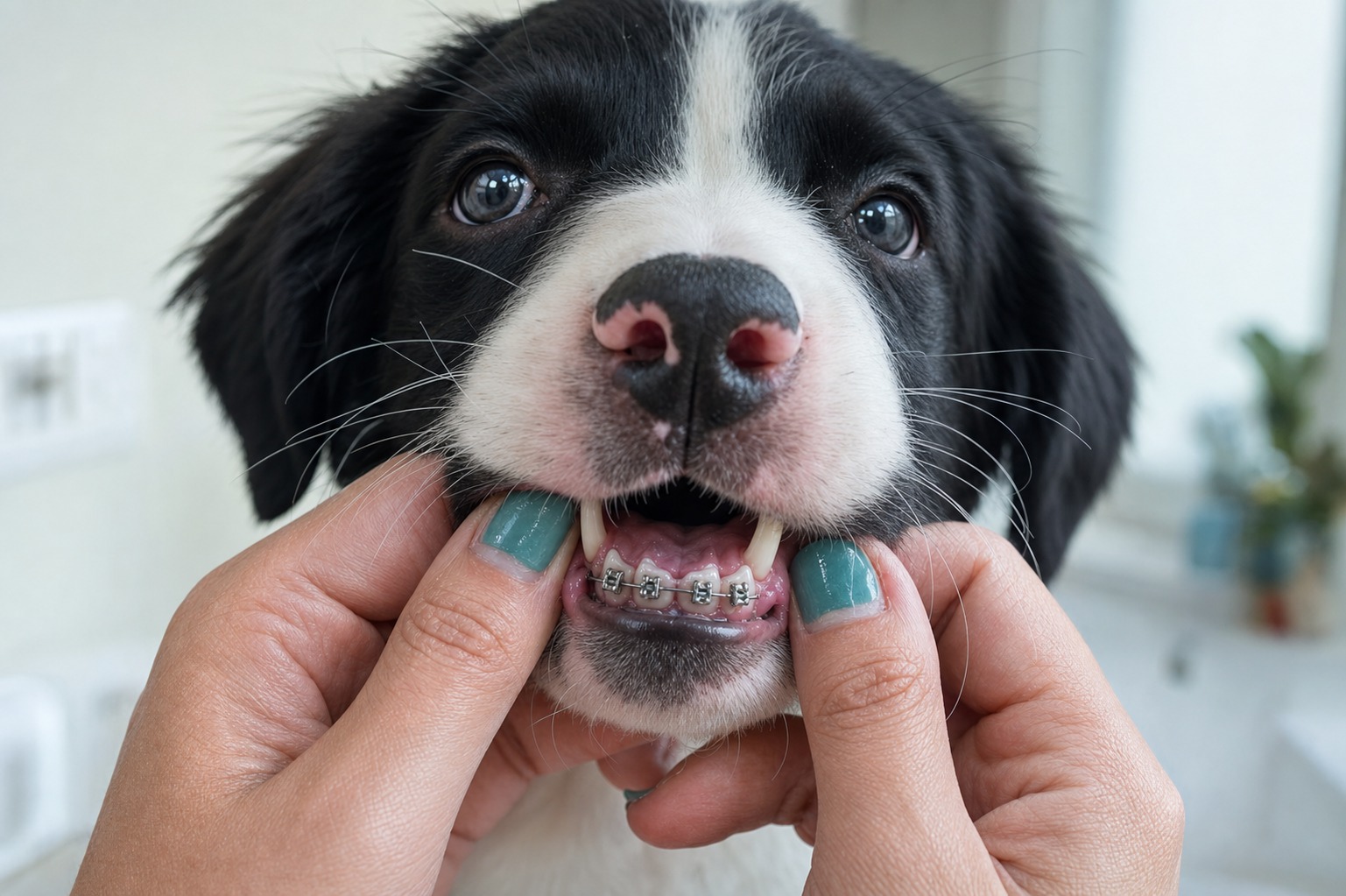 Health & WellnessYour Dog Doesn't Need Straight Teeth. It Needs a Bite That Doesn't HurtDr. Mara Chen · 8 min
 Health & WellnessMost Dog "Longevity" Supplements Are Guesswork. 9 That Aren't.Dr. Priya Nair · 11 min
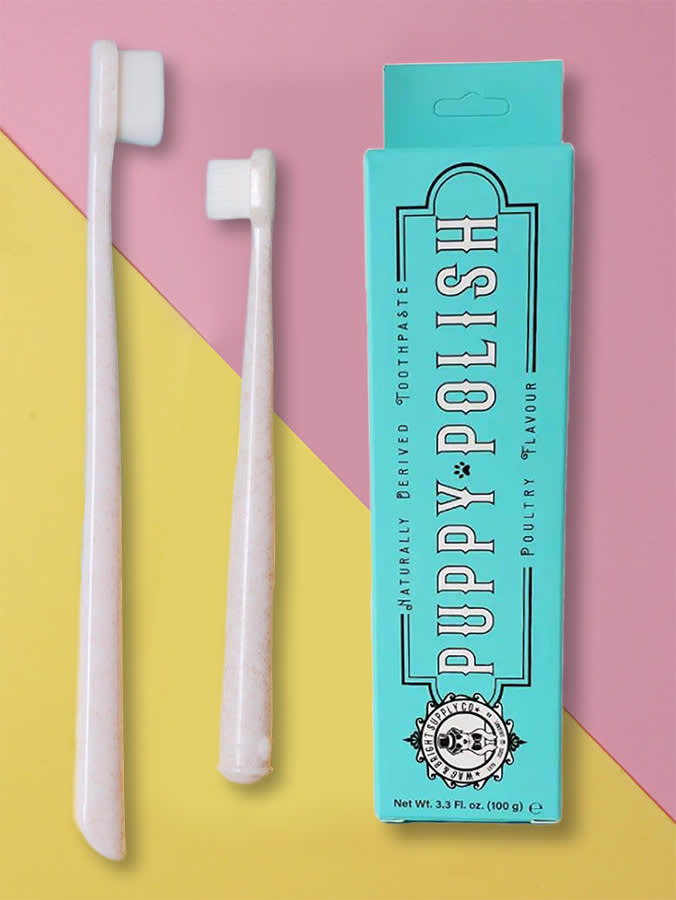 Product PicksYou Didn't Fail at Brushing Your Dog's Teeth. You Started at the Wrong End.Dr. Mara Chen · 7 min
 Health & WellnessYour Dog's Bad Breath Is a Medical Report, Not a Personality TraitDr. Priya Nair · 6 min
 Health & WellnessBrush the Ones You Want to Keep: The Dog Dental Rule Nobody Says Out LoudDr. Nina Kohl · 6 min