


Scientists Built an ADHD Test for Dogs. The Catch Is What It Measures.
Researchers have created the first standardized way to screen dogs for ADHD-like traits, and its clever move is borrowed straight from how we diagnose people: it doesn't just count symptoms, it asks whether they're actually wrecking the dog's daily life.

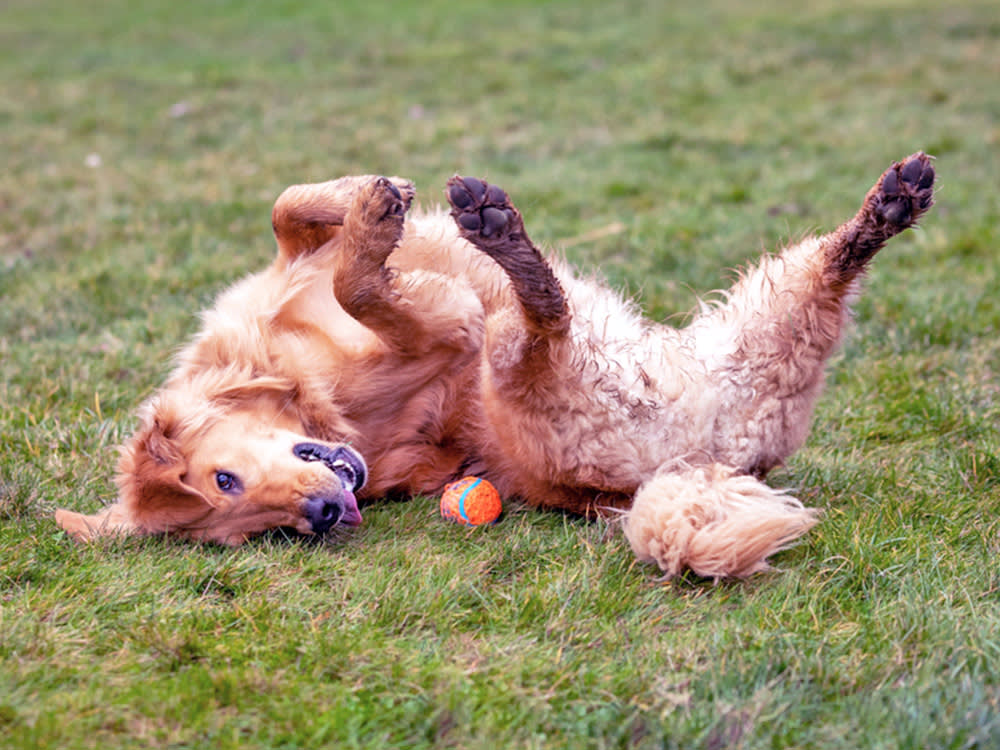
Ask around and plenty of dog owners will half-joke that their pup “has ADHD,” the one who can’t settle, forgets a cue mid-sentence, and vibrates through the house at random. For years the honest answer from experts has been a gentle correction: ADHD is a human diagnosis, and while dogs can absolutely show inattentive, hyperactive, and impulsive behavior, there was no real yardstick to say whether a given dog crossed any meaningful line. That yardstick now exists, and the interesting part isn’t that it counts twitchy behaviors. It’s what else it insists on measuring.
A team of Hungarian ethologists has developed the first standardized system for screening family dogs with suspected ADHD, built to follow the same logic clinicians use for people. The tool is called the Dog ADHD and Functionality Rating Scale, or DAFRS, and its whole design turns on a single idea that most casual “my dog is so ADHD” talk skips right over.
Symptoms aren’t the whole test. Impairment is.
In human diagnosis, having symptoms is not enough. Lots of people are occasionally distractible, restless, or impulsive without meeting the bar for ADHD. What separates a personality quirk from a disorder is functional impairment, whether those traits actively interfere with getting through a normal day. The Hungarian researchers built that same requirement into DAFRS. A dog isn’t flagged just for being a lot; they’re flagged when the behavior is genuinely getting in the way of ordinary life.
Mechanically, the scale rates two things side by side: how strongly a dog shows common ADHD-type behaviors, and how much those behaviors disrupt the dog’s day-to-day functioning. Under the published system, a dog earned an “at risk” label only by reaching a score of at least 26 points on the symptom side while also showing a noticeable problem in at least one functional area. Both boxes have to be checked. High-energy alone doesn’t do it.
What the study actually found
The research, published in 2025 in Scientific Reports, analyzed 1,872 family dogs and their owners. When the criteria were applied, just over four percent of the dogs, 79 of them, met the at-risk threshold. That number lands in an oddly familiar place: it’s close to the prevalence reported in human adults with ADHD, though notably lower than the rates seen in children and adolescents.
The researchers are careful about what that four percent means, because owner perception muddies the water in both directions. Some people don’t recognize genuinely severe symptoms in their dogs, while others are simply more observant and flag more. To reduce the odds of mislabeling an ordinary behavior problem as ADHD, the team’s approach folds in outside input where possible, including from a dog’s trainer, so a diagnosis rests on more than one person’s read of a single dog on a single day.
It’s worth keeping the earlier science in view here, too. Even before this scale, studies had found that roughly one in five dogs displays hyperactivity, inattention, and impulsivity, the three core traits, to some degree. What was missing was a consistent way to sort everyday liveliness from something that rises to the level of a disorder. That’s the gap DAFRS is built to close.
What it means if your dog is the wild one
Before anyone panics, a reality check: there’s no sign the general public can book this screening any time soon, and a bouncy dog is not a diagnosis. DAFRS is, for now, a tool aimed at research and veterinary practice, a way to standardize a question owners and clinicians have been asking without a shared vocabulary.
If your dog genuinely struggles to focus or settle, the practical playbook doesn’t wait on a formal label anyway. Keep training sessions short and end them before frustration sets in. Pair training with calming, brain-engaging activities like scent work, which lets a busy mind do a satisfying job. And when a session starts to unravel, build in a break or drop back to an easier skill for the day rather than pushing through. Those adjustments help a distractible dog whether or not they’d ever score into the at-risk range.
What I like about this scale is that it forces the right question, which is not ‘is my dog energetic’ but ‘is this energy costing my dog a good life.’ A dog who zooms around the yard and then settles is thriving. A dog who can’t eat, can’t rest, and can’t get through a walk without coming apart is telling us something else. Measuring the impairment, not just the behavior, is exactly how we avoid slapping a heavy label on a dog who’s simply full of joy.
For now, the takeaway is less a diagnosis than a mindset. The next time your dog can’t sit still, the useful thing to notice isn’t how much they move. It’s whether all that motion is getting in the way of the life they’re supposed to be enjoying.
References
- Csibra, Barbara, et al. “Development of a human-analogue ADHD diagnostic system for family dogs.” Scientific Reports, 2025, nature.com.
- Csibra, Barbara, et al. “Development of a human-analogue, 3-symptom domain Dog ADHD and Functionality Rating Scale (DAFRS).” Scientific Reports, 2024, nature.com.
- Department of Ethology, Eötvös Loránd University (ELTE). “Diagnostic system developed for identifying ADHD-suspected dogs.” Phys.org, 2025, phys.org.
Dr. Park is a board-certified emergency and critical care specialist. She reviews our health and safety content for clinical accuracy and contributes guides on recognising urgent conditions. Her focus is helping owners act quickly and correctly when it matters most.
Meet our experts ↗Keep reading
 Health & WellnessFifteen Seconds Is Grooming. A Minute Is a Symptom.Dr. Mara Chen · 7 min
 Health & WellnessYour Dog Has a Mirror Behind Each Eye. It's Why They See at Night, and Why They See Worse Than You.Dr. Nina Kohl · 7 min
 TrainingYou're Not Reading Your Dog. You're Reading the Room Behind Him.Dr. Ravi Mehta · 7 min
 TrainingYour Dog Curls Its Lip and Chatters Its Teeth. It's Reading a Smell You Can't.Dr. Priya Nair · 5 min
 TrainingYou're Not Breaking Up a Fight. You're Interrupting a Conversation.Dr. Nina Kohl · 9 min
 TrainingYour Dog Isn't Being Possessive Over That Toy. They're Doing Math.Dr. Amara Solis · 8 min