


Your Dog Curls Its Lip and Chatters Its Teeth. It's Reading a Smell You Can't.
That weird upper-lip curl after a deep sniff isn't a snarl or a glitch. It's the flehmen response, a dog opening a second, hidden nose. What it means, why dogs do it subtly, and the one time it's worth a vet visit.
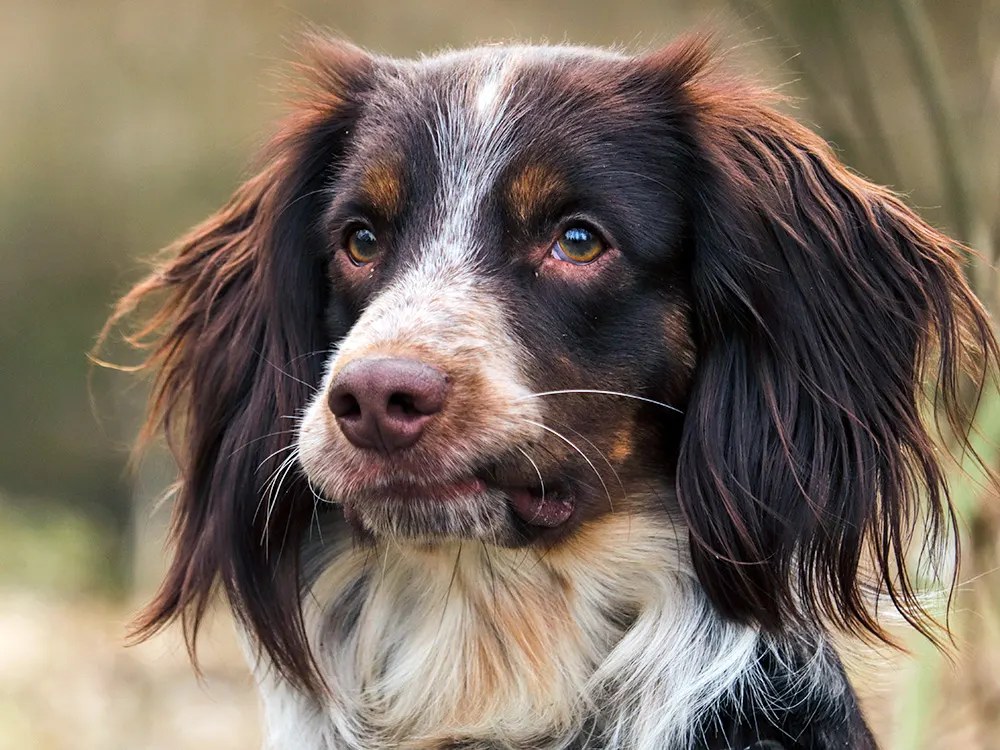
You’ve almost certainly seen it and filed it under “my dog is weird.” Your dog buries its nose in a patch of grass, another dog’s rear, or a fence post, then lifts its head, opens its mouth a little, and curls its upper lip back to bare its top teeth, maybe with a bit of teeth-chattering or drool thrown in. It looks like a tiny, confused snarl. It isn’t. That expression is your dog switching on a second sense of smell you don’t have, and once you know what it is, the weirdness turns into something kind of amazing.
The behavior is called the flehmen response, from a German word meaning to bare the upper teeth. Far from being a quirk, it’s a piece of specialized biological machinery, and dogs share it with horses, cats, goats, and a long list of other mammals. Here’s what’s actually happening in your dog’s face.
The hidden organ doing the work
To understand the lip curl, you have to know about an organ most people have never heard of. On top of their already-legendary sense of smell, dogs have an extra olfactory structure called the vomeronasal organ, also known as Jacobson’s organ, tucked in the nasal cavity, with a duct that opens up on the palate right behind those front teeth.
This organ has one specialty: detecting pheromones, the chemical signals animals use to influence one another’s behavior. It’s wired directly to the brain, which is why the information it gathers gets processed fast and deep. Pheromones do heavy lifting in dog life, they’re central to a male dog reading whether a female is ready to mate, to a mother dog calming and bonding with her puppies, and to puppies identifying their mom. The vomeronasal organ is the receiver tuned to that channel.
Why the lip has to curl
So where does the funny face come in? The flehmen response is essentially the delivery mechanism. By raising the head, curling back the upper lip, and opening the mouth, a dog helps drive scent and pheromone particles up toward that vomeronasal opening in the roof of the mouth. From there, the particles get processed and the signal is routed straight to the brain. The lip curl, in other words, is a dog physically steering a smell toward a specialized organ, the way you might cup your hand behind your ear to catch a faint sound.
The reason it’s most associated with reproduction is simple: that’s the vomeronasal organ’s main beat. An intact male will use the flehmen response to pull a female’s pheromones into the organ to gauge whether she’s receptive. But reproduction isn’t the only trigger. Dogs also flehmen when investigating a urine marking or working through any other especially intense, information-rich scent. If your neutered dog does it, it’s most likely puzzling out another dog’s urine; if your intact dog does it, they may have caught the scent of a female in heat.
People love the idea that dogs ‘see’ the world through their nose, and the flehmen response is that idea made visible. It’s the dog telling you, in body language, that a smell is worth a second, closer read. When I explain to owners that their dog is essentially routing a scent to a dedicated pheromone sensor, the goofy lip curl suddenly makes total sense, and they start noticing it everywhere.
Why your dog’s version is so subtle
If you’ve never been sure you’ve seen your dog do this, there’s a reason. Dogs are surprisingly understated performers of the flehmen response. Where a horse, cow, or goat will fling its head up and hold that curled-lip pose dramatically for several seconds, a dog might offer nothing more than a lifted head and a briefly focused, faraway expression.
The difference is anatomical. Compared with a goat’s or horse’s, a dog’s upper lip sits tighter against the face and bends far less, so you won’t get the same theatrical curl. What you may catch instead is the teeth-chattering or the drooling that can accompany it. So if you’ve been missing your dog’s flehmen moments, you probably just didn’t know the subtle version counts.
The one time to take it seriously
For the most part, a lip curl after a good deep sniff is completely benign, just your dog processing something interesting, and it needs no intervention. The important caveat is context. If your dog chatters its teeth, smacks its lips, drools, or makes strange lip movements when they haven’t just been smelling something, don’t file it under flehmen and move on.
Those same movements, absent the sniff that explains them, can be signs of a real problem, a seizure, a neuromuscular issue, or dental disease among them. The rule of thumb is straightforward: flehmen has an obvious scent trigger and passes in a few seconds. Repeated or unexplained teeth-chattering, lip-smacking, or drooling deserves a vet’s look. Read the context, and you’ll almost always know which one you’re seeing.
The bottom line
Plenty of dog behaviors we write off as quirky are actually elegant biology in action, and the flehmen response is a perfect example. That curled lip and those chattering teeth are a dog opening a dedicated pheromone-reading channel, driving scent molecules toward the vomeronasal organ to squeeze extra information out of an especially interesting smell. It’s normal, it’s fascinating, and it’s one more reminder that your dog is experiencing a layer of the world you’ll never directly access, right there on the other end of the leash.
References
Common questions
Is the flehmen response normal in dogs?
Yes, completely normal in both intact and neutered dogs. It's most associated with investigating other dogs' urine or, in intact dogs, detecting a female in heat. It's a sign of a dog analyzing a scent, not a health problem.
When should the lip curl worry me?
If a dog chatters its teeth, smacks its lips, or drools when it hasn't just been sniffing something, don't assume it's flehmen. Those signs can point to a seizure, a neuromuscular issue, or dental disease, and are worth a vet check.
Dr. Nair is a veterinarian focused on diet and feeding. She covers everyday nutrition, treats, and the many "can they eat this?" questions owners ask, grounding each answer in what is actually safe and sensible for dogs and cats.
Meet our experts ↗Keep reading
 TrainingYour Little Dog Isn't Peeing More Because of a Tiny Bladder. It's a Bluff.Dr. Amara Solis · 7 min
 Health & WellnessYour Old Dog Staring at the Wall Is Veterinary Medicine's Most Missed DiagnosisDr. Nina Kohl · 8 min
 TrainingYour Stress Has a Smell. Your Dog Just Made a Decision Based on It.Dr. Lena Park · 7 min
 TrainingYour Dog's Sad Face Is a Muscle Wolves Don't Have. It Evolved to Work on You.Dr. Ravi Mehta · 8 min
 TrainingThat's Not Your Dog's Eye. It's Their Third EyelidDr. Nina Kohl · 8 min
 Health & WellnessSnow Zoomies Come With a Countdown. Almost Nobody Starts the Clock.Dr. Mara Chen · 7 min