


That's Not Your Dog's Eye. It's Their Third Eyelid
The unnerving flash of white when your dog naps usually isn't an open eye at all. Here's the anatomy behind it, how dog sleep really works, and the symptoms that mean call the vet.

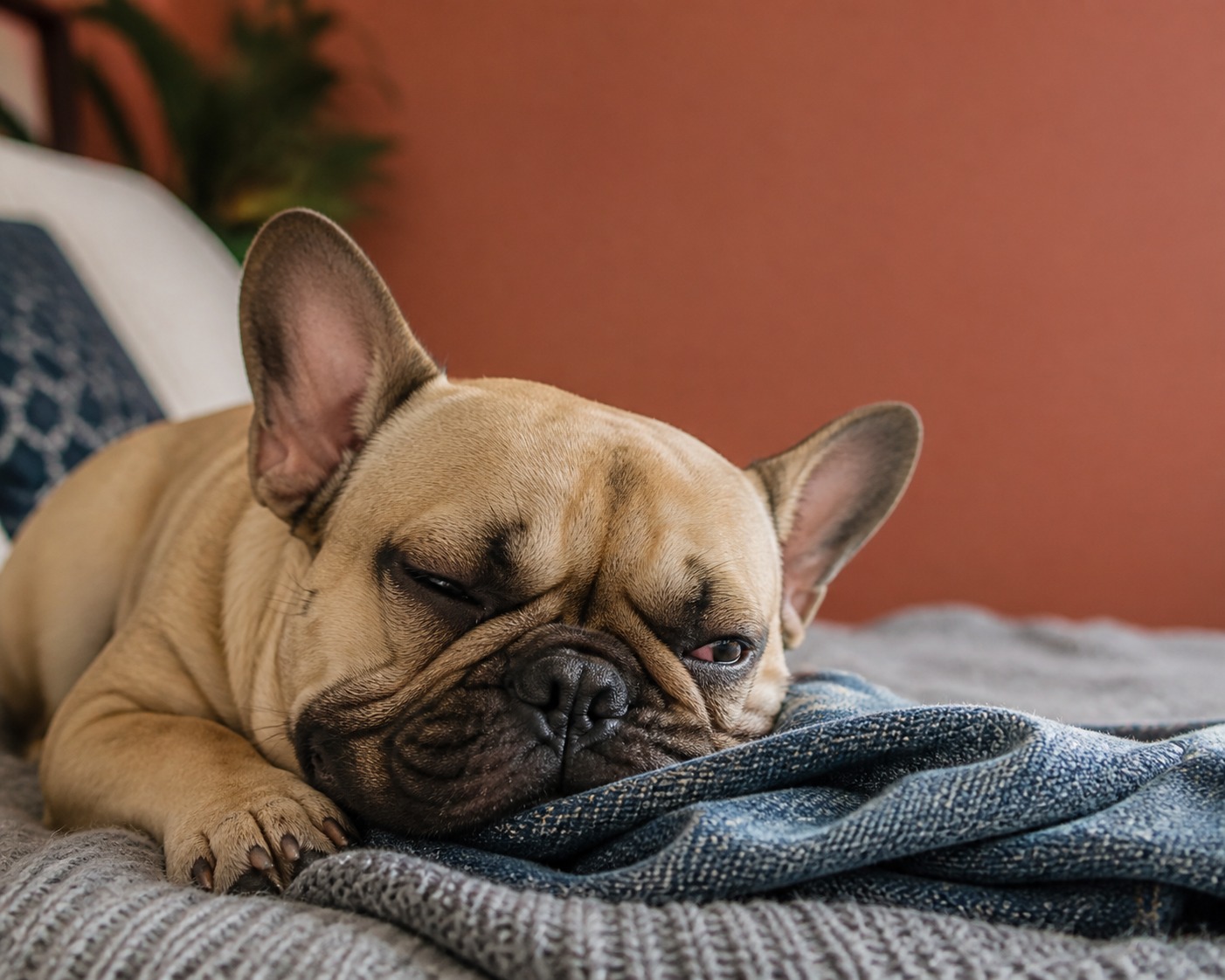
The first time you catch your dog “staring” while fast asleep, body limp and snoring but eyes seemingly open and glassy, it can stop you cold. Here is the reassuring twist that most explanations skip: in the majority of cases, you are not looking at an open eye at all. You are looking at your dog’s third eyelid. Once you know that structure exists and what it does, the whole eerie sight makes sense, and you can tell the harmless version from the rare one that deserves a vet’s attention.
The part most explanations miss: the third eyelid
Dogs have a structure people don’t: a nictitating membrane, commonly called the third eyelid. It sits tucked in the inner corner of each eye and sweeps horizontally across the surface like a windshield wiper, spreading tears and clearing dust and debris. It is more than a wiper, too. The gland attached to it produces a large share of the tear film, so it is doing real work to keep the eye healthy and moist.
Here is why it matters for sleep. When a dog drops into deep sleep, the eyeball often rolls back in the socket, and as it does, the semi-transparent third eyelid can be drawn up and stay partly across the eye. From the outside you see a pale, pinkish, or whitish film where the eye should be, and it reads as “eyes open.” The dog’s actual eyelids may be shut the whole time. In other words, the unsettling look is frequently not an open eye at all but a normal membrane caught mid-sweep by the rolled-back eye beneath it.
There is a second, simpler cause in some dogs: the outer lids just don’t fully seal when the face relaxes, leaving a genuine gap. Dogs with longer muzzles or more prominent eyes are likelier to show this. Either way, on its own, it is anatomy, not illness.
How dogs actually sleep, and why the eyes get caught open
Dogs don’t move through sleep the way we do. Like us, they cycle between rapid eye movement (REM) sleep, when most dreaming happens, and quieter non-REM stages. But the rhythm is very different: dogs drop off fast, surface often, and dip back down all night.
Just how restless that is comes through in a classic 1993 study in Applied Animal Behaviour Science. Tracking dogs across an eight-hour stretch, researchers found the dogs woke and fell back asleep 23 separate times. Each sleep run averaged about 16 minutes, broken by roughly five minutes of wakefulness. As the authors put it, the sleeping-and-waking pattern in dogs was quite different from ours; we consolidate sleep into long blocks, while dogs sprinkle it across the day in short bursts.
That fragmented rhythm is part of why a dog can look asleep with the eyes open and actually be in a brief window of near-alertness, hovering between sleep and waking with the eye already partly uncovered before sliding back under. During REM specifically, the muscles relax deeply while the brain stays busy, which is exactly when you’ll also see twitching, paddling paws, and soft woofs, and when a relaxed lid or a rolled eye is most likely to leave that gap.
Are they dreaming?
Almost certainly, at least some of the time. Those twitches, paw paddles, and muffled noises are the signatures of a dreaming dog. What they’re dreaming about, a squirrel, a treat, a long sniff down the block, we’ll never know. And if watching makes you want to curl up beside them, there’s real upside to napping alongside your dog for both of you.
When it shows up more often
Eyes-open sleep is normal, but it can become more frequent in certain dogs: an older dog, a blind dog, or a dog who is unwell. That doesn’t mean a senior who snoozes with the eyes cracked is sick. It means that if you already know your dog is under the weather, a bit more eyes-open sleeping isn’t surprising and, by itself, isn’t alarming.
The symptoms that do warrant a vet visit
Here is where to pay attention. The open-eyed look is benign, but it can occasionally sit next to something that isn’t. Contact your vet, promptly in some cases, if you notice:
- Disorientation on waking. If your dog seems lost, not themselves, or falls over on getting up, that can point to a seizure rather than ordinary sleep. Don’t wait on this one.
- Red, irritated, or discharging eyes. Goopiness, redness, or visible irritation suggests an eye problem, not a sleep quirk, and the third eyelid staying up while your dog is awake can itself signal irritation or pain. Have it looked at.
- Falling asleep at odd times or places. Sudden, out-of-character sleepiness is worth investigating.
- A sudden change in the pattern. If your dog abruptly starts sleeping with the eyes open, or you notice new, excessive twitching, vocalizing, restlessness, or signs of discomfort, take a closer look.
If you’re ever unsure, gently rouse your dog. Wake easily and act normal, and you can relax. Seem off, and trust that instinct and call.
Most of the time, the flash of white when a dog naps is the third eyelid doing exactly what it’s built to do while the eye rolls back in sleep. The thing to watch isn’t the open-eyed look itself but the company it keeps: disorientation, a red or weepy eye, or a sudden shift in how your dog sleeps. Those are your cues to pick up the phone.
Helping your dog get genuinely good rest
Since the open-eyed look is usually nothing to fix, the best move is to support quality rest overall:
- Build in real downtime. Rest matters as much as stimulation. A dog who gets enough quiet, undisturbed sleep is steadier and healthier.
- Wear them out. Physical exercise and mental enrichment during the day buy a deeper snooze later.
- Set the scene. A cozy bed in a calm spot helps. Some owners add a low-key playlist or a gentle naptime massage for an anxious or wired dog.
What newer research adds
Sleep scientists have started studying dogs with the same non-invasive brain-monitoring tools used in human sleep labs, and the picture is striking. Recent polysomnography work confirms dogs move through drowsiness, non-REM, and REM stages much like we do, and that their sleep quality is surprisingly sensitive to their day and surroundings. A 2025 study found family dogs sleep worse, with less deep sleep, when their owner isn’t present. Other recent work shows a stressful daytime experience can reshape a dog’s sleep that night, shifting how much time they spend in REM.
The everyday takeaway is encouraging: your dog’s sleep is real, complex, and worth protecting. A predictable routine, enough exercise, and a calm place to rest near the people they love genuinely shape how well your dog sleeps, third eyelid showing or not.
References
- Adams, G. J., & Johnson, K. G. (1993). Sleep-Wake Cycles and Other Night-Time Behaviours of the Domestic Dog Canis familiaris. Applied Animal Behaviour Science, 36(2–3), 233–248.
- Animals (2025). Family Dogs’ Sleep Macrostructure Reflects Worsened Sleep Quality When Sleeping in the Absence of Their Owners: A Non-Invasive Polysomnography Study.
- VCA Animal Hospitals. “The Third Eyelid in Dogs.”
- Merck Veterinary Manual. “Disorders of the Third Eyelid in Dogs.”
Common questions
Do all dogs sleep with their eyes open?
No. Some dogs show the third eyelid or a gap in the lids regularly, others never do. Dogs with longer muzzles or more prominent eyes tend to show it more. It is an individual quirk, not a rule.
Should I take my dog to the vet for sleeping with their eyes open?
Only if something else seems off. Red or goopy eyes, waking up disoriented or falling over, or a sudden change from your dog's normal pattern are worth a call. The open-eyed look on its own is normal.
How can I tell if my dog is dreaming?
Look for twitching, paddling paws, soft whimpers or woofs, and eye movement under the lids. Those are the classic signs of REM sleep, when dreaming happens.
Dr. Kohl is a board-certified veterinary dentist with a particular interest in preventive oral care. She reviews all dental health content at The Pet Times and contributes practical guides on home dental routines, professional cleaning, and oral disease prevention.
Meet our experts ↗Keep reading
 Health & WellnessA Longer Walk Won't Fix This. 7 Signs Your Dog Is Under-Exercised.Dr. Amara Solis · 9 min
 LivingTwo Years, Two Best in Show Winners, Two Sets of Cut-Off Ears. That's Not a Coincidence.Dr. Ravi Mehta · 11 min
 Health & WellnessYour Dog Licking Your Feet Is Harmless. The Cream on Your Skin Isn't.Dr. Ravi Mehta · 6 min
 TrainingThe Myths About 'Aggressive' Dogs Are Getting Good Dogs KilledDr. Amara Solis · 8 min
 Health & WellnessYour Dog Has a Mirror Behind Each Eye. It's Why They See at Night, and Why They See Worse Than You.Dr. Nina Kohl · 7 min
 TrainingStop Asking Why Your Dog Scratches the Carpet. Ask Where.Dr. Nina Kohl · 7 min