


Do Dogs Pick Up Your Accent? The Science Is Weirder Than the Viral Videos.
A husky 'speaking Italian' broke the internet. Two canine researchers explain what's actually plausible about dogs mimicking how we sound, and where the cute theory runs into a dog's anatomy.
Affiliate disclosure. This article contains affiliate links. We may earn a small commission if you buy through a link, at no extra cost to you. How we handle recommendations.
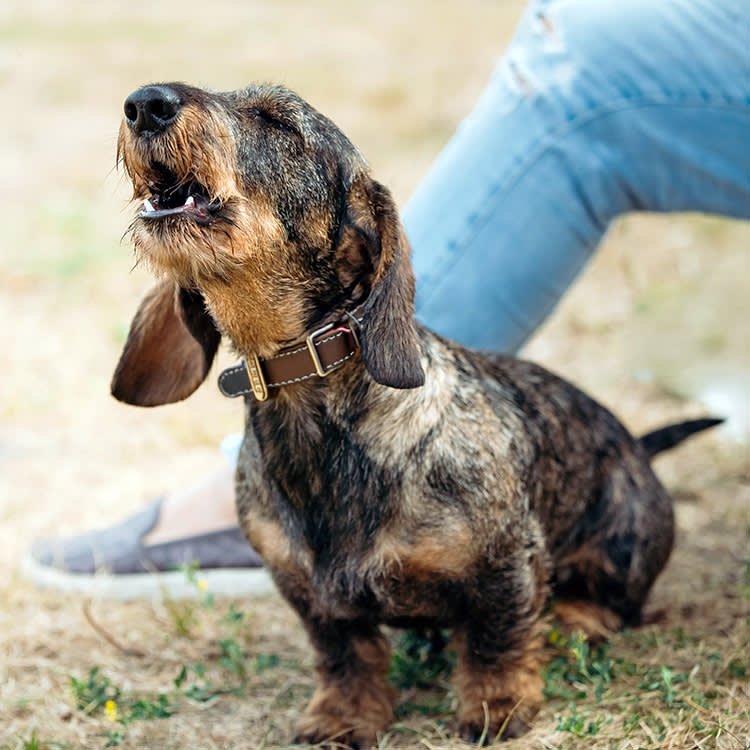
Every so often a clip goes viral of a dog that appears to be talking with a regional accent, a husky “chatting” in what sounds uncannily like Italian, say, and the internet loses its collective mind. The instinct is to call it a fluke, or a bit of clever editing. But the more interesting question underneath the memes is a real one that researchers are willing to entertain: can a dog actually pick up the way its humans sound? The answer is a qualified, fascinating “sort of,” and the limits are dictated less by intelligence than by the shape of a dog’s face.
The honest version: some truth, heavy on the “some”
No major research institution has funded a proper study on canine accents, so nobody can hand you a peer-reviewed verdict. What you can get is informed speculation from people who study dog cognition for a living, and they don’t dismiss it out of hand.
Dogs obviously have no concept of what an accent is. But a huge amount of dog behavior is built on responding to, and sometimes imitating, their humans. Dogs are known to mimic other human behaviors, so the idea that some vocal imitation might sneak in too isn’t far-fetched. Researchers who work on canine intelligence describe this as the missing link in the logical chain: we know dogs copy us in many ways, we just haven’t proven they copy the sounds we make. Pressed to guess, some lean toward thinking it’s plausible, precisely because so much of what dogs do is rooted in echoing their people as a way of bonding.
There’s a longer-standing observation in this space too. Stanley Coren, the psychologist and author of the classic How to Speak Dog: Mastering the Art of Dog-Human Communication, has noted that some dogs do seem to impersonate the sounds around them, with Nordic breeds like huskies being especially prone to it, though all breeds do it to some degree. The anecdote that sticks: a Standard Poodle whose owner always came home with a bright, singsong “Hellooooo,” and who eventually began imitating that cheerful greeting.
Why your dog will never actually sound like you
Here’s where charm meets anatomy. As delightful as a dog with a Southern drawl would be, it can’t fully happen, and the reason is physical.
Dogs are poorly equipped to make consonant sounds, because the lower part of their face isn’t built to be as flexible and mobile as ours. What they can do is land on the vowels and, more importantly, the cadence, the rise and fall and rhythm of speech. So a dog “accent,” to whatever extent it exists, would live in melody and timing, not crisp pronunciation. It’s also, by the researchers’ own admission, probably not something we’ll ever cleanly measure.
There’s more shaping a dog’s voice than mimicry, too. Physiology sets the baseline, bigger dogs produce lower sounds, and the structure of the mouth and the space above the vocal cords colors the rest. Intent factors in as well. Dog vocalization has been described along three dimensions: pitch, where lower tends to read as more threatening; duration, where longer sounds tend to be more deliberate; and repetition, where a sound repeated a few times usually carries more meaning than a one-off.
“What people are really noticing in these videos is that dogs match our prosody, our rhythm and intonation, not our words,” says Dr. Nina Kohl. “A dog raised in a chatty, expressive household often vocalizes in a more expressive, back-and-forth way, because that’s the conversational music they’ve marinated in. It isn’t an accent in the human sense, but it isn’t nothing, either.”
The bigger question hiding inside the small one
The accent debate opens onto something researchers genuinely wonder about: do dogs raised in different cultures behave differently? When findings come out of labs all over the world, it’s worth asking whether we’re seeing something true of all dogs or something shaped by a particular local way of living with them.
It’s plausible, if unproven, that a dog raised in a more communal, collectivist environment might show more prosocial, helping-oriented behavior than one raised in a more individualistic setting. There’s no direct evidence yet, it’s a hypothesis waiting for a study, but it reframes the accent question as part of a bigger one about how much of a dog’s “personality” is really a reflection of the human world it grew up in.
The takeaway
So, do dogs have accents? Not in the way a Bostonian or a Glaswegian does. But the notion that dogs subtly echo the sound-world of their households, catching our cadence, our pitch, our conversational rhythm, is more credible than the skeptics assume and more limited than the viral clips suggest. Until someone funds the husky-accent study the internet clearly deserves, the doggie brogue stays in the delightful realm of “possible.” Which, honestly, is a pretty good place for it.
References
- Coren, S. How to Speak Dog: Mastering the Art of Dog-Human Communication. Free Press. https://www.amazon.com/How-Speak-Dog-Mastering-Communication/dp/074320297X?tag=tpt281408-20
- Occidental College Canine Intelligence Lab. https://www.oxy.edu/academics/canine-intelligence-lab
- Fugazza, C., et al. “Social learning and imitation in dogs.” Scientific Reports, 2021. https://www.nature.com/articles/s41598-021-90776-5
Jordan Ellis is a certified professional dog trainer with a decade of experience working with rescue organisations and private clients. They specialise in anxiety, reactivity, and positive reinforcement methods, and review all training and behaviour content at The Pet Times.
Meet our experts ↗Keep reading
 TrainingYour Dog Knows You're Coming Home. It's Smelling Time Pass.Dr. Mara Chen · 5 min
 TrainingYour Reactive Dog Can't 'Settle.' Stop Asking and Give Them a Job.Dr. Mara Chen · 8 min
 TrainingYour Dog Isn't Being Possessive Over That Toy. They're Doing Math.Dr. Amara Solis · 8 min
 TrainingYour Dog Isn't Trying to Dominate You. They're Overwhelmed.Dr. Ravi Mehta · 7 min
 TrainingYour Dog Tolerates Your Hugs. That's Not the Same as Liking Them.Dr. Ravi Mehta · 7 min
 TrainingYour Dog Licking Itself Is Normal. Until One Spot Becomes a Full-Time Job.Dr. Amara Solis · 7 min