


Crufts Just Crowned Its Best Dog. The Handler's Past Became the Story.
A Clumber Spaniel named Bruin won Best in Show at Crufts 2026. Within hours, the win was overshadowed by his handler's decades-old animal cruelty conviction, and by a bigger question the dog show keeps dodging.
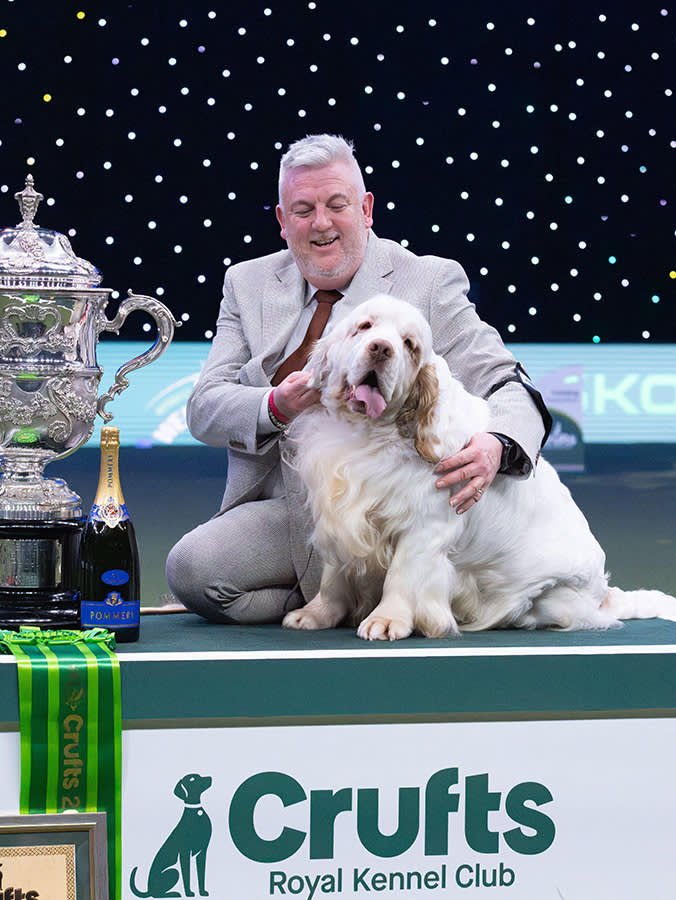
There is a version of the Crufts 2026 story that is pure feel-good. A Clumber Spaniel named Bruin, a heavy, drowsy-eyed breed that one British magazine once nicknamed the “sad clown dog,” beat out more than eighteen thousand competitors to take Best in Show at the world’s largest dog show. It was the first Best in Show for the breed since 1991. On paper, a lovely upset.
That version lasted about a day.
Almost as soon as Bruin’s win was announced on March 8, 2026, at the Birmingham arena, reporting surfaced that the dog’s breeder and handler, Lee Cox, had been convicted of animal cruelty in 2001. And that is where the real story of Crufts 2026 lives, not in the ribbon, but in how a welfare organization handles a welfare conviction sitting inside its own winners’ circle.
What Cox was actually convicted of
The facts are not in dispute, because Cox’s own governing body confirmed them. In September 2001, following a three-day trial at Sedgemoor Magistrates Court in Somerset, England, Cox was convicted of causing unnecessary suffering to a black Cocker Spaniel named Adam. Adam had a chronic ear infection so severe and so neglected that the ear ultimately had to be amputated.
The dog was found at Cox’s former breeding facility, Kaston Kennels. The RSPCA inspector who visited the property, Jo Daniel, told the court that the dogs there were in shocking condition, and that finding an animal in Adam’s state anywhere would have been bad, but finding it in the care of internationally known breeders was worse. Cox and his business partner were prosecuted. Cox received a three-year conditional discharge and was ordered to pay £5,000.
That was 25 years ago. It is also, factually, an animal cruelty conviction held by the person who just won the biggest prize in the dog-showing world.
The Kennel Club’s answer, and why it lands awkwardly
The Royal Kennel Club, which runs Crufts, did not dodge the conviction. It confirmed it. But its framing is worth reading closely, because it tells you how the institution thinks.
The club characterized the case as a one-off from a quarter-century ago, pointed to what it described as a spotless record and real contributions to the dog world in the decades since, and said its disciplinary committee had already weighed the matter and concluded that the court’s conditional discharge did not rise to the level of disqualification. In other words: we looked at this, we decided a quarter-century of clean conduct outweighs it, and we are comfortable.
Reasonable people can land in different places on that. A conditional discharge is the low end of criminal sentencing, and people do change over decades. But the discomfort, and the reason animal-welfare groups like PETA seized on it, is structural. Crufts sells itself as a celebration of responsible dog ownership. When the human holding the top trophy carries a cruelty conviction, the event’s core message and its winners’ circle are, at minimum, in tension. The show is asking the public to separate the dog from the handler at the exact moment it puts them on a podium together.
The bigger blind spot nobody put on the podium
Here is the part that gets lost in the conviction headlines, and it matters more for the average dog than any single handler’s record.
Bruin is a Clumber Spaniel. Clumbers are a heavy, low-slung, deeply built breed with a large head, loose facial skin, and drooping eyes that can leave the haw (the inner eyelid) exposed. That look is exactly what wins in the ring. It is also associated with real health costs: entropion and ectropion (eyelids that roll in or sag out), a tendency toward weight and joint strain, and the general burden that comes with exaggerated conformation. Show success rewards the very features that a welfare-first breeding program might try to soften.
“When we breed an animal toward a particular silhouette, the ribbon and the vet bill often point in the same direction,” says Dr. Priya Nair. “The show ring can’t help selecting for a look, and with a lot of these older working breeds the look and the health problem are the same trait. That’s the conversation I wish these wins started, instead of ending.”
That is the welfare blind spot Crufts keeps not talking about. A handler’s 2001 conviction is a clean, nameable villain. The slower, quieter issue, that the aesthetic being crowned can itself carry a health tax, implicates the whole enterprise, so it rarely makes the post-show coverage.
What newer research adds
The direction of travel in canine welfare science is toward conformation, not away from it. Long-running work at institutions like the UK’s Royal Veterinary College, through its VetCompass program, has repeatedly linked exaggerated body types to shorter, harder lives, most famously in flat-faced breeds, but the logic extends to any breed bred toward an extreme. The Kennel Club itself now runs “Respect for the breed” and Breed Watch programs that flag “points of concern” in show dogs, including eye and eyelid problems in breeds like the Clumber, which is a quiet admission that the ring and the dog’s health can pull apart.
None of that erases Bruin’s win or settles the question of Cox’s past. It just reframes what the story of Crufts 2026 was really about. The conviction is what people argued about. The shape of the winning dog is what will actually be passed down.
References
- Crufts 2026 Best in Show winner: Bruin the Clumber Spaniel — Royal Kennel Club
- Crufts ‘Best in Show’ winner previously convicted of animal cruelty — LBC
- Crufts Scandal: Winner’s Animal Cruelty Conviction — PETA UK
- Breed Watch and points of concern — The Kennel Club
- VetCompass programme — Royal Veterinary College
Jordan Ellis is a certified professional dog trainer with a decade of experience working with rescue organisations and private clients. They specialise in anxiety, reactivity, and positive reinforcement methods, and review all training and behaviour content at The Pet Times.
Meet our experts ↗Keep reading
 Living55 Dogs, One Business License: The Arizona Case That Exposes a Rescue LoopholeJames Okafor · 5 min
 LivingNobody Meant to Have 100 Dogs. That's How It Always Starts.Nina Vasquez · 5 min
 LivingThe Cheapest Way to Empty a Shelter Is the One Nobody UsesJames Okafor · 6 min
 LivingHe's Fostered Almost 40 Pit Bulls. The Stigma Is the Only Thing He Can't Rehome.Leila Torres · 8 min
 LivingA Former Ringling Clown Is Rewriting the Pit Bull's Reputation, One Hoop at a TimeMarcus Webb · 5 min
 LivingBritain Banned a Dog That Officially Doesn't ExistJames Okafor · 7 min