


55 Dogs, One Business License: The Arizona Case That Exposes a Rescue Loophole
A Chandler 'rescue' hoarded 55 dogs behind nothing more than a business license. The real scandal isn't one arrest, it's that private citizens had to do the regulating the law never required.

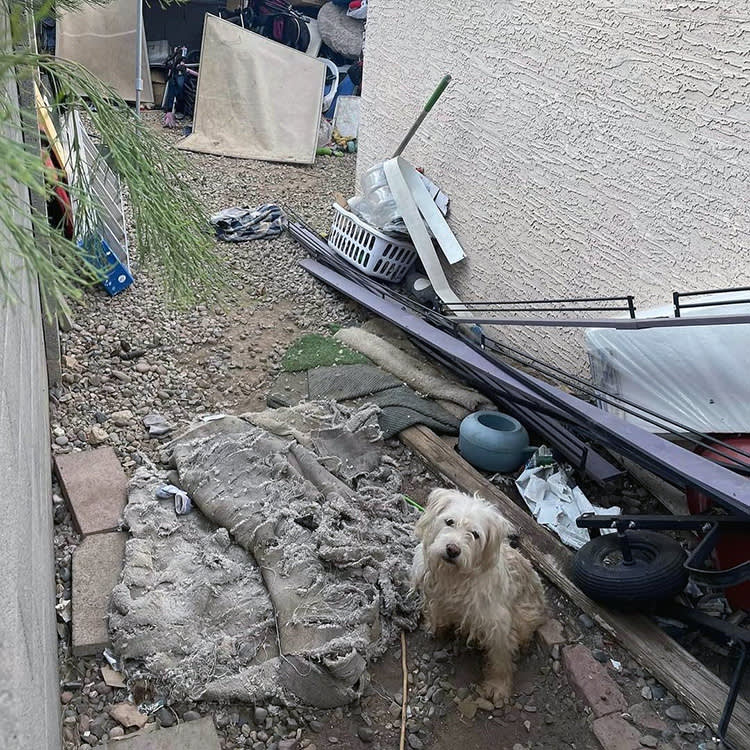
The headline number was 55: the count of living dogs pulled from a house in Chandler, Arizona, in September 2023. But the number that actually explains how this happened is one. One business license. That, plus a self-applied label reading “rescue,” was the entire legal apparatus standing between April McLaughlin and the 55 special-needs dogs stacked in cages up to seven feet high across her bedrooms, kitchen, garage, and yard. This is not, at its core, a story about a single cruel person. It is a story about a legal vacuum, and about the ordinary people who had to step into it because no agency would.
The loophole at the center of it
Start where the coverage usually ends, with the regulation, because it is the part that makes the rest possible. There is no federal law governing animal rescue and foster programs in the United States. None. Oversight is left entirely to states, counties, and cities, and a large share of them have simply declined to write any. Arizona is one of them: opening an animal shelter there requires a business license and nothing more, no facility inspection, no cap on animal numbers, no welfare standard to meet.
That gap is not theoretical. It is the mechanism. A person can accumulate dozens of animals, call the operation a rescue, solicit donations and transfers from other groups, and remain entirely invisible to any regulator until the situation collapses into a criminal case. Arizona had already lived through a version of this years earlier, when police seized dozens of cats and dogs from an abusive Phoenix shelter, and the same structural problem, anyone can hang out a shingle, went unfixed.
When there’s no regulator, citizens become the regulator
Because the state built no tripwire, private individuals had to be the tripwire. For months before any search warrant, a loose network of animal advocates documented and amplified concerns about McLaughlin, who reportedly operated under several aliases, and pushed a brewing class-action effort from people and organizations who said they had firsthand bad experiences with her.
The reach of that informal enforcement was remarkable. A Texas rescue that had transferred two of its special-needs dogs to McLaughlin grew alarmed at later photos showing the animals looking frail, drove to Arizona to check in person, and posted evidence of neglect online when they found it. That is the work an inspection regime is supposed to do, done instead by volunteers with a car and a phone.
When the law doesn’t require anyone to look, the only people looking are the ones who care enough to make it their unpaid second job. These advocates functioned as an ad hoc inspection system. That’s admirable, and it’s also an indictment, because it means an animal’s safety came down to whether a stranger happened to notice and refused to let it go.
The formal response, a search warrant, came only after police received information from a veterinary professional about the condition of three dogs. Many of the advocates allege that both local police and the regional humane society had been notified of the abuse months earlier and did not act, an accusation that continues to fuel anger around the case.
The scene the loophole allowed
By the time officials entered, the conditions were horrific. Neighbors had complained for some time about a powerful stench and nonstop barking. “It smells like dead animals, and there are flies in my front yard, in my house, in my backyard,” one neighbor told a local outlet. “It’s ridiculous, and the dogs bark 24/7.”
Inside, responders reported dogs in kennels stacked as high as seven feet, packed into both bedrooms, the kitchen, garage, living room, bathroom, by the front door, and out back. The smell was strong enough that firefighters wore breathing apparatus. Fifty-five living dogs were removed. Five deceased puppies were found in a freezer. In a detail that stunned advocates, the regional humane society later reported euthanizing five of the rescued dogs, and advocates seized on that outcome as they pressed for the survivors to go to safe foster homes rather than be put down.
Accountability that matches the loophole
The legal response has felt, to many following the case, as thin as the regulation that enabled it. All 110 counts against McLaughlin, 55 for animal abuse and 55 for cruelty, plus one count of vulnerable adult abuse because her elderly mother lived in the home, are misdemeanors. A judge set bail at just 2,500 dollars in cash. Asked by police how it had gotten so bad, McLaughlin reportedly said she saw nothing wrong with storing food next to the dead animals in the freezer, and that she had been running the rescue for about a year and had simply taken on too many dogs. A system that requires nothing on the front end tends to deliver little on the back end.
What it means when you adopt
The practical lesson is not to distrust rescue, which remains one of the best ways to bring an animal home. It is to distrust the word “rescue” as a guarantee, because legally it guarantees nothing. Do the diligence the state doesn’t: ask to see where animals are housed, look for real medical and adoption records and nonprofit registration, and search the operator’s name. Support the organized, persistent advocates who keep cases like this from vanishing into silence, since under the current patchwork they are frequently the only oversight that exists.
And if you do bring home a dog from a situation like this one, know that the trauma is real but rarely permanent. Dogs’ responses to hardship vary as widely as people’s do, and with patience, a predictable routine, and the right support, most settle and thrive. The 55 who got out of that Chandler house were failed by a system designed to never notice them. What they needed next was people determined to.
References
- Animal Legal & Historical Center, Michigan State University. “Laws Regulating Rescue and Foster Care Programs for Companion Animals.” animallaw.info
- ASPCA. “State Animal Cruelty Laws.” aspca.org
- Patronek, Gary J. “Hoarding of Animals: An Under-Recognized Public Health Problem in a Difficult-to-Study Population.” Public Health Reports, vol. 114, no. 1, 1999, pp. 81–87. doi.org/10.1093/phr/114.1.81
Common questions
Is it legal to start an animal rescue with no oversight?
In much of the United States, effectively yes. There is no federal law regulating rescue and foster programs, and many states, Arizona among them, do not require a permit or inspection to open a shelter beyond a standard business license.
How can I tell a legitimate rescue from a bad actor?
Ask to see where the animals are housed, look for transparent adoption and medical records, check whether the group is a registered nonprofit, and search the operator's name for complaints or lawsuits. Legitimate rescues welcome scrutiny; bad actors resist it.
What should I do if I suspect a rescue is abusing animals?
Document what you can, report it to local animal control and police, and contact your state's department of agriculture. In this case, sustained, organized reporting by many people is what finally forced action.
James Okafor covers rescue, adoption, and the causes shaping animal welfare. His work follows the people and organisations working to give more pets a home, and the issues owners and advocates care about most.
Meet our experts ↗Keep reading
 LivingRetired War Dogs Come Home With the Same Wounds Their Handlers DoJames Okafor · 7 min
 LivingL.A. Just Slammed the Brakes on New Dog Breeding. Here's the Fight Behind It.James Okafor · 4 min
 LivingThe Pentagon Spent $1 Million Testing Drugs on Beagles. Congress Just Cut It Off.Marcus Webb · 4 min
 LivingA Bystander's Phone Was the Only Thing Between These Dogs and DeathNina Vasquez · 4 min
 LivingOne Sleepover Makes a Shelter Dog 14 Times More Likely to Get AdoptedLeila Torres · 5 min
 LivingA Storm, a Deadline, and 200 Dogs: Inside a Frantic Mississippi RescueNina Vasquez · 4 min