


A Constipated Dog Usually Needs Water, Not a Vet. Here's How to Tell the Difference
Most mild dog constipation clears with more water, a little fiber, and a walk. The hard part is spotting the version that is actually a blockage or a medical emergency. A vet breaks down the home fixes and the red lines.

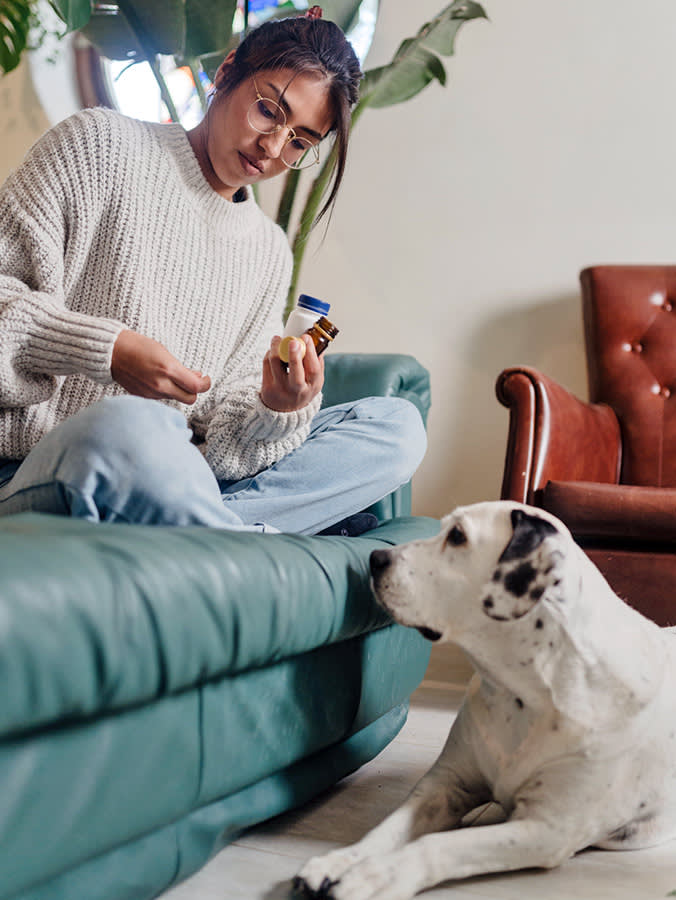
Dogs get backed up sometimes, just like the rest of us. A day or two of mild constipation is common, usually harmless, and often fixable with things already in your kitchen. So the goal of this piece is not to panic you. It is to give you two skills: the small, cheap measures that get most dogs moving again, and the ability to recognize the far less common situation where “constipated” is actually a medical emergency in disguise.
Because here is the thing that trips people up. The dog straining in the yard and producing nothing might be mildly stopped up and in need of a walk and some water. Or they might have swallowed a sock that is now stuck. Same posture, wildly different stakes. Knowing which is which is the whole game.
First, make sure it is actually constipation
Constipation means difficulty passing stool, or not passing it at all. The signs are fairly specific: pooping less often than normal, producing small, hard, dry stools, holding a hunched squatting posture for a long stretch with little or nothing to show for it, or crying out while trying to go, which points to pain.
The common mix-up is with diarrhea. A dog with diarrhea often keeps straining after passing loose stool, which looks a lot like constipation to a worried owner. This is why your dog’s recent history matters more than a single moment in the yard. If the last few days have brought less stool, not more, and it is coming out hard and dry, constipation is the likely culprit.
What causes it, from the trivial to the serious
Causes run along a spectrum, and where a case sits on that spectrum decides how worried to be.
The most important one to rule out first is a swallowed object. Eating something that cannot pass, a sock, underwear, a chunk of a toy or its stuffing, sand, plastic, is one of the most common reasons a dog stops producing stool, and it is the one that can turn dangerous fast. If you saw your dog eat something they should not have, or something has gone missing and your dog is straining, vomiting, or off their food, skip the home remedies and call your vet now.
The gentler causes are the ones you can usually manage yourself. Dehydration is a big one, especially in dogs who eat only dry kibble and are indifferent about their water bowl. Too little exercise slows the whole gut down, which backs things up. A diet short on fiber is another frequent offender, as is stress, which can make a dog clench up and refuse to go (often mistaken for true constipation). Long-haired dogs can develop a “pseudo-constipation” when matted fur and dried stool physically block the exit. And a set of more serious medical causes, an enlarged prostate, masses or tumors, painful anal glands, or systemic diseases like hypothyroidism or kidney disease that slow the gut, sit at the far end. Older dogs are more prone to constipation across the board, though it can happen at any age.
The home remedies that actually help
If your dog is otherwise bright, eating, and not vomiting, and you have ruled out a swallowed object, these gentle measures resolve most mild cases.
Get more water into them. Add a splash to their kibble, mix in some canned food, drop a few ice cubes in the bowl, or set up a pet fountain, since some dogs drink far more from moving water. A little low-sodium chicken or turkey broth can tempt a reluctant drinker, just make sure it contains no onion or garlic.
Move them. A normal walk does more than you would think, because physical activity gets the gastrointestinal tract moving and helps everything progress on schedule.
Add a modest amount of fiber. Plain canned pumpkin puree is the classic, and about a tablespoon is plenty. Do not overdo it, because piling on fiber can backfire and make things worse. A teaspoon of coconut oil stirred into food can help soften stool for many dogs and is generally well tolerated. Canned dog food, with its much higher moisture content than kibble, does double duty by boosting water intake, and a dog-specific probiotic can support healthier gut function.
And do a quick physical check. For long-coated dogs, keep the fur around the rear trimmed and groomed so it cannot form a plug, and look for any obvious mass or bleeding that would send you to the vet sooner rather than later.
When home care is not enough
Two to three days of constipation that will not respond to these measures needs a veterinarian, not more pumpkin. So does constipation that comes packaged with other symptoms, especially vomiting or a drop in appetite.
The reason to take the timeline seriously is what untreated constipation can become. Beyond the plain discomfort, a colon that stays impacted can stretch into megacolon, a permanent enlargement that sometimes requires surgery. The reassuring flip side is that caught early, the large majority of cases are handled in a single visit or on an outpatient basis. Your vet may run bloodwork to check for a hidden disease driving it, or take an X-ray to see how backed up things really are, then treat with fluids for dehydration, an enema, or medication to get things moving safely. None of that is a reason to delay. It is the reason not to.
The short version: reach for water, a walk, and a spoon of pumpkin first. But keep the swallowed-object question and the 48-hour clock in the back of your mind, because the rare emergency hiding inside a common complaint is exactly the one you do not want to miss.
References
- Merck Veterinary Manual. “Constipation in Small Animals.” Merck Veterinary Manual.
- American Kennel Club. “Dog Constipation: Causes, Symptoms, and Treatment.” AKC.
- U.S. Food and Drug Administration. “Get the Facts about Foreign Body Ingestion and Your Pet.” FDA.
Common questions
Can I give my dog a human laxative for constipation?
Not on your own. Some human laxatives are used in dogs, but only under a vet's direction, because several are unsafe for dogs and can cause serious side effects. Stick to the gentle food-and-water measures at home, and let your vet choose any medication.
Can I give my dog an enema at home?
No. Enemas should be given by trained veterinary staff. Some dogs need light sedation to tolerate one safely, and doing it wrong can cause real harm. If your dog is backed up enough to need an enema, they need a vet.
How much pumpkin should I give a constipated dog?
Start small, about a tablespoon of plain canned pumpkin puree mixed into food. More is not better, since too much fiber can actually make constipation worse. Use pure pumpkin only, never pie filling, which is loaded with sugar and spices dogs should not have.
Not a substitute for your vet. Our guidance is educational. For urgent symptoms, contact a vet or emergency clinic right away. Editorial standards
Dr. Mehta is a board-certified veterinary nutritionist who evaluates pet food formulations, ingredient quality, and the science behind dietary trends. He writes and reviews all nutrition content at The Pet Times, including our food rankings and feeding guides.
Meet our experts ↗Keep reading
 Health & WellnessThe Cutest Thing About Your Flat-Faced Dog Is the Thing That's Suffocating ItDr. Ravi Mehta · 7 min
 Health & WellnessA Worm Can Smell Cancer. That's the Idea Behind the At-Home Dog Test.Dr. Mara Chen · 7 min
 Health & WellnessYour Dog Cried in Their Sleep. Here's When It's a Dream and When It's Not.Dr. Lena Park · 7 min
 Health & WellnessNo Country Has Banned Bulldogs. They've Banned Breeding Them Until They Can't BreatheDr. Priya Nair · 7 min
 Health & WellnessOne Mosquito Can Put a Worm in Your Dog's Heart. Here's How to Stop It.Dr. Ravi Mehta · 8 min
 Health & WellnessThat New Lump Feels Like Nothing. That's Exactly the Problem.Dr. Mara Chen · 7 min