


No Country Has Banned Bulldogs. They've Banned Breeding Them Until They Can't Breathe
The 'flat-faced breed ban' headlines miss the real shift: regulators are not outlawing Pugs and Frenchies, they are setting health thresholds breeders must meet. Here is what the rules say and what a buyer should actually check.

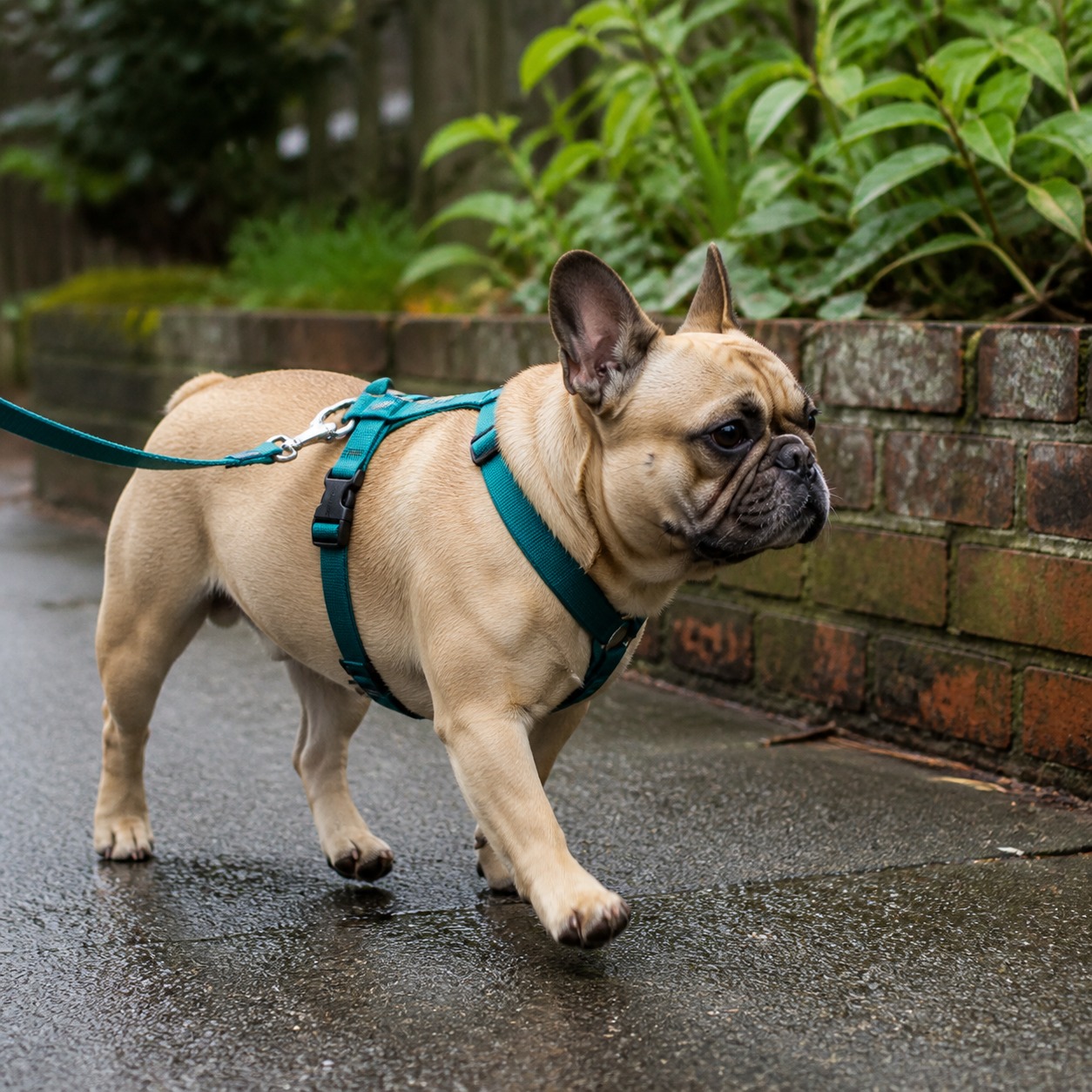
“Breeding ban” is a great headline and a bad description. No government has outlawed Pugs, French Bulldogs, or Bulldogs, and reading the news as if one had leads owners to exactly the wrong conclusion, that this is a fight about whether their dog is allowed to exist. It is not. What regulators in Norway, the Netherlands, and elsewhere have reached for is narrower and far more interesting: not “stop these breeds,” but “stop breeding them to a shape that cannot breathe.” Once you see that distinction, the whole debate reorients. The dogs are not the problem. The shape the market keeps demanding is, and every serious policy points its enforcement upstream, at breeders and buyers, not at the animals already curled up on the couch.
What the rules actually say, because they are not the same rule
The international action is a patchwork, and the differences between the approaches are the most useful part.
Norway went through the courts. In a 2022 case brought by the Norwegian Society for the Protection of Animals, a court found that breeding English Bulldogs and Cavalier King Charles Spaniels as conventionally practiced violated the country’s Animal Welfare Act. Crucially, the ruling did not abolish the breeds. Norwegian courts left open a path to breed Bulldogs under a specific, health-tested program, crossbreeding and health screening included, rather than the appearance-first standard. The principle is conditional: breed for health, or do not breed.
The Netherlands skipped the courtroom and reached for a ruler. Following research from Utrecht University, the Dutch government adopted criteria that a breeding dog’s muzzle must be at least one-third the length of its skull, with a longer-term goal of half, alongside requirements for open nostrils, normal breathing, and healthy eyes and skin folds. It is a measurable threshold, not a prohibition, and it shifts the burden of proof onto the breeder to demonstrate the dog clears the bar.
The United Kingdom, where these breeds exploded, has debated similar restrictions, and veterinary associations in Canada and Australia have pushed for selective breeding and owner education rather than outright bans. The common thread is not elimination. It is a demand that the next generation be bred healthier than the last.
The body underneath the cute face
To understand why governments are willing to wade into dog breeding at all, look at what “extreme” conformation does to an animal. “Brachycephalic” just means a flat face and short muzzle, but that compressed skull still has to house a normal volume of soft tissue.
You have packed a full-size set of soft tissue into a skull that has been bred shorter and shorter. The nostrils can be narrowed almost to slits, the soft palate is too long for the space and folds back over the windpipe, and the dog is working to pull air through a passage that is partly blocked all the time. That constant effort is the thread connecting the flat face to overheating, exhaustion, and even heart strain.
The numbers behind that picture are stark, and they are newer and harder than the original conversation suggested. A 2021 VetCompass study from the Royal Veterinary College, drawing on records of nearly 2,800 French Bulldogs, found the breed predisposed to a long list of disorders compared with other dogs, and separate RVC research has reported that some flat-faced breeds carry many times the risk of heat-related illness, with English Bulldogs at the extreme end. The airway is only the headline. Selective breeding for the look has also brought eye ulceration, spinal malformation, chronic ear and skin infection in the prized wrinkles, dental crowding, and birthing difficulty severe enough that many Bulldogs can only be delivered by cesarean. As Dr. Nair puts it, “Compare a Bulldog from a century ago with one today and you are looking at two different animals. The breed did not drift here. People selected for it.”
This is a demand problem wearing a breeding problem’s clothes
Flat-faced dogs have existed for generations, so why is the alarm sounding now? Volume. As these breeds became some of the most popular dogs on earth, the number of animals living with serious, heritable problems scaled right alongside them. A few flat-faced dogs is a curiosity. Millions of them is a welfare crisis, and a profitable one for anyone willing to breed for the face the market rewards.
That is why the people closest to the problem keep landing in the same place: the durable fix is upstream, in breeding standards and buyer behavior, not in courtrooms. Nikki Carvey, founder and president of Roadogs & Rescue, sees the human cost weekly. Her organization rescues and rehabs Bulldogs with medical problems and puppies born with disabilities.
“One of the most common reasons people surrender a dog is because they can’t afford the medical care,” Carvey says. “Sometimes we get calls from owners while they’re at the emergency vet, and their dog needs to be hospitalized for pneumonia or a life-saving surgery. With puppies who have a disability, people ask us to take them because they’re more complicated to care for and they just don’t have the time, or the commitment.”
Carvey is blunt about the budget gap buyers underestimate: “They are not a breed for someone on a budget. People get sucked in by the cute factor, pay a lot to get one, and then have no money left for quality veterinary care.”
The buyer’s checklist the headlines never give you
If you love these breeds, here is the part the regulatory fight actually hands you: you are the lever the policies are trying to move. You do not have to wait for a law to choose a healthier dog.
- Look at the muzzle, not the face. The Dutch one-third rule exists for a reason. A visible muzzle and open, round nostrils are rough proxies for an airway that works. Nostrils pinched to slits are a red flag you can see from across the room.
- Ask for a respiratory grade. The UK Kennel Club and University of Cambridge run a Respiratory Function Grading Scheme that scores breeding dogs for airway obstruction. A responsible breeder of Frenchies, Bulldogs, or Pugs should be testing the parents and able to show you their grades.
- Watch the parents move and breathe. Snoring, snorting, and rattling at rest are not the breed being charming. They are a restricted airway being handed down.
- Budget honestly. Folds, eyes, ears, and airways generate recurring vet bills. If a pneumonia hospitalization or airway surgery would be a financial crisis, this may not be your breed yet.
- Consider rescue. Breed-specific rescues like Carvey’s are full of these dogs, and adopting one neither rewards the worst breeders nor adds to the demand driving the crisis.
The breeds are not going anywhere, and almost no owner is choosing between a Frenchie and a felony. The choice that actually matters is quieter: whether the next flat-faced dog you bring home was bred to look a certain way, or bred to breathe.
References
- Norwegian Society for Protection of Animals litigation on Bulldog and Cavalier King Charles Spaniel breeding under the Animal Welfare Act, Oslo District Court, 2022.
- Expertise Centre Genetics of Companion Animals, Utrecht University, basis for Dutch short-muzzle breeding criteria, 2019.
- O’Neill, D. G., et al. “French Bulldogs differ to other dogs in the UK in propensity for many common disorders: a VetCompass study.” Canine Medicine and Genetics, 2021 (Royal Veterinary College).
- Royal Veterinary College VetCompass. “Brachycephaly: epidemiology and health issues.” rvc.ac.uk.
- The Kennel Club and University of Cambridge. “Respiratory Function Grading Scheme.”
- Roadogs & Rescue. roadogsandrescue.org.
Not a substitute for your vet. Our guidance is educational. For urgent symptoms, contact a vet or emergency clinic right away. Editorial standards
Dr. Nair is a veterinarian focused on diet and feeding. She covers everyday nutrition, treats, and the many "can they eat this?" questions owners ask, grounding each answer in what is actually safe and sensible for dogs and cats.
Meet our experts ↗Keep reading
 Health & WellnessThe English Bulldog Isn't Dying Out. Its Own Breed Standard Is Killing It.Dr. Priya Nair · 7 min
 LivingHe Lost 90% of His Business. Then He Groomed 1,461 Dogs for Free.Marcus Webb · 5 min
 LivingA Viral Dog Reunion Rewrote California LawMarcus Webb · 6 min
 LivingTwo Years, Two Best in Show Winners, Two Sets of Cut-Off Ears. That's Not a Coincidence.Dr. Ravi Mehta · 11 min
 Health & WellnessA Man Shot a Dog for Running at Him. He Was Never Charged.Marcus Webb · 8 min
 LivingYour Dog Slips the Yard. A Cop Shows Up. What the Data Says Happens Next.Marcus Webb · 6 min