


That New Lump Feels Like Nothing. That's Exactly the Problem.
The soft, squishy fatty tumor most older dogs get is usually harmless, but you cannot tell a lipoma from something dangerous with your fingers. Here's what these lumps are, and the exact changes that should send you to the vet.

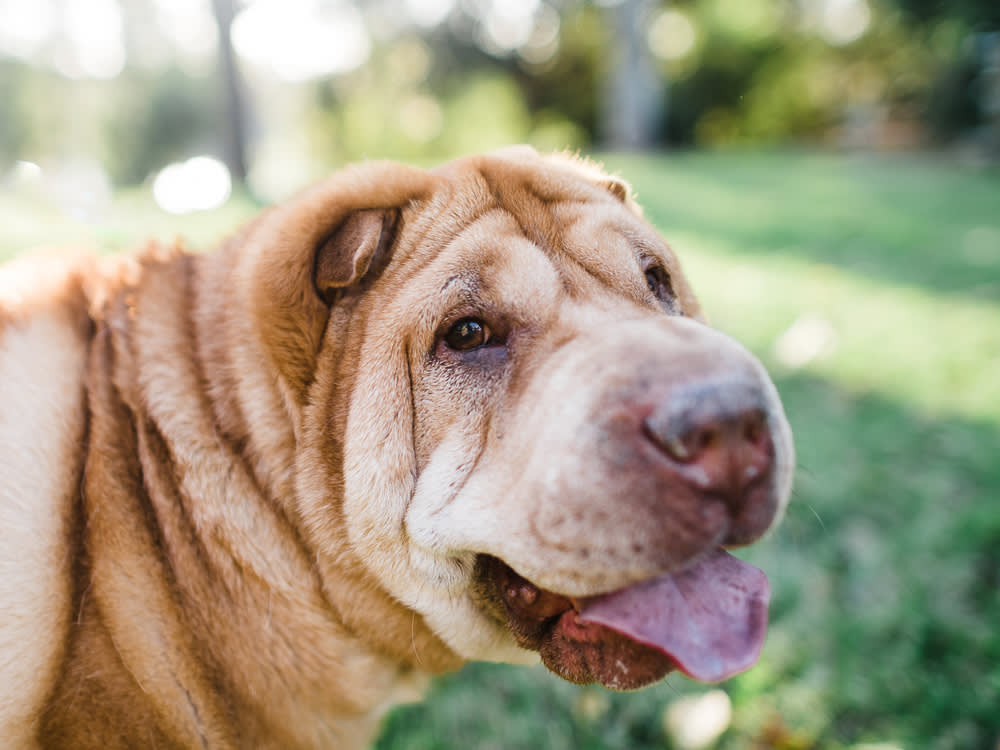
Run your hand down an older dog’s side and sooner or later you find one: a soft, roundish lump that rolls a little under the skin and does not seem to bother them at all. Your stomach drops anyway. The word “tumor” does that.
Here is the part worth holding onto, and the part that trips people up. Most of these lumps are lipomas, which are simply harmless deposits of fat, and your dog genuinely could not care less about them. But the soft, sliding, painless feel that makes a lipoma so reassuring is not proof of anything. A dangerous mass can start out feeling exactly the same. So the real job is not learning to identify a lipoma by touch, because that cannot be done reliably. The job is knowing which lump gets checked, and which changes mean you stop waiting.
What a lipoma actually is
A lipoma is a benign growth built out of fat cells. They show up most in middle-aged and senior dogs, they tend to sit just under the skin along the torso and legs, and pet parents most often find them in the armpit or running along the chest and belly. They are usually soft, well-defined, and easy to wiggle between your fingers. Occasionally one forms deeper, inside the chest or abdomen, where you would never feel it.
Dogs rarely stop at one. They tend to collect several over the years, sometimes more than you can keep track of, and each grows on its own schedule. Most creep along slowly. A few move faster.
Not all fatty masses behave the same way, and the distinctions matter:
- Simple lipomas are the common kind: soft, encapsulated, slow, and boring in the best sense.
- Infiltrative lipomas are more aggressive. They push into nearby muscle, bone, and nerves, and they tend to grow faster.
- Liposarcomas are the rare bad actor: an actual malignant tumor. They usually feel different, often fixed in place rather than freely sliding, which is one of the clues a vet looks for.
Why you can’t diagnose by feel
This is the heart of it. A simple lipoma and an early infiltrative mass can feel nearly identical under your fingers, and even a liposarcoma does not announce itself with a sign. That is not a reason to panic over every lump. It is a reason to get new ones sampled rather than assuming.
Diagnosis is quick and low-drama. Find a small, squishy mass on a senior dog, and a vet can often call it probably a lipoma on sight, but “probably” is not a diagnosis. To confirm, they collect a few cells with a fine needle and look at them under a microscope. Fat cells under the scope mean a fat tumor. It takes minutes and usually needs no sedation.
Owners sometimes apologize for bringing in a lump that turns out to be nothing. I always tell them that is the whole point. A five-minute needle sample is how we earn the right to leave a lump alone, and it is a far better trade than months of wondering.
When a mass might be the infiltrative type, because it feels anchored to the tissue underneath, imaging like a CT scan can show how deep it runs and what it is tangled up in. If there is any real concern about cancer, a biopsy settles it and rules out look-alikes such as mast cell tumors.
How common are they, and who gets them
Lipomas are genuinely common in older dogs. A large UK study drawing on the primary-care records of more than 380,000 dogs found that close to two percent had been diagnosed with a lipoma, and the odds climbed steadily with age.
Age is the biggest lever. Set against dogs in the three-to-six-year range, those nine and older run roughly 17 times the risk of developing one. Weight is next: dogs carrying extra body fat are more prone to these masses, so keeping your dog lean genuinely tilts the odds, even if it is no guarantee. Breed plays a role too. Any dog can grow a lipoma, but Dobermanns, Weimaraners, Labrador Retrievers, Springer Spaniels, Beagles, German Pointers, and Miniature Schnauzers show up more often, and purebred dogs overall are more prone than mixed breeds.
When a lipoma is just cosmetic (which is most of the time)
For the vast majority of dogs, a lipoma is a lump you monitor and otherwise ignore. It does not hurt, it will not spread, and treatment is not required. Lipomas do not shrink or vanish on their own, but the only real downside for most dogs is the appearance, and your dog is not looking in the mirror.
Removal is surgery, with the usual risks that come with anesthesia and a healing incision, so it is not something to do casually. When a vet does recommend taking one out, expect roughly $200 to $500 per mass. Hard-to-reach lumps that need a specialist can run upward of $1,000 each, and that may be before anesthesia, pre-surgical bloodwork, and lab testing of the tissue are added in. With a dog that has several lipomas, those numbers add up fast, which is exactly why “leave it alone” is usually the right call.
The changes that mean stop waiting
Most lipomas never need anything. These four situations are the exceptions, and they are the reason every new or changing lump deserves attention.
- It sits where it interferes with movement. A mass growing in the armpit or against a limb can eventually get big enough to change how your dog walks or lies down. Catching one of these before it balloons makes removal far simpler.
- It grows suddenly or changes how it looks. A lump that was slow and steady and then takes off, or that changes shape, color, or texture, warrants a same-week vet visit rather than a wait-and-see.
- It feels anchored, not free. A fatty mass that is fixed to the tissue underneath instead of sliding freely is the classic clue for an infiltrative liposarcoma. These get removed aggressively and are sometimes treated with radiation.
- It reaches an enormous size. A truly massive growth can outrun its own blood supply, leading to tissue death, infection, and drainage, and it becomes much harder to remove the bigger it gets. Do not let one get to that point.
Can you prevent them?
Not really, and it helps to be honest about that. There is no proven way to stop lipomas from forming. What you can do is keep your dog at a healthy weight with the right amount of food and real exercise, which is linked to fewer of them, and stay on top of monitoring. Note any new lump or change in an existing one, and keep up with annual exams. Many vets will measure and map a dog’s known lipomas so it is obvious later whether something new has appeared or an old one has changed. That map is one of the most useful things in a lumpy dog’s file.
What newer research adds
The strongest recent picture of just how common these masses are comes from the large-scale UK primary-care records mentioned above, which pinned down both the roughly two-percent diagnosis rate and the steep rise with age and body weight across hundreds of thousands of dogs. It moved lipomas out of the realm of “vets see a lot of them” and into hard numbers.
The other quiet shift is in how clinics track them. Rather than eyeballing a lump each year, more vets now measure and chart every known mass at a dog’s checkup, sometimes with a simple body map. It sounds mundane, but it is the single best defense against the real risk here, which is not the harmless fat you already know about. It is the new lump, or the old one that quietly started behaving differently, getting waved off as “just another fatty tumor.”
The bottom line
Lipomas are one of the most common things that happen to a dog’s body as it ages, and most of them are nothing. But “most” is not “all,” and your fingers cannot tell the difference. Let a soft new lump be checked once, let your vet map the ones that turn out to be harmless, and then watch for the specific changes that mean it is time to go back. That is how you get to relax about the lumps that deserve relaxing about.
References
- O’Neill, D.G., et al. “Lipoma in Dogs Under Primary Veterinary Care in the UK: Prevalence and Breed Associations.” Canine Medicine and Genetics, 2021. rvc.ac.uk/vetcompass
- Frost, C., et al. “Body Cavity Lipomas in Six Dogs.” Journal of the American Animal Hospital Association.
- American College of Veterinary Surgeons. “Skin Tumors (Lipomas and Others) in Dogs.” acvs.org
Common questions
How can I know for sure a lump is a lipoma?
You can't by feel alone, and neither can your vet. A soft, movable lump on an older dog is suggestive of a lipoma, but the only way to confirm it is to sample the cells, usually with a quick fine-needle aspirate.
Can a fatty tumor turn out to be cancer?
Most lipomas are benign and stay put. A small number are infiltrative and grow into nearby muscle and tissue, and rarely a fatty-looking mass is actually a malignant liposarcoma. That is why every new lump is worth a check.
Is there a natural way to shrink a lipoma?
No supplement, oil, or diet reliably shrinks or dissolves a lipoma. The one thing within your control is keeping your dog lean, since extra body fat is linked to more of these masses.
Not a substitute for your vet. Our guidance is educational. For urgent symptoms, contact a vet or emergency clinic right away. Editorial standards
Dr. Chen is a small-animal veterinarian who leads health and safety coverage at The Pet Times. She writes and reviews the bulk of our illness, condition, and safety content, translating clinical guidance into clear, practical advice owners can act on at home.
Meet our experts ↗Keep reading
 Health & WellnessDogs Don't Get Menopause. That's Exactly Why Senior Heat Cycles Are DangerousDr. Lena Park · 6 min
 Health & WellnessThe Color of Your Dog's Eye Goop Is a Triage MapDr. Amara Solis · 6 min
 Health & WellnessThere's a Number for 'Drinking Too Much.' Most Dog Owners Don't Know It.Dr. Lena Park · 8 min
 Health & WellnessYour Dog's Nose Predicts Their Lifespan. Nobody Wants to Hear It.Dr. Mara Chen · 7 min
 Health & WellnessThe Dog Cancer Vaccine Trial Finished. Here's What It Actually Showed.Dr. Amara Solis · 5 min
 Health & WellnessYour Monthly Chew Doesn't Kill Every Worm. Here's the Gap.Dr. Ravi Mehta · 9 min