


The Dog Cancer Vaccine Trial Finished. Here's What It Actually Showed.
The largest clinical trial ever run on canine cancer tested a shot meant to prevent tumors before they start. The results are real, promising, and more complicated than the headlines: it helped with some cancers, missed the deadliest one, and the sequel is already in the works.
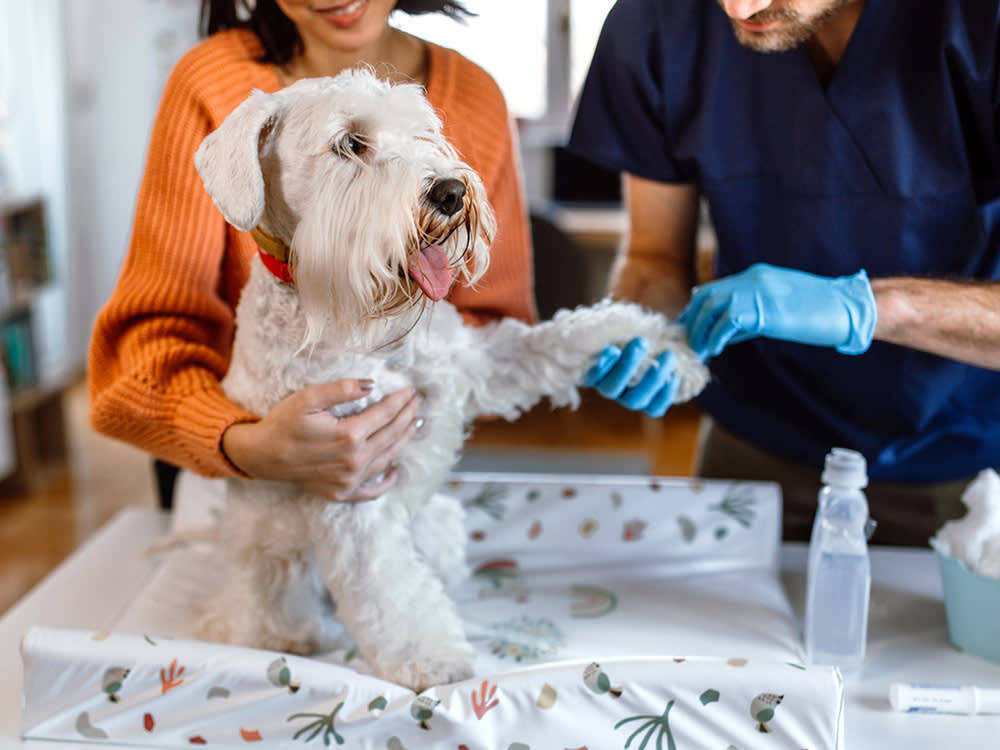
Roughly half of all dogs over the age of ten will develop cancer, and the risk runs even higher in many purebreds. Against that backdrop, one idea has been quietly chased for over a decade: not a better cancer treatment, but a shot that stops the cancer from ever forming. The results of the trial testing that idea are now in, and they are worth understanding clearly, because they are genuinely promising and genuinely partial at the same time.
The short version: the vaccine did something real, but not everything its designers hoped, and the most important chapter is the one still being written.
What the trial set out to do
Dr. Stephen Johnston, of Arizona State University’s Biodesign Institute, spent more than ten years developing a preventive cancer vaccine for dogs. In 2018 a major grant funded the real test: the Vaccination Against Canine Cancer Study, or VACCS trial, a five-year, multi-center, double-blind study and the largest clinical trial on canine cancer ever conducted.
The premise flips how we usually think about cancer care. Instead of curing tumors after they appear, this vaccine aims to keep healthy dogs cancer-free in the first place. The reasoning behind the funding was economic as much as medical: a preventive shot that buys decades of healthy life would likely be far cheaper than treatments that often extend life by only months.
The design was straightforward. Healthy dogs living at home got twice-yearly exams. Some received the real vaccine, some a placebo. The placebo dogs were expected to develop cancer at normal rates, giving researchers a baseline to measure the vaccinated dogs against. Every participating dog, vaccinated or not, received a credit toward cancer-related medical costs.
What the results showed, and didn’t
Early results were encouraging but uneven. Data pointed to a reduction in the number of tumors in about 65 percent of vaccinated dogs. That is a meaningful signal for a first-generation preventive vaccine.
The nuance is in which cancers responded. The team had originally aimed at eight types: mast cell tumors, osteosarcoma, lymphoma, melanoma, mammary cancer, lung cancer, soft tissue carcinomas, and hemangiosarcoma. It did not reduce all eight. Mast cell tumors and adrenal tumors dropped. But others, including hemangiosarcoma, a common, fast-spreading, and especially deadly canine cancer, did not.
Johnston framed that gap as a fixable engineering problem rather than a dead end, saying they now understand why certain cancers weren’t covered: the vaccine simply didn’t include the right components for them, and the next version would.
It’s important that owners hear both halves of this. A preventive shot that lowers tumors in a majority of vaccinated dogs is a real scientific milestone, not hype. And it did not protect against some of the cancers we fear most, which is exactly why this is a first step, not a finished product. Promising and unfinished are both true here.
An unexpected bonus
One surprise had nothing to do with tumors. The vaccine also appeared to reduce arthritis and other chronic diseases by more than 50 percent. Johnston’s theory is that the vaccine triggers an immune response against senescent cells, worn-out cells that accumulate with age and are linked to a range of late-life diseases, from cancer to atherosclerosis to osteoarthritis. If that holds up, the implications reach well beyond cancer into how we might slow aging-related decline itself.
Why dogs, and why this matters for people
There’s a reason this work runs in dogs rather than starting in humans, and it isn’t just about helping dogs, though it is that. Many canine cancers closely resemble human cancers, and dogs’ immune systems respond similarly to ours. Crucially, canine tumors develop much faster, so a vaccine’s effectiveness can be measured in about five years instead of the 15 to 20 it would take in people. Johnston’s blunt take: if it works in dogs, it becomes very hard to argue against trying it in humans. The dogs in this study may be the leading edge of preventive cancer vaccines for everyone.
Where things actually stand
Set expectations correctly. The vaccine still needs regulatory approval before it can reach the public, and the developers are focused on producing an improved version first. This is not something you can ask your vet for at your next visit. What exists today is strong proof of concept, an unusually large body of data, and a clear roadmap for a better second generation.
If your dog is a breed or age with elevated cancer risk, the useful move right now is unchanged and unglamorous: routine wellness exams, prompt attention to new lumps or unexplained changes, and honest conversations with your vet about screening. Prevention-by-vaccine is coming into view. It is not here yet.
What’s new since this was written
Since the trial’s early updates, the study reached a significant milestone: the VACCS trial was announced as complete in 2024, wrapping up the full five-year enrollment and follow-up. The developers reported the safety and preliminary efficacy profile was encouraging enough that they began producing an improved version of the vaccine and signaled interest in a path toward conditional approval and limited availability, while the full efficacy analysis was still being prepared for peer-reviewed publication. In plain terms: the big trial is finished, the headline early result (a tumor reduction in a majority of vaccinated dogs, strong for some cancers and absent for others like hemangiosarcoma) held, and attention has shifted to a next-generation formula designed to close the gaps. Approval and real-world availability remain ahead, not behind, so treat any product claiming to be “the dog cancer vaccine” with healthy skepticism until regulators sign off.
References
Common questions
Did the vaccine actually prevent cancer?
Partly. Early results showed a reduction in tumors for roughly 65 percent of vaccinated dogs, with clear reductions in mast cell and adrenal tumors, but no reduction in some cancers, including hemangiosarcoma. Full efficacy data is still being analyzed for peer-reviewed publication.
How much would it cost?
Unknown until it's approved, but the developers have said their goal is a preventive shot cheap enough to be widely accessible, on the logic that preventing cancer is far less expensive than treating it.
Not a substitute for your vet. Our guidance is educational. For urgent symptoms, contact a vet or emergency clinic right away. Editorial standards
Dr. Solis is a board-certified veterinary dermatologist with over twelve years of clinical experience. She advises on skin conditions, allergies, and grooming practices that affect coat and skin health. All dermatology and allergy content at The Pet Times is reviewed by her team before publication.
Meet our experts ↗Keep reading
 Health & WellnessEye Gunk Is Normal. The Color and the Count Tell You When It Isn't.Dr. Ravi Mehta · 9 min
 Health & WellnessYou Found a Lump on Your Dog. Here's the One Thing You Can't Do About It.Dr. Nina Kohl · 8 min
 Health & WellnessYour Dog Can Take the Anti-Aging Pill Today. Read the Fine Print First.Dr. Ravi Mehta · 7 min
 Health & WellnessThe Biggest Dog Cancer Study Ever Run Found Something Better Than a CureDr. Ravi Mehta · 10 min
 Health & WellnessYour Dog Isn't Colorblind. Their Eyes Made a Trade You'd Never Take.Dr. Nina Kohl · 8 min
 Health & WellnessYou Cannot Tell a Lump Is Harmless by Touching ItDr. Mara Chen · 7 min