


Your Dog Can Take the Anti-Aging Pill Today. Read the Fine Print First.
LOY-002 is a real daily pill aimed at extending senior dogs' lives, and senior dogs are swallowing it right now. But enrolling means a four-year commitment and a coin-flip chance you're feeding your dog a placebo. Here's what that trade actually looks like.

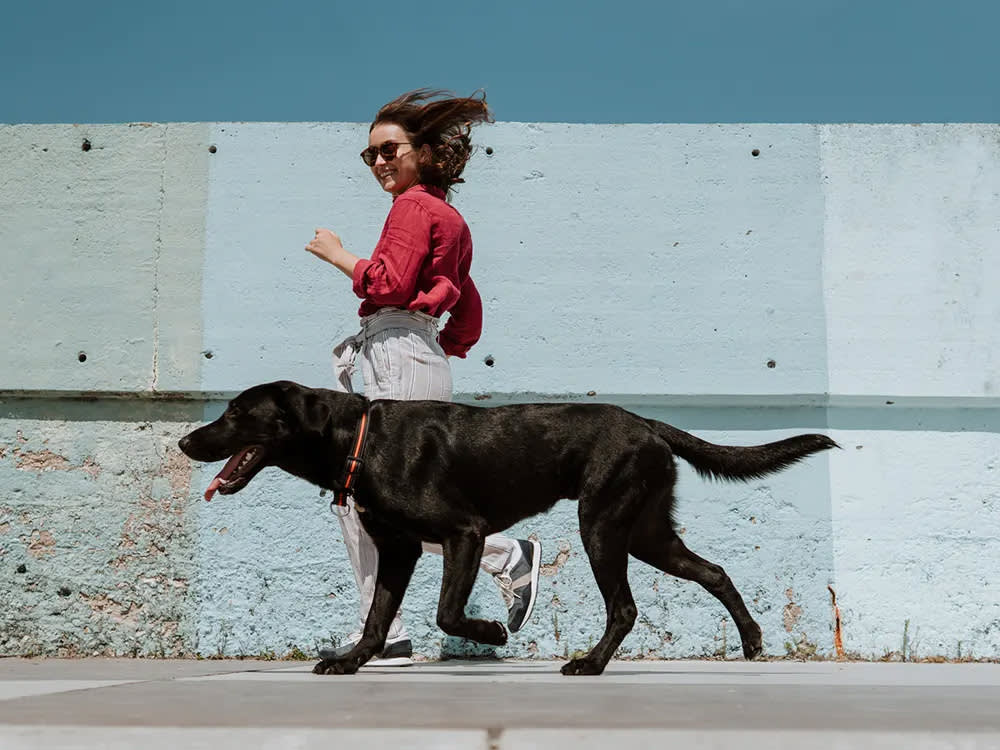
A daily beef-flavored tablet designed to slow down old age is not a thought experiment. Senior dogs across the country are taking one right now, at the kitchen counter, with breakfast.
That is the part of this story most people miss. The headline version, that a biotech company might make your dog live longer, has been circulating for years and always sounds like it belongs to some polished future. The reality is much less cinematic and much more demanding: to get your dog anywhere near this drug today, you sign up for a four-year study, drive to a participating clinic, and accept that a coin flip decides whether the pill in your hand contains the drug or nothing at all.
That trade is worth making for some dogs and clearly not worth it for others. Here is how to tell the difference.
The drug is not a cure. It is a metabolic nudge.
Loyal, the company behind it, is not claiming to fix any single disease. The theory behind LOY-002 is that as dogs get older, their metabolism drifts into an inefficient state, and that this drift is part of what shortens the healthy years at the end of a dog’s life. The pill is meant to push back on that drift, extending healthy lifespan rather than curing a specific illness.
This matters for expectations. A drug aimed at aging itself will not make an arthritic ten-year-old sprint like a puppy, and it is not a substitute for treating the kidney disease or heart murmur your dog already has. If it works as hoped, the benefit shows up as time: more good months on the back end.
Owners hear ‘longevity drug’ and picture a fountain of youth, and that is not what is on the table. What is on the table is the possibility of holding the line a little longer against the slow metabolic slide that takes the shine off a senior dog. That is a real prize, but it is a quieter one than the headlines suggest.
Worth remembering that this is the second drug in the family. LOY-001, the long-acting injectable aimed at large adult dogs and the hormone thought to shorten their lives, was the one the FDA said in 2023 had a “reasonable expectation of effectiveness” after research showed a series of injections curbed insulin increases and lowered the targeted hormone. LOY-002 is the daily-pill sibling, and its reach is far wider: senior dogs of nearly all sizes, not just the giants.
What enrolling in STAY actually asks of you
The study is called STAY, and it is a double-blind, placebo-controlled trial run through roughly fifty veterinary clinics around the country. More than 1,200 veterinarians expressed interest in taking part. It enrolled over a thousand dogs, each followed for as long as four years.
Read that last sentence again, because it is the commitment. Not a prescription. Four years of study visits, with a dog who is already at least ten years old.
The eligibility gates are simple: your dog must be at least ten years old and weigh at least fourteen pounds. Beyond that, a participating clinic screens them.
The first dog dosed was an eleven-year-old Whippet named Boo, under the supervision of the study’s principal investigator, Dr. Coby Rudakewiz. Loyal’s founder and CEO, Celine Halioua, has framed the launch around the roughly fifteen million senior dogs living in the United States, her own senior Rottweiler among them.
There is also a research dimension owners rarely think about. Loyal is banking saliva and blood samples from the dogs in the study, building a biological library intended to support future longevity research in dogs and, eventually, in people. If you enroll, your dog is contributing to that whether or not the pill they swallow is the real one.
The coin flip is the whole decision
Here is the piece that gets glossed over in the excitement. In a double-blind placebo study, neither you nor your vet knows which arm your dog is in. Roughly half of these senior dogs are, by design, getting nothing.
That is not a flaw. It is the only way to find out whether the drug does anything, and every honest trial works this way. But it means enrolling is not the same as “getting your dog the anti-aging drug.” It is buying a lottery ticket with a four-year holding period, on a dog who may not have four years.
So run the decision honestly:
Enrolling probably makes sense if: your dog is ten or eleven rather than fifteen, in solid health with no urgent disease, your clinic is close enough that repeat visits are not a burden, you would be glad to contribute data to the science regardless of which arm you land in, and you can hold the possibility of a placebo without resentment.
Enrolling probably does not make sense if: you are chasing a rescue for a dog who is already declining, the nearest site is a long drive on a hot afternoon with a stiff senior in the back seat, or the emotional weight of possibly having fed your dog a placebo for four years is one you would carry badly. There is no shame in that. Know it about yourself first.
And if you are not enrolling, the boring interventions still hold the biggest lever anyone has proven: keeping your dog lean, keeping them moving, staying current on dental care, and getting bloodwork often enough to catch kidney and thyroid problems before they announce themselves. None of that is glamorous, and all of it buys time today.
What “conditional approval” will and will not mean
If and when LOY-002 clears its final hurdle, it will not arrive with the same weight as a fully approved drug. The FDA’s Center for Veterinary Medicine has a conditional approval pathway that lets a company market a drug for a limited period while it continues gathering the effectiveness data required for full approval. It is a real regulatory bar, not a rubber stamp, but it means “promising and reasonably safe,” not “proven.”
Practically, that means the first prescriptions will be written under a shorter leash than usual, at a price the company sets, for a benefit that is still being measured. Owners who expect a settled, insurance-friendly, evidence-locked medicine on day one will be disappointed.
What’s new since this was written
The regulatory picture has moved, and mostly in Loyal’s favor. In February 2025, the FDA accepted the effectiveness section of the LOY-002 application, and in January 2026 it accepted the target animal safety section. That leaves manufacturing as the last of the three major technical sections standing between the pill and a conditional approval.
If that final piece clears without trouble, a conditional approval could land as early as late 2026 or in 2027. It would be the first drug ever approved for lifespan extension itself in any species, which is genuinely a first, and worth saying plainly rather than breathlessly.
None of that changes the math for a dog who is ten today. Approval timelines slip, and a senior dog’s calendar does not. If your interest in this drug is really an interest in more time with the dog asleep at your feet, the trial is one lever, and the lean-body-weight, good-dental-care, twice-yearly-bloodwork lever is the other. The second one is available this afternoon.
The bottom line
LOY-002 is the most serious attempt anyone has made to treat old age as a condition rather than a fate, and it has come further than most people realize. But joining the study is a four-year commitment with a fifty-fifty chance of a placebo, and a conditional approval, when it comes, will mean “promising,” not “proven.” Go in with your eyes open, or don’t go in at all. Either is a defensible way to love a senior dog.
References
- Loyal Receives FDA Acceptance of Reasonable Expectation of Effectiveness for Senior Dog Lifespan Extension (Businesswire, February 2025)
- Loyal Receives FDA Acceptance of Safety Package for Senior Dog Lifespan Extension Drug (Businesswire, January 2026)
- Lifespan extension drug in development for senior dogs reaches a new milestone (dvm360)
- Loyal: information for dog owners and study sites
Common questions
Will my dog definitely get the drug?
No. STAY is a double-blind, placebo-controlled study, so roughly half of the enrolled dogs receive a placebo, and neither you nor your vet knows which group your dog is in until the study ends.
Is LOY-002 FDA approved?
Not yet. As of early 2026 the FDA had accepted two of the three technical sections required for conditional approval: effectiveness and target animal safety. The manufacturing section is the remaining piece.
Does this work on any dog, or only big ones?
LOY-002 is the version aimed at senior dogs of nearly all sizes, from fourteen pounds up. The earlier drug, LOY-001, was an injectable aimed specifically at large adult dogs.
Not a substitute for your vet. Our guidance is educational. For urgent symptoms, contact a vet or emergency clinic right away. Editorial standards
Dr. Mehta is a board-certified veterinary nutritionist who evaluates pet food formulations, ingredient quality, and the science behind dietary trends. He writes and reviews all nutrition content at The Pet Times, including our food rankings and feeding guides.
Meet our experts ↗Keep reading
 Health & WellnessNo Fleas, Still Scratching? 7 Culprits, Ranked by How Likely They Are.Dr. Mara Chen · 14 min
 Health & WellnessA Dog Who Won't Drink Water Is a Clock, Not a QuirkDr. Lena Park · 7 min
 Health & WellnessThere's an Actual Number for 'My Dog Drinks Too Much Water'Dr. Lena Park · 7 min
 Health & WellnessThat New Lump Feels Like Nothing. That's Exactly the Problem.Dr. Mara Chen · 7 min
 Health & WellnessLeptospirosis Used to Be a Country-Dog Problem. Now It's Hunting City Dogs.Dr. Ravi Mehta · 8 min
 Health & WellnessOne Flea Bite Can Wreck an Allergic Dog. The Count Never Mattered.Dr. Priya Nair · 9 min