


Your Dog Cried in Their Sleep. Here's When It's a Dream and When It's Not.
That soft whimper from a sleeping dog usually means they're dreaming, and it's harmless. But a short list of red flags separates a normal dream from something that needs a vet. Here's how to tell them apart.

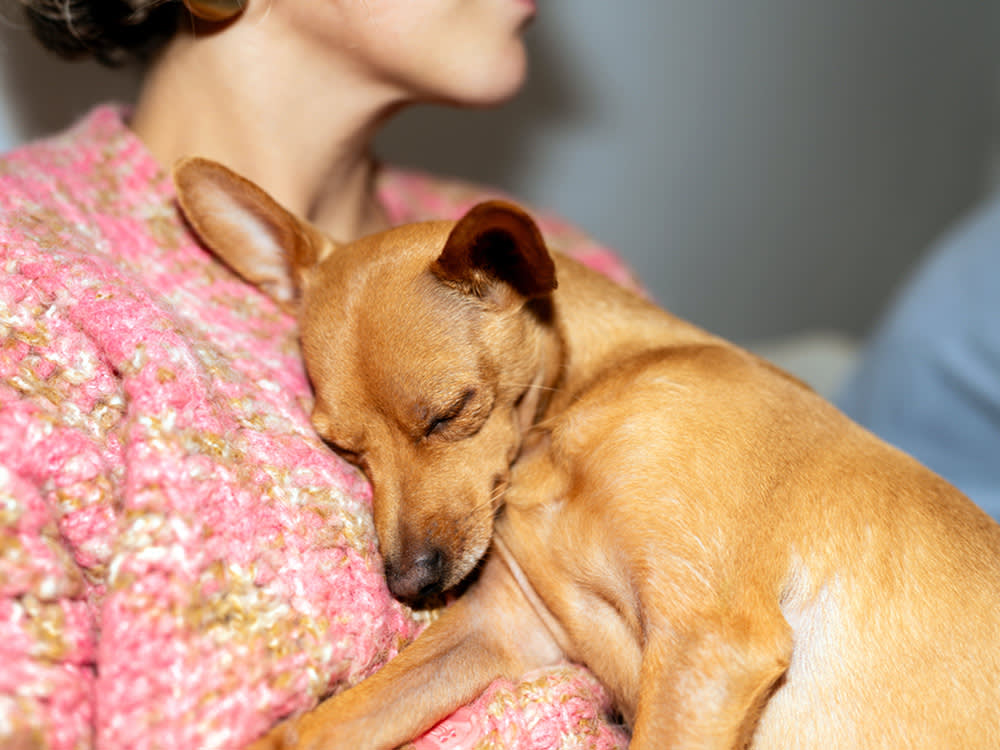
You’re on the couch and you hear it: a faint whimper from your sleeping dog, paws paddling, breath quickening. Your stomach drops. Nightmare? Pain? Should you wake them? Here’s the reassurance first and the vigilance second, because both matter. The overwhelming majority of sleep crying is your dog dreaming, and it’s completely normal. But a specific, knowable set of signs separates a harmless dream from a problem that deserves attention, and knowing that list is what lets you relax the rest of the time.
Start with the good news: dogs are dreamers
Dogs sleep a lot, 12 to 14 hours a day on average, and puppies, seniors, and big breeds like mastiffs and Rottweilers sleep even more. That’s not laziness. Sleep is how they rest, recover, and mentally file the day.
Like us, dogs move through sleep stages, including light sleep, deep sleep, and REM, the rapid-eye-movement phase where the interesting things happen. In REM, brain activity ramps up and dreams are most likely. That’s when you’ll see the twitching paws, fluttering eyelids, wagging tails, and hear the soft noises, sometimes even a full bark or cry. REM usually starts about 20 minutes into a sleep cycle and lasts a few minutes at a stretch, and because dogs cycle through it more often than we do, you may catch these little episodes several times in a single nap.
Dog sleep is also lighter and more broken than ours, an evolutionary holdover that kept wolves and wild dogs ready to react. So a dog that stirs, vocalizes, and resettles is doing something deeply normal.
When a sleeping dog whimpers or twitches, they’re almost always just processing their day, chasing a squirrel, replaying a game, working through a small stress, exactly the way we surface a dream. If they wake up calm and unbothered, that’s your answer. There’s nothing to fix and nothing to fear.
The full menu of causes
Dreaming is the most common explanation, but not the only one. It helps to know the whole range so you can place what you’re seeing.
Dreaming or a nightmare. During REM, dogs replay memories and emotions, good and bad. A whimper might be a genuinely happy dream, not a distressing one. Since dogs can’t narrate their dreams, we read the physical cues, and a peaceful, unafraid waking is the reassuring sign.
REM sleep behavior disorder. Rarely, a dog’s muscles fail to relax during REM, so they physically act out dreams. Unlike ordinary twitching, these episodes look more intense: sudden leaping up, snapping at the air, violent leg thrashing. It’s uncommon, but exaggerated or self-endangering sleep episodes are worth raising with a vet or veterinary neurologist.
Seizures. This is the one that most needs ruling out. Certain seizures, including focal seizures and those tied to epilepsy, can strike during sleep and mimic dreaming, but tend to look more rigid and repetitive. Seizures often lack the gradual transitions of a dream, can start abruptly, and may leave a dog dazed, disoriented, drooling, or incontinent afterward. If you suspect seizures, record a video and call your vet promptly, diagnosis may involve neurological exams or bloodwork, and treatment can include anti-seizure medication.
Anxiety. Dogs carrying generalized, situational, or trauma-based anxiety may sleep restlessly and vocalize emotionally. A dog with a history of instability or abandonment can carry those feelings into sleep, sleeping less soundly and waking suddenly in a panic. A stable routine, a safe sleep space, and calming tools help, and moderate to severe cases may call for training or medication guided by your vet.
Illness or pain. Sometimes the cause is physical, not mental. Arthritis, hip dysplasia, digestive discomfort, and dental pain can make certain sleeping positions hurt, and a dog may vocalize without fully waking to reposition. Illnesses causing fever or nausea can also produce restless, vocal sleep. If you also notice limping, appetite loss, or stiffness, look into the physical cause.
Should you wake a crying dog?
Usually, no. Just like people, dogs jolted out of REM can be disoriented, and interrupting a normal dream serves no purpose. There’s also a real risk of a defensive reaction, a startled dog may nip, growl, or bolt, not from aggression but from fear.
“If you feel you have to intervene, use your voice, not your hands,” Dr. Park says. “Softly say their name from a few feet away and let them surface on their own. Reaching in to shake a dreaming dog awake is how gentle dogs end up snapping at the people they love. The exception is if you genuinely think it’s a seizure or real pain, then a calm, careful rousing and a close look are appropriate.”
When to actually worry
Sleep crying earns a closer look when you see: crying that grows more frequent or intense over time; crying paired with violent twitching or rigid limbs; crying followed by confusion, disorientation, or incontinence on waking; daytime changes like lethargy, aggression, or appetite loss; or crying that begins suddenly in an adult or senior dog with no prior history.
Book a vet visit if seizures or a neurological problem seem possible, if an older dog is also showing signs of cognitive decline, if pain or stiffness is plain during waking hours, or if the nighttime crying is eating into the rest your dog needs to function. Your vet may run a physical exam, order bloodwork, or refer you onward. Often the fix is simple, better routines, more daytime stimulation, a calmer sleep setup, but when it’s something more, catching it early makes all the difference.
What newer research adds
The science behind those sleep noises has gotten more precise. Researchers link the twitching, paddling, and vocalizing to muscle activity that partially breaks through during REM, a normal quirk of how the sleeping brain handles motor signals, which is exactly why healthy dogs do it and why it’s rarely cause for alarm. Work on canine cognition also continues to support the idea that dogs replay real daily experiences in their dreams, likely including their people, so that whimper may well be your dog dreaming about you.
None of this changes the practical playbook, but it sharpens the reassurance. A dog that cries softly, twitches, and wakes up its normal self is doing something the science now understands well and considers healthy. Save your worry for the specific red flags above, and let the ordinary dreams be.
References
- “Sleep in Dogs.” VCA Animal Hospitals. https://vcahospitals.com/know-your-pet/sleep-in-dogs
- “Why Do Dogs Twitch in Their Sleep?” American Kennel Club. https://www.akc.org/expert-advice/health/why-dog-twitch-in-sleep/
- “Dog Seizures.” American Kennel Club. https://www.akc.org/expert-advice/health/dog-seizures/
Common questions
Should I wake my dog when they're crying in their sleep?
Usually no. Waking a dog abruptly from REM sleep can disorient them and, in a startled dog, trigger a defensive nip. If you must rouse them, do it gently with your voice from a small distance rather than touching them.
When is sleep crying a sign of a problem?
Be concerned if it becomes more frequent or intense over time, comes with violent or rigid twitching, is followed by confusion or incontinence on waking, appears suddenly in an adult or senior dog, or pairs with daytime changes like limping, lethargy, or appetite loss.
Not a substitute for your vet. Our guidance is educational. For urgent symptoms, contact a vet or emergency clinic right away. Editorial standards
Dr. Park is a board-certified emergency and critical care specialist. She reviews our health and safety content for clinical accuracy and contributes guides on recognising urgent conditions. Her focus is helping owners act quickly and correctly when it matters most.
Meet our experts ↗Keep reading
 Health & WellnessYour Dog Can't Have Down Syndrome. What You're Seeing Is Still Real.Dr. Amara Solis · 8 min
 Health & WellnessThe Spay Timing Question That Splits Rottweiler Owners (and Vets)Dr. Mara Chen · 5 min
 Health & WellnessThe Distemper Shot Has Side Effects. Reading the List Shouldn't Talk You Out of It.Dr. Ravi Mehta · 7 min
 Health & WellnessThe 'Mystery Dog Illness' Wasn't a Mystery. Here Are 8 Ways to Keep Your Dog Out of It.Dr. Mara Chen · 7 min
 Health & WellnessYour Dog Isn't Colorblind. Their Eyes Made a Trade You'd Never Take.Dr. Nina Kohl · 8 min
 Health & WellnessBone Cancer in Big Dogs: Don't Wait Out the LimpDr. Mara Chen · 7 min