


CBD Is King in the Pet Aisle. The Crown Is Unregulated.
Pet owners spend hundreds of millions on CBD, but the evidence isn't one thing. It's genuinely promising for some uses, thin for others, and undercut everywhere by a market that doesn't have to prove what's in the bottle.

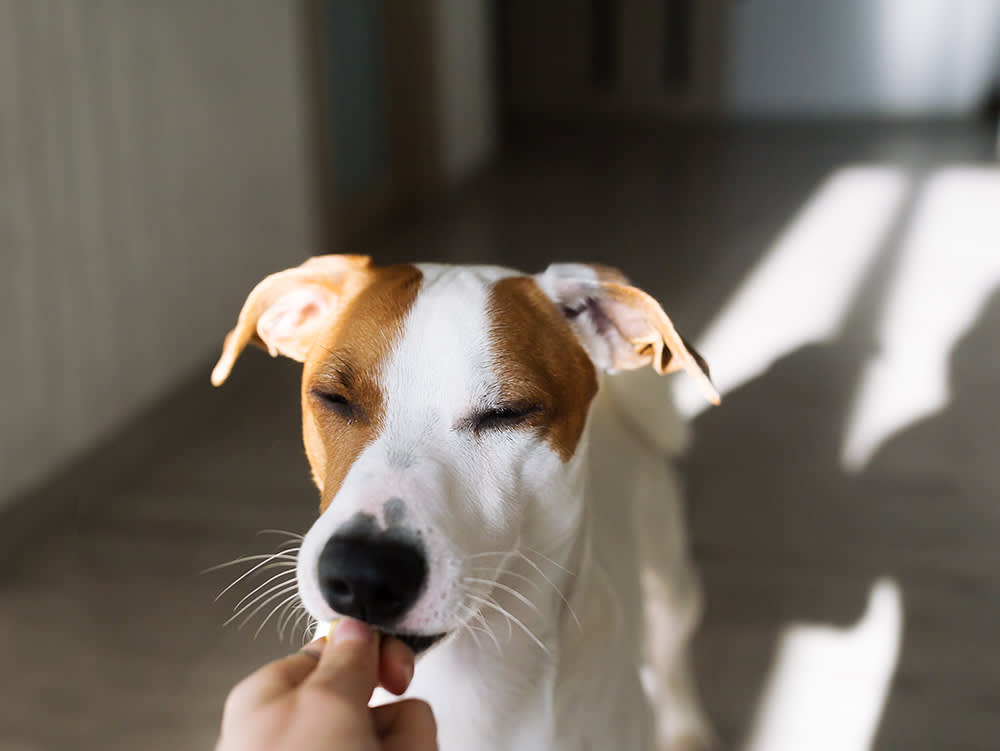
Walk down any pet-supply aisle and CBD is everywhere: oils, chews, treats, even shampoos. “These days, CBD is king,” as one integrative veterinarian has put it, listing arthritis, anxiety, epilepsy, cancer, and end-of-life care as the leading reasons people reach for it. The spending backs that up. Pet owners poured hundreds of millions of dollars into CBD products in a single year, and the number keeps climbing.
But money spent is not the same as proof of benefit. The honest state of pet CBD is more interesting than either the true believers or the skeptics admit: it is not one thing that works or doesn’t. It is a compound with genuinely promising evidence for some uses, thin evidence for others, and a regulatory vacuum sitting underneath the whole category.
First, what CBD actually is
Cannabidiol (CBD) is one of at least 60 active compounds, called cannabinoids, found in cannabis. Critically, it is not the one that gets you high; that is THC. CBD offers, as the saying goes, the benefits without the buzz. Most pet CBD is sourced from hemp, legally defined as cannabis containing less than 0.3 percent THC.
The reason it does anything at all is that every animal with a spine, including your dog and cat, has an endocannabinoid system (ECS). This is an ancient signaling network whose basic jobs have been summarized as helping the body “relax, eat, sleep, forget, and protect.” Cannabinoid receptors work much the same way across species. As one common analogy goes, receptors are like locks and cannabinoids are like keys; when the key turns the lock, a chain of effects follows in the cell. Notably, dogs have more of these receptors in their brains than any other animal tested, humans included, which is part of why they can be sensitive to cannabis compounds.
Sorting the uses by how strong the evidence is
This is where most CBD coverage goes wrong, treating every claim as equal. They are not. Here is the honest ranking.
Pain and arthritis: the strongest case. Studies at major research universities have shown positive effects of CBD on dogs with joint pain. At Cornell, arthritic dogs given CBD showed less pain and more activity after about a month. This matters because the standard alternative, NSAIDs, carries real risks of liver and kidney damage with long-term use, especially in senior or immune-compromised pets. For chronic joint pain, CBD’s anti-inflammatory effect gives it a plausible, evidence-backed role.
Situational anxiety: promising, with limits. CBD appears to help with mild, situational stress, the kennel stay, the party, the thunderstorm. There is a reliable spike in CBD sales around the Fourth of July for a reason. The mechanism involves serotonin receptors and the body’s own “runner’s high” compound. The advice from vets who use it is to distinguish ongoing anxiety from event-driven spikes, and for events, to find a safe low starting dose and increase toward the event. It is not a proven fix for severe or generalized anxiety.
Aggression and shelter stress: interesting early signals. In Italy, where euthanizing shelter dogs is illegal, researchers tested CBD on particularly aggressive shelter dogs over six weeks and saw reduced aggression, without making the dogs sleepy or less active, evidence it calms rather than sedates. Encouraging, but preliminary.
Itching: mostly no. Some research showed CBD reduced scratching in kennel dogs, but the nuance matters: it does not appear to help dogs who itch because of allergies. Where it may help is dogs who itch from anxiety, essentially a nervous habit. For true allergic itch, look elsewhere.
Seizures: the weakest case, despite the hype. CBD’s human success against rare genetic epilepsies inspired canine research, but in dogs the results are thin and inconsistent, and CBD has not been shown to reliably control seizures, especially in dogs already on medication. This is the use most oversold by marketing relative to the evidence.
The mistake I see owners make is treating CBD as a single yes-or-no answer. It’s not. I’m reasonably comfortable talking about it for a stiff, arthritic senior or a dog that falls apart during fireworks. I’m much more cautious when someone wants it to replace seizure medication. Same bottle, completely different strength of evidence. You have to match the use to what’s actually been shown.
The problem underneath all of it
Here is the issue that touches every use, good evidence or bad: the market is barely regulated. Because CBD products are not overseen by the FDA the way drugs or even supplements are, there is no enforced standard for what is in the bottle. Independent testing has repeatedly found products whose contents do not match their labels, sometimes containing far less CBD than claimed, sometimes almost none.
That turns even a well-chosen use into a gamble unless you buy carefully. So the buying criteria matter as much as the decision to try CBD at all. Look for products made specifically for pets, never human formulas, which can contain xylitol, an artificial sweetener that causes liver failure in dogs. Insist on third-party lab testing or certification that verifies the actual CBD content and screens for contaminants like pesticides and heavy metals. Confirm the product is THC-free or within legal limits, since dogs are especially sensitive to THC. And favor products that publish a clear milligram content and dosing guidance, so you can dose to the actual amount of CBD rather than a vague “one dropper.”
How dosing generally works
There is no official universal dose, which is itself a sign of how young this field is. The rule of thumb vets use is to start low, factor in your pet’s weight, and work up slowly while watching for effects. Acute, one-off stressors like a kennel stay may warrant a higher single dose; chronic issues like arthritis are usually managed with lower doses given two or three times a day. CBD’s side effects are few and generally mild, mainly sleepiness and an increased appetite. One more caution: hemp seed oil is sometimes marketed to look like CBD but is not the same thing, so read labels closely.
What newer research adds
The evidence base has grown more organized since the early enthusiasm. Recent systematic reviews and meta-analyses have consolidated the picture the ranking above reflects: the osteoarthritis and pain evidence has strengthened into the most credible use, with multiple controlled studies showing benefit, while the seizure evidence remains genuinely mixed. Newer delivery methods are also in trials, including longer-acting injectable formulations designed to hold steady blood levels for weeks, though these are research-stage, not products on the shelf. The consistent thread across the newer work is that serious adverse events are rare, which is reassuring, but that “safe” and “proven effective for your specific goal” are two different bars, and only some uses clear the second one.
The practical bottom line: CBD is not snake oil and it is not a miracle. For the right pet and the right problem, most solidly for arthritis pain, discussed with a vet and bought from a lab-tested source, it is a reasonable tool. Just go in knowing which uses the science actually supports, and treat the unregulated market as the real hazard it is.
CBD can interact with other medications and affect the liver. This article is general information, not medical advice; talk with your veterinarian before starting CBD, particularly if your pet takes other medications or has a chronic condition.
References
- Gamble, L. J., et al. “Pharmacokinetics, Safety, and Clinical Efficacy of Cannabidiol Treatment in Osteoarthritic Dogs.” Cornell University, Frontiers in Veterinary Science, 2018. frontiersin.org
- “Effects of a single dose of cannabidiol on aggressive behavior in shelter dogs.” pmc.ncbi.nlm.nih.gov
- “Pharmacokinetics, efficacy, and safety of cannabidiol in dogs: an update of current knowledge.” Frontiers in Veterinary Science, 2023. frontiersin.org
- U.S. Food and Drug Administration. CBD and animal products. fda.gov
Common questions
Is CBD safe for dogs and cats?
CBD has a wide safety margin, and reported side effects are usually mild, such as sleepiness or increased appetite. The bigger risks come from the product itself: THC contamination, xylitol in human formulas, and inaccurate labeling. It can also interact with other medications, so loop in your vet, especially if your pet takes other drugs.
How much CBD should I give my pet?
There is no official universal dose. The general approach is to start low, factor in body weight, and increase gradually while watching your pet. Acute situations like a vet visit may call for a higher single dose; chronic issues are usually managed with lower, repeated doses. Because products vary so much, dose to the actual milligrams of CBD, not to 'one dropper,' and confirm the plan with your vet.
Not a substitute for your vet. Our guidance is educational. For urgent symptoms, contact a vet or emergency clinic right away. Editorial standards
Dr. Nair is a veterinarian focused on diet and feeding. She covers everyday nutrition, treats, and the many "can they eat this?" questions owners ask, grounding each answer in what is actually safe and sensible for dogs and cats.
Meet our experts ↗Keep reading
 Health & WellnessOf All the Pet CBD Claims, Arthritis Is the One With Real ScienceDr. Amara Solis · 7 min
 Product PicksSorted by Evidence: A Vet's Guide to Supplements and Calming Products That WorkDr. Priya Nair · 16 min
 Health & WellnessYour Pet's Gut Is an Organ. You're Probably Damaging It by AccidentDr. Priya Nair · 7 min
 Health & WellnessOne in Three Dogs Has 'Too Much' E. Coli. The Number Isn't the Scary Part.Dr. Ravi Mehta · 7 min
 Health & WellnessYour Dog's Anxiety Might Start in the Gut, Not the BrainDr. Mara Chen · 5 min
 Health & WellnessYour Dog's 'Placebo Effect' Is Mostly YouDr. Amara Solis · 6 min