


Your Dog's 'Placebo Effect' Is Mostly You
Yes, placebos measurably affect animals, which is strange, because a dog can't believe a sugar pill will help. The explanation says something quietly powerful about your role in your pet's recovery, and it comes with a warning about how easily we fool ourselves.

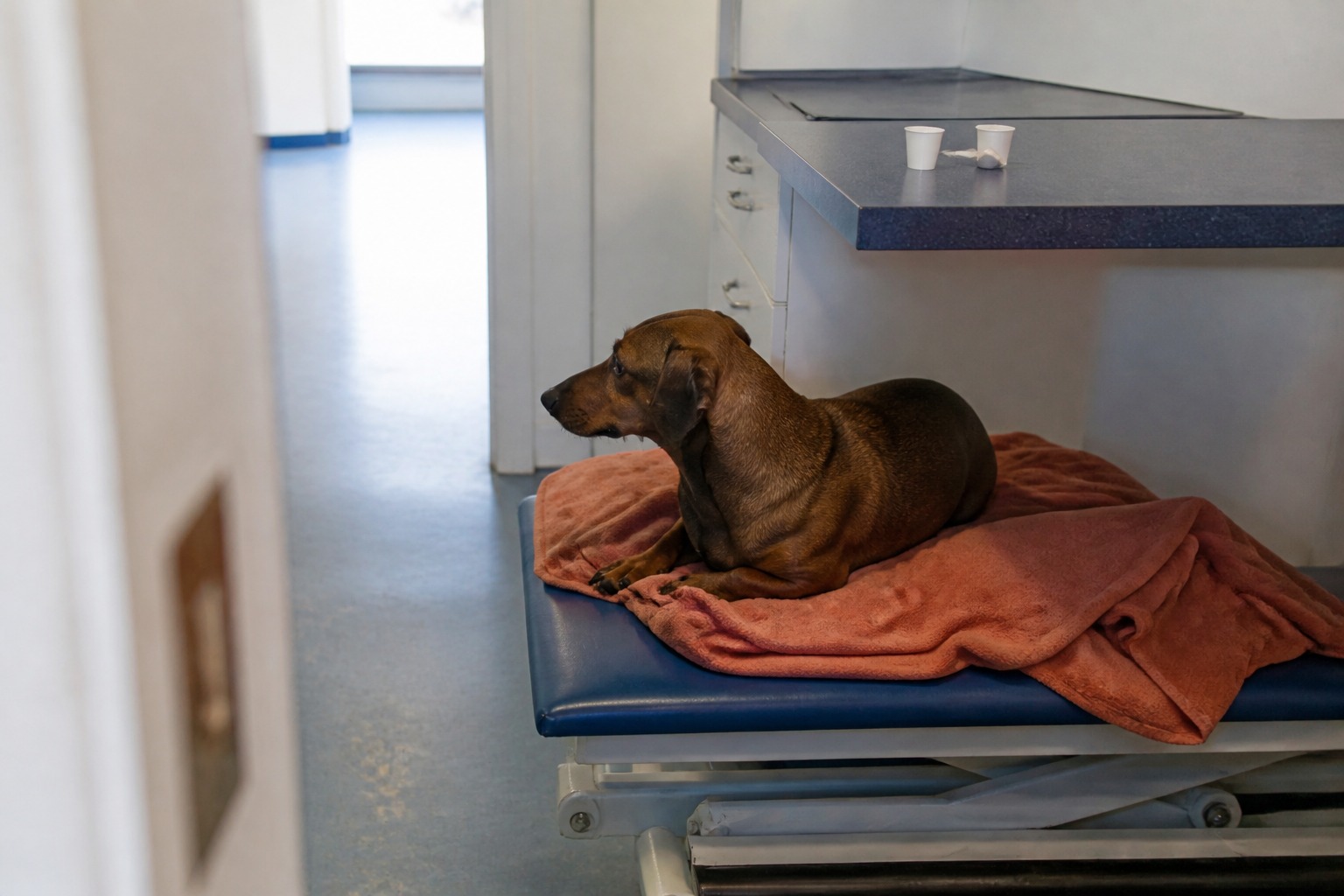
A placebo is, by definition, a benefit that comes from expecting a treatment to work rather than from the treatment itself. Which raises an obvious problem when the patient is a dog. Your dog does not know a pill is medicine. He can’t hope for recovery, read a label, or grasp the intent behind a treatment. So for a long time the assumption was simple: placebos couldn’t possibly work on animals.
That assumption turned out to be wrong, and the reason it’s wrong is more interesting than a sugar pill.
The effect is real. The mechanism is unusual.
Veterinary researchers have documented placebo responses in dogs and other species for decades. In people, the effect is usually chalked up to some mix of three things: classical conditioning (your body learns to associate a treatment with relief), expectation (you believe it will help), and the release of endogenous opiates, the body’s own homemade painkillers.
Animals can’t run the “expectation” program the way we do. But they have access to conditioning and to their own internal pain-relief chemistry, and researchers propose a fourth ingredient that’s unique to the veterinary version: the effect of human contact. This is the piece that reframes the whole question. Study after study has found that an animal’s mental and emotional state shapes its physical health, and that a person’s presence and touch can measurably move the needle.
When you stroke a dog, its heart rate can drop noticeably. Human contact produces consistent changes in a dog’s blood pressure and in blood flow through the heart’s own vessels. Contact has documented effects on immune function, on cardiovascular measures, and more, across animals of every age. In other words, a chunk of what looks like a “placebo response” in a hospitalized pet may really be the physiological effect of a calm, familiar human being in the room.
It reframes what an owner is for during treatment. People assume the medicine does the work and they’re just there for moral support. The data says their presence is part of the therapy. A calm hand on a scared animal changes real numbers, heart rate, blood pressure. That’s not sentiment, it’s physiology, and it’s a strong argument for keeping owners nearby whenever we safely can.
That’s the constructive takeaway: your steadiness is a clinical asset. Vets increasingly encourage owner visitation for hospitalized animals for exactly this reason.
The warning half of the story
Here’s the catch, and it’s the part every pet owner should sit with. The same wiring that makes your presence helpful also makes you a wildly unreliable judge of whether a treatment is working. Researchers call it the caregiver placebo effect, and it’s been measured with unusual precision.
In a landmark 2012 study, veterinary scientists Michael Conzemius and Richard Evans followed 58 dogs with arthritis pain, all of them secretly on a placebo, and tracked them two ways. They asked owners and vets whether each dog seemed better, and they also ran force-plate gait analysis, an objective machine that measures exactly how much weight a dog puts on each leg as it moves. The machine can’t be charmed by a wagging tail.
The gap between the two was stark. By the objective measure, only about 12 percent of the dogs actually improved, most stayed the same, and a few got worse. But the humans watching told a very different story. Owners judged their dog improved roughly 40 percent of the time. Veterinarians examining the same dogs saw “improvement” about 45 percent of the time. Everyone involved, the people who love the dog and the professionals trained to assess it, saw progress that a machine confirmed wasn’t there.
That’s not a knock on anyone’s honesty. It’s how perception works. We expect the treatment to help, we love the patient, and we notice the good day and forget the bad one. Which means when you try a new supplement, diet, joint chew, or alternative therapy and become convinced it’s working, your conviction is close to worthless as evidence. It might be working. Or you might be watching your own hope.
What to do with both halves
Hold the two lessons together, because they’re both true. Your presence genuinely helps a frightened animal heal, so be there. And your read on whether a treatment is helping is deeply biased, so don’t rely on it.
The practical fix is to force objectivity where you can. Instead of “he seems more comfortable,” track things you can actually count: how far your dog walks before slowing, whether he takes the stairs, how many times a night he shifts position, how long it takes him to stand up in the morning. Write them down before you start something new, not just after. When you can, let objective veterinary measures, bloodwork, X-rays, gait scoring, settle the question a hopeful eye can’t.
The strangeness of placebos working on animals dissolves once you see what’s underneath: a real, physical bond between a person and a pet that affects the body, wrapped inside a perception system that flatters our expectations. Use the first. Distrust the second.
References
- McMillan FD. “The placebo effect in animals.” J Am Vet Med Assoc, 1999;215(7):992–999.
- McMillan FD. “Effects of human contact on animal health and well-being.” J Am Vet Med Assoc, 1999;215(11):1592–1598.
- Conzemius MG, Evans RB. “Caregiver placebo effect for dogs with lameness from osteoarthritis.” J Am Vet Med Assoc, 2012;241(10):1314–1319.
This article discusses how treatment responses are assessed in pets. It isn’t a substitute for veterinary care; if your pet is unwell, work with your veterinarian rather than judging a treatment by eye alone.
Not a substitute for your vet. Our guidance is educational. For urgent symptoms, contact a vet or emergency clinic right away. Editorial standards
Dr. Solis is a board-certified veterinary dermatologist with over twelve years of clinical experience. She advises on skin conditions, allergies, and grooming practices that affect coat and skin health. All dermatology and allergy content at The Pet Times is reviewed by her team before publication.
Meet our experts ↗Keep reading
 Health & WellnessYour Stiffening Dog Doesn't Need a Spa Day. Five Minutes of This Does MoreDr. Amara Solis · 10 min
 Health & WellnessThe Middle Path Between 'Wait and See' and Surgery for Your DogDr. Ravi Mehta · 7 min
 Health & WellnessHomemade Dog Ear Cleaner: The Ingredients to Skip Matter More Than the RecipeDr. Amara Solis · 9 min
 Health & WellnessCBD Is King in the Pet Aisle. The Crown Is Unregulated.Dr. Priya Nair · 8 min
 FoodYou Don't Have to Believe in Chi to Use the Warming-and-Cooling Food TrickDr. Amara Solis · 7 min
 Product PicksCrystal-Healing Dog Gear Is a Real Thing. The Design Is Great, the 'Healing' Is Not.Sara Lim · 5 min