


Homemade Dog Ear Cleaner: The Ingredients to Skip Matter More Than the Recipe
Most DIY dog-ear-cleaner advice gets it backwards. The safe part is knowing what to leave out, alcohol, peroxide, and tea tree oil among them, and when not to clean at all. Here's the one gentle formula worth making and the day to put the bottle down.

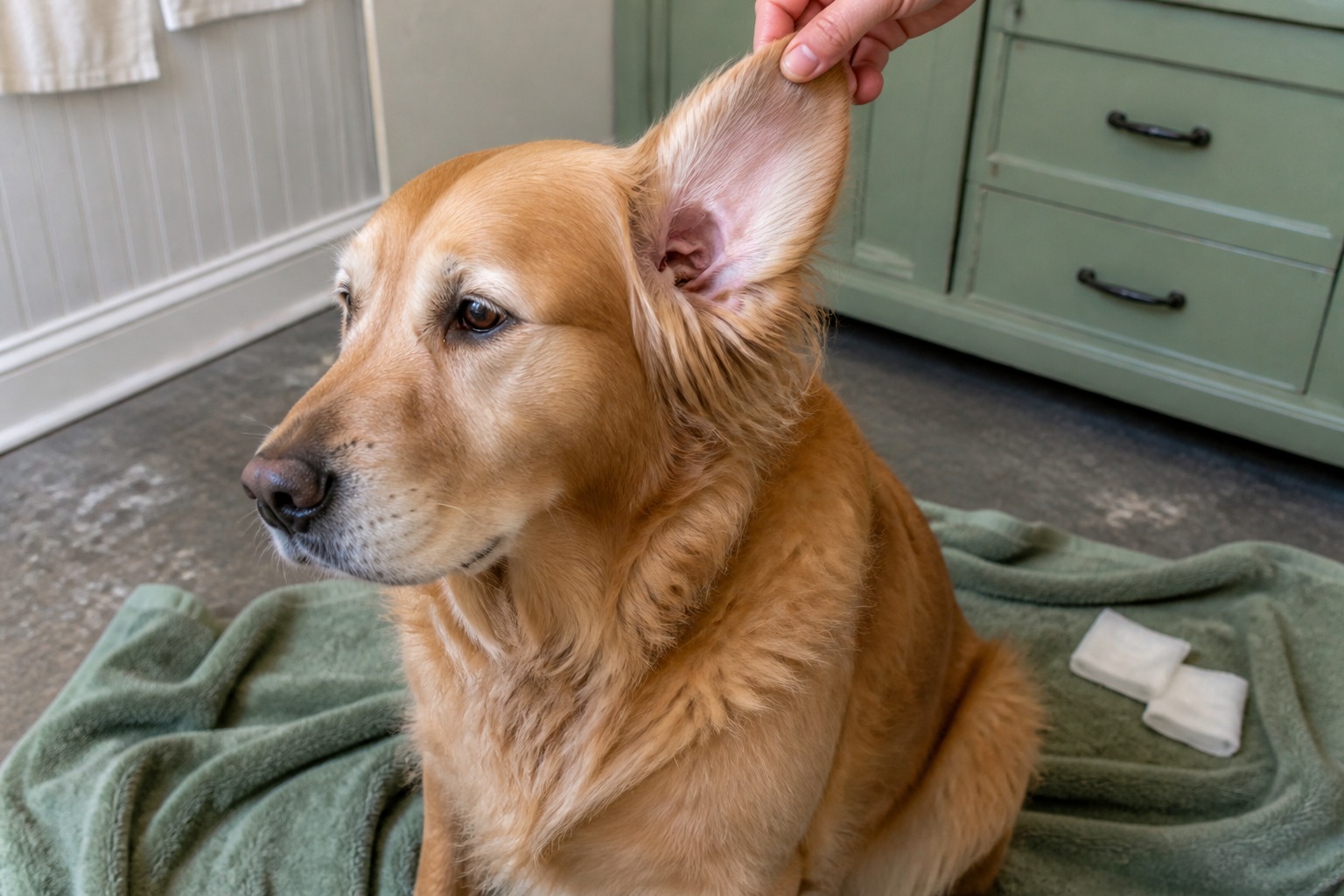
Almost every homemade dog-ear-cleaner guide leads with a recipe. This one leads with a warning, because the part that actually protects your dog is not the formula, it is the list of ingredients to keep out of it and the days to leave the ears alone entirely. A gentle cleaner does very little harm. The popular “natural” additives, and the wrong day to use any of them, are where dogs get hurt.
So we are going to do this in the safe order: first the ingredients that have no business in your dog’s ear, then the single bland formula worth making, then the most important rule of all, which is knowing when not to clean.
The homemade recipes that worry me most are the ones that sound the most wholesome. Owners assume natural means safe, so they reach for tea tree oil or a strong vinegar-and-alcohol mix. Those are exactly the things that can burn an inflamed canal or, if the eardrum is compromised, reach the middle ear. The boring formula is the safe one.
Start here: the ingredients to leave out
A homemade cleaner is only as safe as its harshest ingredient. Keep these out, no matter how often you see them recommended.
Rubbing alcohol at full strength. Undiluted alcohol burns irritated skin and damages the delicate lining of the ear canal. Many DIY recipes, including the classic apple-cider-vinegar mix, lean on it, and that sting is your dog’s cue that something is wrong. If alcohol appears at all, it must be heavily diluted, and for most dogs it is better skipped.
Hydrogen peroxide. It bubbles dramatically, which feels like it is working, but it breaks down healthy tissue in the canal and leaves moisture behind, and trapped moisture is what feeds ear infections in the first place.
Tea tree oil and other essential oils. This is the big one. The ASPCA Poison Control and the AVMA classify tea tree oil as toxic to dogs even in diluted form, with documented cases of weakness, tremors, loss of coordination, and chemical burns. “Natural” does not mean safe. Keep essential oils out of your dog’s ears entirely.
The pattern: the safest homemade cleaners are bland and unscented. If a recipe stings, fizzes, or smells strongly therapeutic, it is doing the wrong kind of work.
The one formula worth making (after your vet signs off)
If your vet has confirmed your dog’s ears are healthy and agrees a homemade cleaner suits them, this is the gentle option to start with. It is mildly drying and mildly anti-microbial without the burn.
Gentle vinegar-and-water rinse. Mix one part plain white vinegar or apple cider vinegar with two to three parts distilled water, then test it on the inside of your own wrist; it should not sting. The mild acidity discourages yeast and bacteria, and the heavy dilution keeps it from irritating healthy skin. Store it in a clean squeeze bottle and shake before each use. Crucially, use this only on a calm, non-inflamed ear; the acidity stings open or raw tissue, so the day your dog’s ear looks red or sore is the day this goes back in the cupboard.
If your dog needs something even gentler, a plain saline rinse (a quarter teaspoon of salt fully dissolved in a cup of warm distilled water) loosens light wax without any acidity at all. When in doubt, gentler is better, and a vet-formulated commercial cleaner is often the smartest choice of all, especially for dogs prone to infections.
Why homemade at all
For owners watching a budget, a DIY rinse made from pantry staples is a real saver for routine maintenance on a healthy ear, and you can adjust the dilution to your dog’s sensitivity. The honest caveat is that “homemade” is the right call only for upkeep, never for treatment. A drugstore or vet cleaner is not a luxury; for a dog with recurring ear trouble it is usually the safer investment.
How to tell your dog’s ears need cleaning
Head-shaking, scratching at the ears, a foul or yeasty smell, or visible waxy buildup all say it is time. A healthy ear is pale pink, cool to the touch, free of lumps and discharge, and basically odorless. If the ear looks clean and smells like nothing, resist the urge to clean it anyway; over-cleaning strips the ear’s natural defenses and can trigger the very infections you are trying to avoid.
The rule that matters most: when not to clean
This is the line that separates safe home care from a trip to the emergency vet. Do not put any solution, homemade or vet-approved, into an ear that shows signs of infection or injury. That means redness, swelling, pain, discharge, a strong odor, or a dog who flinches when you touch the ear.
The reason is anatomy. If an ear infection or injury has ruptured the eardrum, and you often cannot tell from the outside, fluid poured into the canal can reach the middle ear and cause serious, sometimes permanent damage, including hearing loss. A vet can examine the canal and confirm the eardrum is intact before anything goes in. When the ear looks or smells wrong, the correct move is not a gentler recipe. It is the phone.
Cleaning step by step, gently
Once your vet has cleared your dog and the ear looks healthy, clean it slowly and watch your dog the whole time. Warm the solution to room temperature, hold the ear flap up, squeeze in the recommended amount until it pools in the canal, and massage the base of the ear for 20 to 30 seconds to loosen debris. Let your dog shake it all out over a towel, then wipe the visible part of the ear with gauze or a cotton ball, going only as far as a finger reaches. Never insert a Q-tip; it packs debris deeper and can injure the canal. Afterward, keep an eye out for head-shaking, pawing, or new redness, and stop if you see them.
The takeaway
Get the subtractions right and home ear care is simple and safe. No undiluted alcohol, no peroxide, no tea tree oil or essential oils. One bland, well-diluted formula, used only on a calm, healthy ear. And the discipline to put the bottle down and call the vet the moment an ear looks red, smells off, or hurts. The recipe is the easy part. Knowing when to skip it is the part that protects your dog.
References
- Cornell University College of Veterinary Medicine, Riney Canine Health Center. “How to Clean Your Dog’s Ears.” vet.cornell.edu.
- ASPCA Animal Poison Control Center. “Tea Tree Oil.” aspca.org.
- American Veterinary Medical Association. “Essential Oils and Pets.” avma.org.
- Whole Dog Journal. “Homemade Ear Cleaner for Dogs.” whole-dog-journal.com.
Common questions
How often should I clean my dog's ears?
Only as often as your dog actually needs it, which your vet can help you gauge. Many dogs have self-cleaning ears and need almost no help; floppy-eared and swimming dogs need more. Over-cleaning is a real cause of irritation and infection, so if the ears are clean and odor-free, leave them alone.
Is it ever unsafe to clean my dog's ears at home?
Yes. Never put any solution, even a vet-approved one, into an ear that is red, painful, swollen, smelly, or discharging, or into a dog who has had a ruptured eardrum. If the eardrum is compromised, fluid can reach the middle ear and cause serious damage. When in doubt, do not clean; book a vet visit.
What actually kills yeast in a dog's ears?
A home cleaner can help maintain a healthy ear, but it does not treat an active yeast infection. That needs a vet, who may prescribe an antifungal, and sometimes addresses the underlying allergy or diet driving the overgrowth. Cleaning an infected ear with a DIY solution can make things worse, not better.
Not a substitute for your vet. Our guidance is educational. For urgent symptoms, contact a vet or emergency clinic right away. Editorial standards
Dr. Solis is a board-certified veterinary dermatologist with over twelve years of clinical experience. She advises on skin conditions, allergies, and grooming practices that affect coat and skin health. All dermatology and allergy content at The Pet Times is reviewed by her team before publication.
Meet our experts ↗Keep reading
 Health & WellnessMud Won't Hurt Your Dog. What's Living In It Might.Dr. Priya Nair · 6 min
 Health & WellnessThose Clicking Nails Aren't Cosmetic. They're Changing How Your Dog Walks.Dr. Amara Solis · 9 min
 Health & WellnessBefore You Squeeze: The At-Home Anal Gland Job Most Dogs Don't NeedDr. Ravi Mehta · 6 min
 Health & WellnessIf You Can Hear Your Dog's Nails on the Floor, You're Already LateDr. Priya Nair · 9 min
 Health & WellnessBathing Your Dog More Won't Fix the Smell. Finding It Will.Dr. Priya Nair · 8 min
 Health & WellnessYou Nicked the Quick. Here's the 5-Minute Rule That Handles ItLeila Torres · 6 min