


You Nicked the Quick. Here's the 5-Minute Rule That Handles It
Catching the quick happens to everyone, even vets. The fix is a simple clock: what to do in the first minute, when to stop worrying, and the exact signs that mean it's time to call for help.

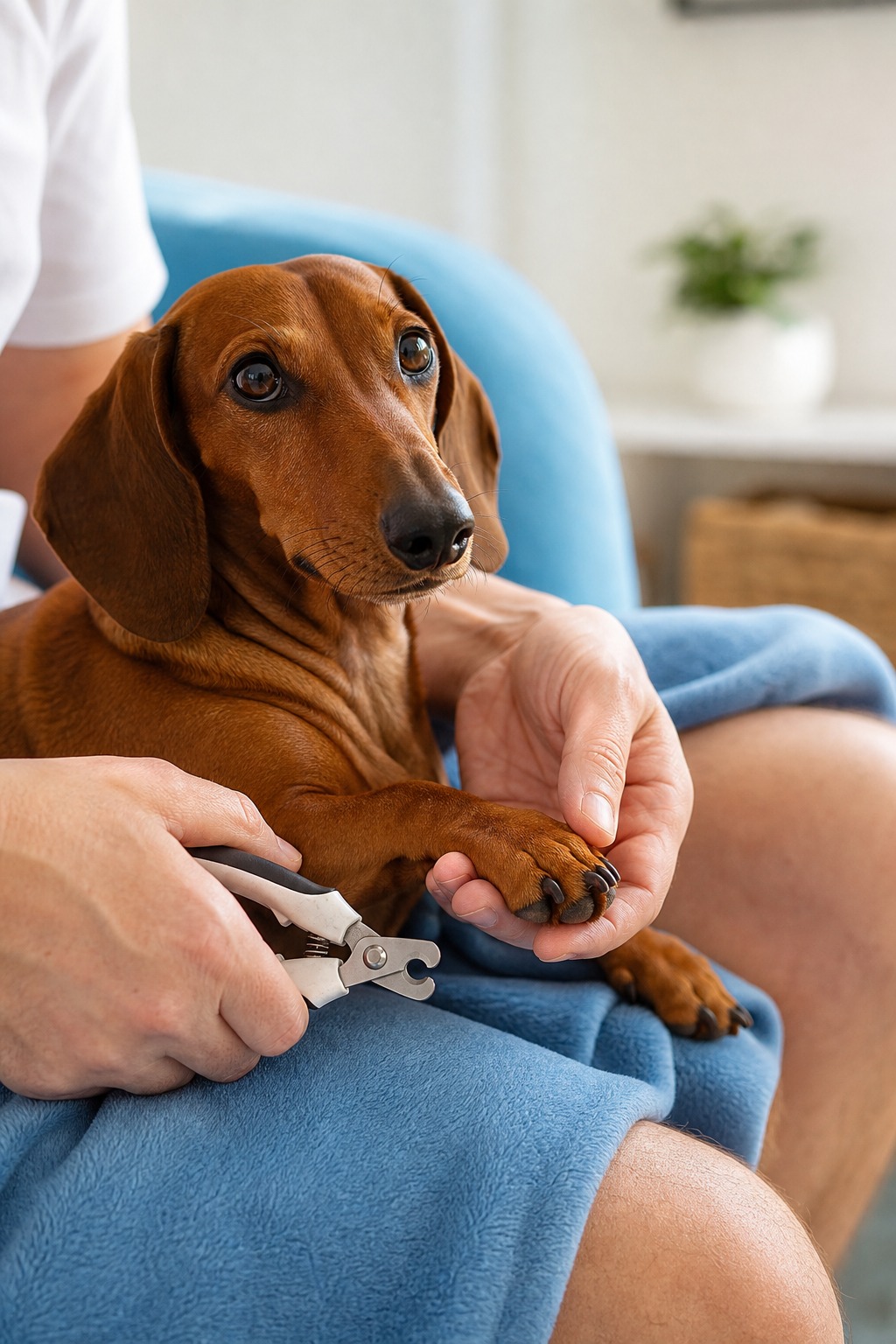
First, the reassuring truth: nicking the quick is not an emergency, and it is not a sign you are bad at this. It happens to seasoned groomers and to veterinarians. What separates a five-minute inconvenience from a stressful, bloody afternoon is not skill, it is knowing the sequence and, above all, respecting a clock. Blood looks alarming against a light floor, but a nicked nail is a small, self-limiting injury that almost always stops on its own if you let pressure do its job for long enough. Most people fail at exactly one thing: they lift the towel too soon.
So here is the whole thing organized the way it actually unfolds, by time.
The first 60 seconds: calm beats everything
Before tools, before powder, before anything, manage the two of you. This is not a soft nicety; it is mechanics. Dogs read your body, and an anxious dog gets an anxious owner’s stress right back, which raises their blood pressure, and higher blood pressure means more bleeding and a longer stop. So the first move is to lower your own voice, slow your hands, and settle your dog. A treat, a calm word, a still lap. You are not wasting time being gentle. You are literally reducing the flow you are about to stop.
Then find the source. Look at which nail, confirm it is the quick and not a cut pad or a torn nail (those can need different handling), and get ready to apply pressure to that one spot.
Minutes 1 to 5: the pressure clock
This is the single most important stretch, and the one people rush. Press a clean paper towel or soft cloth firmly against the tip of the bleeding nail, and hold it there with steady, even pressure for a full two to five minutes. Do not peek at the 30-second mark. Every time you lift the cloth to check, you tear away the clot that was forming and reset the clock to zero. Set an actual timer if you have to. For a large share of minor nicks, uninterrupted pressure alone is the entire treatment.
If it’s still going: clotting agents, including what’s in your pantry
If you lift the cloth after the full interval and it is still welling up, move to a clotting agent. The gold standard is styptic powder (or a styptic pencil). Its active ingredient, ferric subsulfate, constricts the blood vessel and clots the nail fast. Pack the powder directly onto the nail tip or apply it with a cotton swab; with a pencil, wet the tip first and rub it gently across the nail. Then, importantly, leave it, do not immediately wipe it away to inspect your work.
Here is the net-new, genuinely useful part that the panic-Googling owner needs at 9 p.m. with no styptic powder in the house: you almost certainly have a workable substitute in the kitchen. Veterinarians acknowledge that cornstarch, plain flour, or pressing the nail into a bar of soap will all help form a clot in a pinch, by drying and thickening the blood at the tip. They are not as fast or as thorough as styptic powder, and they do nothing to disinfect, so treat them as a bridge, not a cure. But when the choice is “cornstarch now” versus “nothing while I drive to the store,” cornstarch wins.
Two hard rules while you work: never use alcohol or hydrogen peroxide on the nail, both irritate the exposed quick and can worsen bleeding; and if bleeding continues, wrap the paw loosely with gauze or a pet-safe bandage to protect the nail and discourage licking, wrapped snug but never tight enough to restrict circulation.
The vet threshold: when this stops being a home fix
Most nicks never get here, but you should know the line in advance so you are not guessing in the moment. Call your veterinarian if any of these are true:
- The bleeding will not stop after 15 to 20 minutes of proper pressure and a clotting agent.
- The nail is split, torn, or broken rather than simply trimmed too short, that is a different, deeper injury.
- Your dog is limping, holding the paw up, or crying beyond the initial startle.
- Signs of infection show up in the following days: swelling, heat, pus, a bad smell, or renewed pain around the nail.
The last one matters because the risk with a nicked quick is not really the blood, which stops, but the small open wound left behind, which can let bacteria in. Watching the paw for a few days is part of the job.
Once it’s stopped: the short aftercare list
After the bleeding is under control, keep it simple for a few hours:
- Distract and comfort your dog with treats, gentle petting, or a calm voice, they will take the emotional cue from you here too.
- Keep them from licking the nail and from hard running or rough surfaces for the rest of the day.
- Leave the styptic or cornstarch scab alone rather than picking at it to look.
- Keep a stocked pet first-aid kit for next time: styptic powder, gauze, antiseptic wipes, and bandage wrap, so you are never improvising with pantry flour again.
How long healing takes
The timeline scales with how deep the cut was. A minor nick usually stops bleeding quickly, with any soreness gone within a day. A slightly deeper trim may leave your dog tender for a day or two, no treatment needed. Moderate injuries generally heal in three to five days. If the quick was cut deep or the nail split, give it up to two weeks, and watch for the infection signs above.
The real fix: making the nick far less likely
Stopping the bleeding is triage. The better goal is to catch the quick so rarely that this whole page becomes theoretical. Three things get you there.
Better tools. Match the clipper to the dog: guillotine-style for small and medium dogs, scissor-style for large breeds or thick nails, and electric grinders for gradual, low-risk shaping that makes hitting the quick much harder. Replace dull blades, which crush and slip.
Better technique, especially on dark nails. Learn the anatomy first. On light nails the quick is a visible pink core, so you simply stop short of it. On dark nails you cannot see it, so trim a sliver at a time and stop the moment a small dark oval appears in the center of the cut surface, that oval is your warning you are nearing the quick. Take off a little at a time, follow the nail’s natural curve, and do one nail then pause if your dog gets restless.
A calmer dog, built over time. Many dogs hate trims because of a past bad experience, sometimes a nicked quick exactly like this one. This is where the most current, evidence-backed approach helps: cooperative-care training. Rather than restraining a resisting dog, you teach them to opt in, offering a paw and holding still in exchange for rewards, with the freedom to pause. Studies on the method find dogs handled this way show less fear and are easier to maintain, which means fewer struggling, jerking movements, which means fewer accidental cuts in the first place. Between trims, casually handle your dog’s paws so the contact stays ordinary, pair trims with treats, and try calming aids like pheromone sprays or an anxiety vest for the truly nervous. If your dog simply will not allow it, hand the job to a groomer or vet tech; there is no shame in it, and it is safer than a fight.
Keep a regular schedule, too. Overgrown nails push the quick farther down the nail, which makes every future trim riskier, so short, frequent trims are safer than rare, drastic ones, and they spare your floors and your dog’s posture besides.
The bottom line
Catching the quick is common and almost always fixable at home. Stay calm, hold steady pressure for the full five minutes, reach for styptic powder or a pantry substitute if it keeps going, and know the handful of signs that mean it is time to call the vet. Then close the loop by never letting the nails get long, because the surest way to never nick a quick again is to keep the nails short enough that the quick stays deep where it belongs.
References
- “How to Stop a Dog’s Nail From Bleeding.” PetMD. petmd.com
- Edwards, Petra T., et al. “Puppy Pedicures: Exploring the Experiences of Australian Dogs to Nail Trims.” Applied Animal Behaviour Science, vol. 255, 2022. doi.org/10.1016/j.applanim.2022.105730
- Sydänheimo, Anna, et al. “Cooperative Care Does Not Scare: Use of Cooperative Care Training in Routine Husbandry in Dogs.” Animal Behaviour and Welfare Cases, 2023. doi.org/10.1079/abwcases.2023.0010
Not a substitute for your vet. Our guidance is educational. For urgent symptoms, contact a vet or emergency clinic right away. Editorial standards
Leila Torres leads our Living coverage, from home life and travel to the products and rescue stories that come with sharing a life with animals. She edits and writes across the section, with a soft spot for pieces about the bond between people and their pets.
Meet our experts ↗Keep reading
 Health & WellnessThose Clicking Nails Aren't Cosmetic. They're Changing How Your Dog Walks.Dr. Amara Solis · 9 min
 Health & WellnessBefore You Squeeze: The At-Home Anal Gland Job Most Dogs Don't NeedDr. Ravi Mehta · 6 min
 Health & WellnessIf You Can Hear Your Dog's Nails on the Floor, You're Already LateDr. Priya Nair · 9 min
 Health & WellnessMud Won't Hurt Your Dog. What's Living In It Might.Dr. Priya Nair · 6 min
 Health & WellnessHomemade Dog Ear Cleaner: The Ingredients to Skip Matter More Than the RecipeDr. Amara Solis · 9 min
 Health & WellnessOne Frenchie's Miserable, Itchy Skin Built an Entire Dog-Skincare BrandDr. Mara Chen · 6 min