


Cats of the World Makes a Radical Argument: Wealth Doesn't Equal Kindness
Hannah Shaw and Andrew Marttila crossed 30 countries for their bestselling photo book. Its most striking takeaway isn't the photography, it's the case that community, not money, is what makes a good life for a cat.

Affiliate disclosure. This article contains affiliate links. We may earn a small commission if you buy through a link, at no extra cost to you. How we handle recommendations.
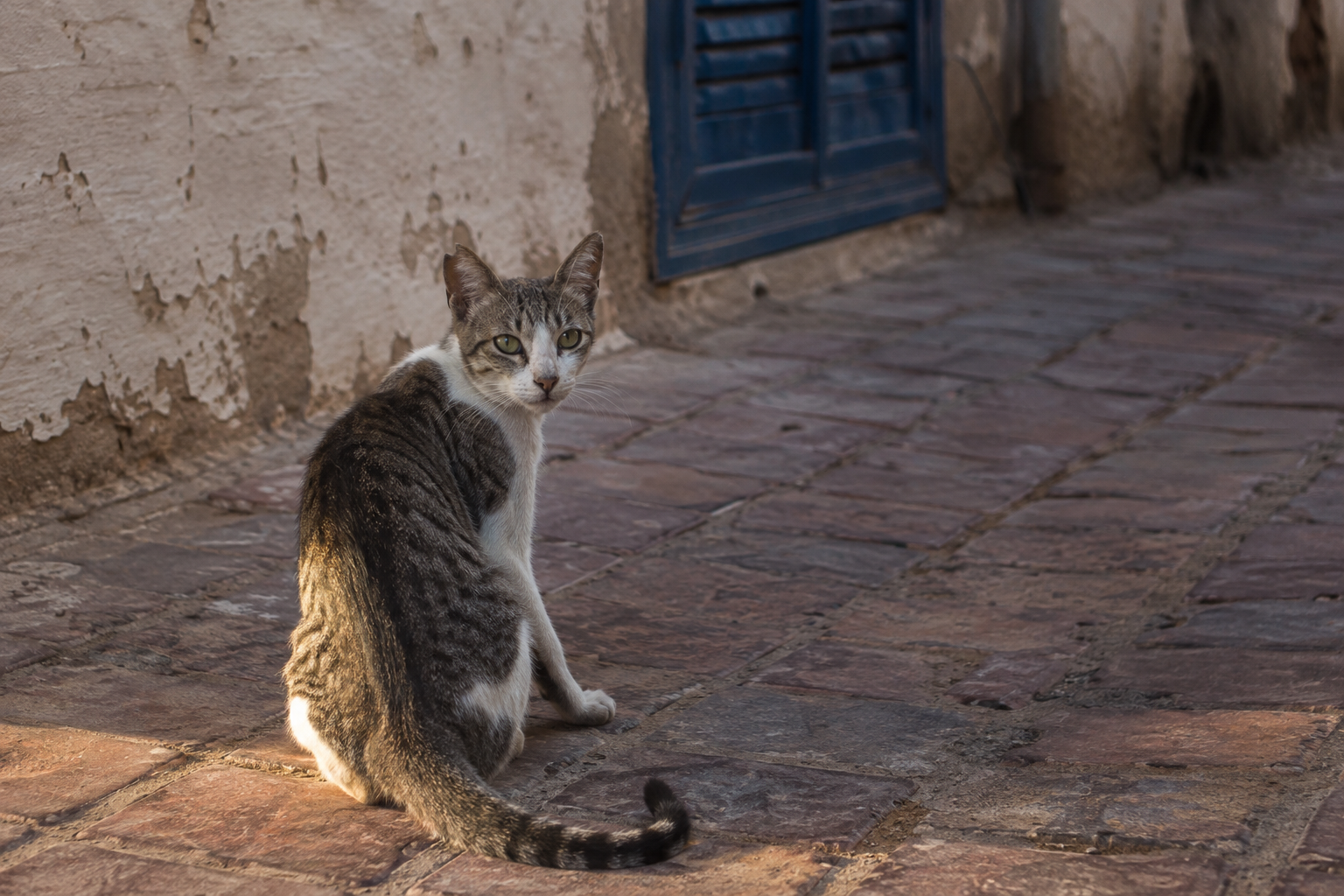
There is a sentence in the story of Cats of the World that stops you cold. Hannah “Kitten Lady” Shaw, who spent five years traveling the globe photographing cats with her husband, cat photographer Andrew Marttila, was asked, in effect, where a cat would be luckiest to be born. Her answer was not a wealthy country. “If I was having to be reborn as a cat, I wouldn’t want to bet on America, honestly,” she says. That single, slightly heretical idea, that money is not what makes a place kind to its animals, is the beating heart of this book, and it is a more interesting thing to sit with than any behind-the-scenes anecdote about treats and camera flashes.
So while there is a charming making-of story here, and we will get to it, let us start where the book itself really lands: with an argument.
The argument: community beats wealth
The assumption most of us carry, usually without examining it, is that rich countries take better care of animals than poor ones. Better vets, better food, better shelters. Shaw came home from 30 countries convinced that the truth is more complicated, and often reversed.
“If I could make one direct line between things being better for animals, it would be more community-focused cultures,” she says. Her example is not a gleaming veterinary hospital but a street. In Mumbai, she met cats who lived across three different families’ homes at once, each household with its own name for the same cat, the animal free to roam between them. “We’re so individual that we don’t think it’s our responsibility to help community animals,” she says. “But in a culture like India, where everybody is looking out for their community, it’s very natural that that would include the animals.”
Marttila frames the same idea through resourcefulness. Over and over the couple met “inventive, resourceful, creative people who didn’t have much money” and shared what they had anyway. “In the U.S. and more industrialized countries, there’s a focus on high-value medical equipment as opposed to utilizing what resources are there in the environment,” he says. In Nepal, where commercial kitten formula simply is not available, one rescuer worked out that the right ratio of water to yak milk makes a nourishing substitute. The point is not that poverty is good for cats. It is that ingenuity and collective responsibility can do what money is assumed to, and sometimes does it better.
The honesty that keeps it from being a fairy tale
What makes the argument credible is that Shaw and Marttila refuse to romanticize it. They are careful to note the real “variance” in the cats they met, and that some places imagined as feline paradises are not equipped to care for the animals actually living there.
Istanbul is the sharpest example. Shaw says they “witnessed more kindness to cats on the street” there than almost anywhere else on the trip, a city genuinely devoted to its cats. And yet Turkey’s economy makes it hard for many residents to afford the veterinary care those beloved cats need. The book holds both truths in the same hand, the extraordinary warmth and the genuine hardship, and centers the people working on solutions rather than papering over the problems. “One of the side quests” of the book, as Shaw puts it, is simply for readers to come away seeing that compassion for animals is universal, expressed in a thousand different forms across every border.
How a cruel comment started it all
The project did not begin with a thesis. It began with a sting. Back in 2019, traveling in Malaysia, the couple posted some cat photos and were met with a wave of xenophobic comments, strangers making ugly assumptions about how cats were treated in that country. It came from only a small slice of their followers, but it lodged. They wanted to make something that showed what they were actually seeing on the ground, which was not cruelty but “incredible passion” and “rescuers doing very impactful work.”
“We just thought, gosh, if people could just be here with us and see what we’re seeing and understand the compassion that exists that is so universal and so easily recognizable,” Shaw recalls. The book became the way to bring readers there.
Getting in the door with one phrase
Turning that intention into a globe-spanning book meant getting access to places no tour bus goes. The pandemic grounded their travel for a stretch, but it gave them time to plan, and rather than booking standard tourist routes, they played what Shaw calls a “game of tag,” asking friends, and friends of friends, if they knew anyone in a given country, then following each lead to the next. Plenty of the best contacts were not even online, so local knowledge was everything.
Once on the ground, they discovered they did not need fluency in any language. They needed one sentence: “Is there a cat here?” That question, or sometimes just pointing to the matching cat tattoos they both wear, opened the door to what Marttila calls a “secret universe” of people making heroic rescue efforts.
The book’s tenderest encounter belongs to an elderly woman they call “the local godmother of cats,” Mrs. Kaparou, who lives on a hilltop above a village on Paros. She welcomes street cats into her garden, feeds them, and pays for their spay and neuter surgeries and vet care out of her own pocket. She speaks no English, and it did not matter. With help from Google Translate and the universal language of three people who adore cats, she invited Shaw and Marttila into her traditional Greek kitchen, fed them tomatoes from her garden, and poured coffee while they took in the blue-and-white houses below. “Thank you for loving animals,” she told them. “You are so beautiful, both of you, and I love you so much.” Shaw was moved to tears on the spot, and again just recalling it. That is the community argument made flesh: no shared language, no shared currency, and still a complete meeting of care.
And yes, about those impossibly good cat photos
The obvious question, once you open the book, is how anyone gets photographs this good of cats who are mostly not house pets. Part of the answer is patience, and part of it is bribery. Marttila’s secret weapon was Churu, the lickable cat treat he affectionately calls “meat tubes.” One taste and even a wary street cat often turned into a willing collaborator.
His method was to start humble. With any cat met in a village or on a rural hike, the first goal was modest: get one clear frame. “If I could frame it well, awesome, and then I would become more ambitious as I discovered whether or not they are social,” he says. If a cat was social, out came the treats and toys to gently reposition it; once it relaxed, he would add gear like the flash. And once the Churu appeared, he says, the cats often behaved as if asking where he wanted them to pose. Some needed no persuasion at all, like a cat in Montenegro who worked the camera like a seasoned professional: “If we’d stayed there, she would have gone six hours.”
Where the book stands now
Cats of the World was published by Ten Speed Press, an imprint of Penguin Random House, on October 15, 2024, and became an instant New York Times bestseller, drawing warm reviews that praised both Marttila’s photography and Shaw’s essays. Across the five-year project the couple visited roughly 100 cities in dozens of countries, from Japan and Malaysia to Montenegro, Greece, Nepal, and Dubai, meeting local rescuers and advocates at each stop.
Because it has stayed in steady print, it remains an easy gift for the cat lover in your life or a worthwhile addition to your own shelf. And its central claim has not aged a day, because the thing the book is really about, people choosing to care for animals with whatever they have, and communities that make room for a cat to simply be a cat, never goes out of style.
References
- Shaw, Hannah, and Andrew Marttila. Cats of the World. Ten Speed Press / Penguin Random House, 2024, ISBN 9780593183113. penguinrandomhouse.com
- “Cats of the World.” Kitten Lady (Hannah Shaw official site). kittenlady.org
Leila Torres leads our Living coverage, from home life and travel to the products and rescue stories that come with sharing a life with animals. She edits and writes across the section, with a soft spot for pieces about the bond between people and their pets.
Meet our experts ↗Keep reading
 Living95% of Them Adopted the Cat They 'Just' FosteredNina Vasquez · 5 min
 LivingYour Cat Isn't Trying to Cuddle. They're Doing Math.Dr. Nina Kohl · 6 min
 LivingA Grumpy 14-Year-Old Cat Nobody Would Have Adopted Started a MovementLeila Torres · 6 min
 LivingYour Cat Notices the Empty Spot. Whether to Call It Grief Is the Hard PartDr. Nina Kohl · 6 min
 LivingYour Kid Isn't Scaring the Cat on Purpose. Here's the Fix.Dr. Nina Kohl · 6 min
 First DaysHer Cat Hid Under a Dresser for Months. That Was the Adoption Working.Dr. Amara Solis · 7 min