


Your Cat Is Probably Securely Attached. Here's Why That's the Useful Part
The viral headline is that cats bond like people. The finding that actually helps you: most cats are securely attached, and knowing how to read the insecure minority changes how you care for them.

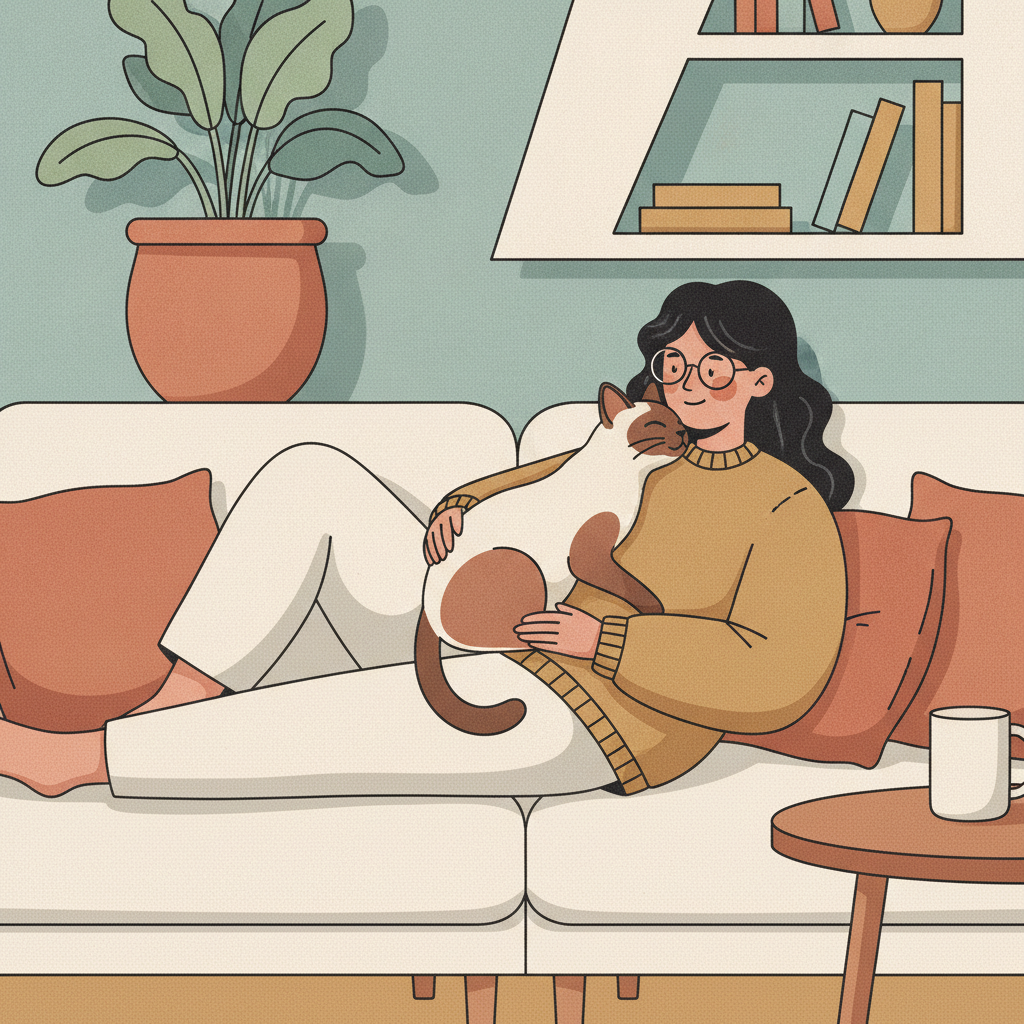
The headline that went viral, “cats have the same attachment styles as people,” is true, but it buries the more useful finding. Yes, a landmark study showed cats form secure and insecure bonds to their humans just like human infants do. But the number that should change how you treat your cat is this one: the clear majority of cats are securely attached. The aloof, doesn’t-need-anyone cat of popular imagination is the exception, not the rule. So the practical question isn’t “do cats bond” (they do), it’s “is my cat one of the secure majority or the insecure minority, and what does each need from me?” That’s what’s worth your attention.
The number that reframes the stereotype
When researchers ran cats through a standard attachment test, about two-thirds came out securely attached. In a group of 70 kittens, 64 percent were secure; in a separate group of 38 adult cats, 66 percent were secure. Those figures are strikingly close to humans, where roughly 65 percent of infants test as securely attached. In other words, the average cat treats its person the way a securely attached child treats a parent: as a home base. That single statistic does more to dismantle the “cats don’t care” myth than any amount of anecdote, and it reframes the aloof-cat stereotype as, mostly, a misread of a minority.
Each cat has its own distinct personality, but attachment shows up in cats the same way it does in human infants and in dogs, with both secure and insecure bonds to their people. Once you know what you’re watching for, the patterns are unmistakable, and most cats are more attached than their owners realize.
— Dr. Nina Kohl, Pet Times behavior advisor
How to tell which kind of cat you have
You don’t need a lab to spot the pattern; you need to watch what your cat does when you leave and come back. The behaviors sort into three recognizable types:
- Securely attached cats greet you on your return, then relax back into normal behavior. They use you as a base and get on with their day.
- Anxiously attached cats stay glued to your side or your lap rather than exploring comfortably, and they don’t settle easily.
- Avoidantly attached cats keep their distance, show less distress when you leave, and meow less while you’re gone.
The reunion moment is the tell. A secure cat’s version of “I missed you” is a quick acknowledgment followed by independence; an insecure cat either can’t let go or won’t engage.
Why this is genuinely practical, not just cute
Here’s the payoff, and it’s the part the viral coverage skips. Securely and insecurely attached cats handle stress differently, and insecurely attached cats take noticeably longer to calm down after something rattles them. If you know your cat leans anxious or avoidant, you can build accommodations in advance instead of reacting to a meltdown. Introducing houseguests slowly, giving a nervous cat elevated hideaways and a predictable routine, and not forcing interaction all become obvious moves once you’ve named the pattern. For a secure cat, you can lean on your own presence as a genuine calming tool during vet trips or moves; for an insecure one, you build the environment to do more of that work because your cat can’t fully use you as a base yet.
Crucially, an anxious or avoidant cat is not a less loving cat. Both secure and insecure cats are attached to their people; the difference is only in how well they can use that person to cope with change and stress. A secure cat can borrow your calm to relax. An insecure cat can’t quite, and will show persistent distress when faced with a stressor, which is exactly why knowing the difference lets you help.
How the researchers figured this out
The method borrows straight from human developmental psychology. To classify a baby’s attachment, scientists use a “secure base test,” watching how the infant behaves when separated from and then reunited with a caregiver. The cat version put each cat in a room with its person for two minutes, alone for two minutes, and reunited for two, while researchers scored separation distress, vocalization, and proximity-seeking. The parallel to the human protocol is what makes the comparison legitimate rather than a cute analogy, and it’s why the resulting numbers line up so closely with infant data.
What came after the first study
That 2019 study, published in Current Biology, was a starting point, not the last word. Since then, multiple research teams have used the same secure base test to study feline attachment, and the findings have deepened the picture. One follow-up found that securely attached cats get a measurable boost in oxytocin, the bonding hormone, after cuddling with their humans, which suggests the bond is doing real physiological work, not just shaping behavior. The through-line across this newer research is consistent with the original: attachment in cats is real, common, and secure more often than not, and paying attention to your individual cat’s style is the concrete takeaway.
The bottom line for your cat
Whatever style your cat has, the job is the same: be emotionally available and responsive. You don’t need a formal test to apply this. Watch how your cat handles your comings and goings, notice whether they use you as a base or struggle to, and adjust the environment and pace to fit. Most cats are more securely bonded to you than the stereotype suggests, and the ones who aren’t simply need you to do a bit more of the steadying for them.
References
- Vitale, K. R., Behnke, A. C., Udell, M. A. R. Attachment Bonds Between Domestic Cats and Humans. Current Biology, 2019.
- Oregon State University Newsroom. Cats, Like Children and Dogs, Develop Attachments to Their Caregivers, Study Shows.
Nina Vasquez writes about life at home with pets and the relationships at the heart of it. Her work covers day-to-day living, people-and-pet stories, and the products that fit into a real household, with a warm, grounded take on everyday pet ownership.
Meet our experts ↗Keep reading
 TrainingYour Cat Isn't Being Dramatic. 8 Things That Genuinely Wound ThemDr. Nina Kohl · 6 min
 TrainingThat Old Sweater Isn't Comforting Your Cat. It's Just Soft.Dr. Mara Chen · 8 min
 First DaysYour Older Cat Doesn't Hate the Kitten. It Hates the Energy.Dr. Priya Nair · 7 min
 TrainingYour Cat Isn't Plotting Revenge. They Already Forgot.Dr. Nina Kohl · 5 min
 TrainingYour Cat Notices the Suitcase. Here's What They Actually Feel.Dr. Nina Kohl · 5 min
 TrainingYour Cat Isn't Attacking You. It's Sending One of 5 Messages.Dr. Amara Solis · 5 min