


Litter Box Strikes: Why Your Cat Pees Where They Shouldn't
Cats almost never pee outside the box out of spite. Here is how to find the real medical or environmental cause and fix it for good.

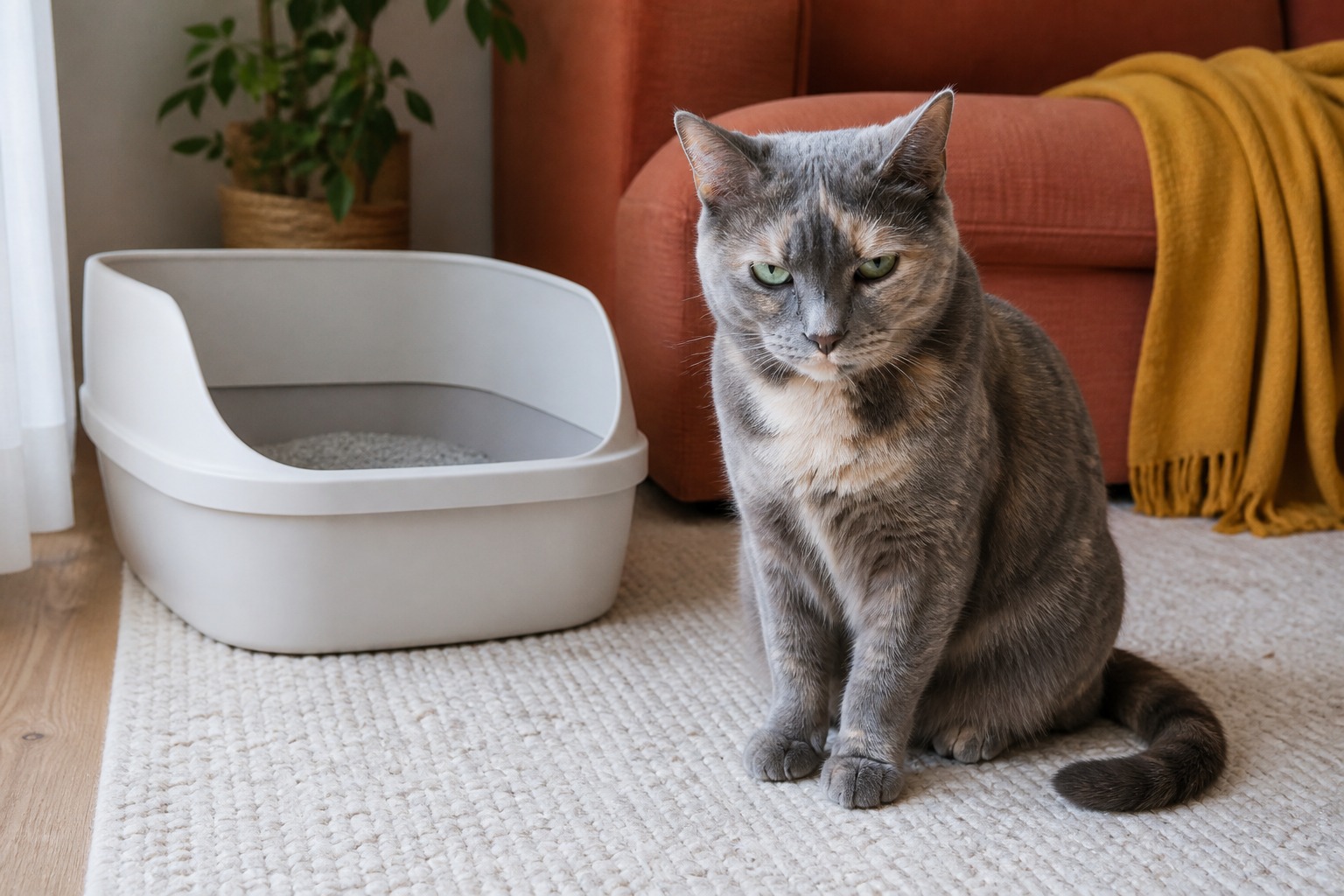
A cat doing cat things is mostly charming. The shadow-pouncing, the 3 a.m. zoomies, the dramatic flop in the middle of your keyboard. You forgive almost all of it. Then you find a wet patch on the rug, and forgiveness gets a lot harder.
Here is the thing worth holding onto before you lose your patience: a cat peeing outside the box is almost never doing it to spite you. It is a signal. Something hurts, something changed, or something about the bathroom setup is a hard no. Your job is to read the signal, not to declare war.
First rule out a medical problem
Inappropriate urination is one of the most common ways a sick cat tells you something is wrong, so the litter box detective work always starts at the vet. Expect a physical exam plus tests like a urinalysis, bloodwork, or x-rays to narrow things down. Several conditions are common culprits.
A urinary tract infection happens when bacteria climb the urethra into the bladder. Left alone, that infection can travel up to the kidneys and turn into pyelonephritis, which makes cats genuinely ill and is far harder to treat than a simple UTI.
Feline idiopathic cystitis, or FIC, is bladder inflammation with no identifiable cause. It looks a lot like a UTI but without the bacteria, and stress is considered a major driver. Kidney disease in its various forms tends to make cats pee more often, and that extra volume sends some of them looking for relief outside the box. Diabetes does something similar. High blood sugar spills glucose into the urine and ramps up both thirst and urination, so a diabetic cat may simply not make it to the box in time.
Do not overlook the mechanical reasons either. Arthritis and other mobility problems make a high-sided box painful to climb into. Many of us buy tall boxes to contain the litter-kicking enthusiasts, but for a senior cat or one with a sore back or hips, that wall is a wall. Given the choice between pain and an easier spot on the floor, they pick the floor.
When a previously tidy cat suddenly stops using the box, I treat it as a medical question until proven otherwise. Pain and urgency drive far more accidents than attitude ever does.
When it is behavior, not biology
Once your vet clears the medical list, look at behavior. Two patterns come up most.
Marking is communication, not bathroom use. A marking cat usually stands upright, quivers the tail, and sprays a small amount onto a vertical surface like a wall or the side of the couch. Eliminating looks different: the cat squats or hunches and produces a real puddle. The body language is not foolproof, but it is a useful first clue about which behavior you are dealing with.
Stress and anxiety are the other big one. Cats get tagged as aloof, but they are sensitive animals, and a stressed cat often acts it out through urination.
The things that change at home
If the accidents started recently, something in the environment probably shifted. Cats run on routine, and disruption rattles them.
A new pet or person is a classic trigger. Your cat may not find the new puppy or kitten adorable. They may find it an unwelcome roommate, and peeing becomes a protest or a stress release. A move does the same thing. A new house is exciting for you and disorienting for a cat who has lost track of where the box even is. And smaller changes count too. Vacations, renovations, and a shifted work schedule can all push a sensitive cat off their normal patterns.
When the box itself is the problem
Sometimes the cat is fine and the bathroom is the issue. Cats will not file a complaint or order a replacement online. They will just quietly stop using a box they dislike.
A dirty box is the most obvious offense. Nobody wants to use an unflushed toilet, and your cat agrees. If the litter is constantly soiled, they will go hunting for somewhere cleaner.
The litter and box type matter more than people expect. Cats can be picky about scent, dust level, and texture, and many have strong opinions about covered versus open boxes. Size counts too. A big cat forced to contort inside a cramped box will eventually opt out. So does location. Cats want a quiet, low-traffic spot with some privacy, away from clattering appliances like the washing machine, and not parked right next to their food or bed.
In multi-cat homes, quantity is non-negotiable. Some cats will grudgingly share, but plenty will refuse a box another cat has soiled. The rule of thumb is one box per cat plus one extra, spaced apart so nobody has to guard a single bathroom.
A practical plan to turn it around
Living with a serial offender is genuinely hard, but a few moves stack the odds in your favor.
- Keep it spotless. Scoop daily so there is always a clean spot, and do a full litter change and deep clean at least weekly to keep odor and bacteria down.
- Rethink location. Move boxes away from foot traffic and loud noise.
- Add boxes. One per cat plus one extra, spread around the home.
- Experiment slowly. Try different litters, textures, and box styles one change at a time. Finding the right combination can take a while.
- Loop in your vet. Routine checkups catch problems early, and any sudden change in bathroom habits is worth a call.
When to call the vet, not just clean the carpet
An occasional accident with an obvious explanation is one thing. A pattern of soiling is another, and certain signs mean you should book a visit rather than wait it out:
- Frequent urination
- Blood in the urine
- Cloudy urine
- A strong or foul odor
- Straining to pee
- Posturing to urinate with nothing coming out
- Changes in eating or drinking
- Vomiting, diarrhea, or lethargy alongside the accidents
- Excessive licking and grooming, especially of the back end
- You are at your wit’s end. This matters. Some owners get so worn down by this that they start thinking about rehoming or worse. Do not let it reach that point. Almost every case has a fixable cause.
What’s new since this was written
Recent feline medicine continues to lean hard into the stress side of litter box trouble, especially for FIC. Updated guidance from veterinary groups now frames feline idiopathic cystitis as part of a broader stress syndrome called Pandora syndrome, where bladder flare-ups travel alongside other signs of chronic stress rather than standing alone. The practical takeaway for owners is that environmental enrichment, predictable routines, and reducing conflict between cats are treated as front-line therapy, not afterthoughts.
There is also growing attention to multimodal environmental modification, a clinical term for the unglamorous fundamentals that actually move the needle: more boxes, better placement, hiding spots, vertical space, and consistent feeding times. It is a useful reminder that the cheapest fixes are often the ones that work.
Final thoughts
A cat peeing outside the box is frustrating, smelly, and almost always solvable. Start with the vet to rule out illness, never punish, and take an honest look at whether the boxes themselves meet your cat’s standards. For stubborn cases, a veterinary behaviorist can help dig out the root cause so you and your cat can get back to peace.
References
- Heath, Sarah. “Common Feline Problem Behaviours: Unacceptable Indoor Elimination.” Journal of Feline Medicine and Surgery, vol. 21, no. 3, 2019, pp. 199 to 208. https://doi.org/10.1177/1098612x19831202
- “Feline Behavior Problems: House Soiling.” Cornell University College of Veterinary Medicine. https://www.vet.cornell.edu/departments-centers-and-institutes/cornell-feline-health-center/health-information/feline-health-topics/feline-behavior-problems-house-soiling
- “Feline Lower Urinary Tract Disease (FLUTD).” American Veterinary Medical Association. https://www.avma.org/resources-tools/pet-owners/petcare/feline-lower-urinary-tract-disease
Common questions
How do I stop my cat from peeing in the house?
Book a vet checkup to rule out illness, keep every litter box scrupulously clean, add enough boxes for your household, and place them in quiet, private spots. Most cases improve once a medical or stress trigger is found and removed.
Should I punish my cat for peeing outside the litter box?
Never. Punishment raises your cat's stress level and usually makes the problem worse. Focus on a vet visit and on improving the litter box setup instead.
Why is my cat peeing on the floor but pooping in the box?
This split pattern often points to a urinary tract issue, urine marking, or a box your cat finds uncomfortable for the longer business of urinating. A vet can help you tell these apart.
Why is my cat peeing over the edge of the box?
The box is probably too small. Cats that have to hunch or aim awkwardly will overshoot the side. Size up to a box your cat fits in comfortably.
Dr. Park is a board-certified emergency and critical care specialist. She reviews our health and safety content for clinical accuracy and contributes guides on recognising urgent conditions. Her focus is helping owners act quickly and correctly when it matters most.
Meet our experts ↗Keep reading
 TrainingYou Can't Train a Cat Off the Counter. You Can Outbid Her.Dr. Mara Chen · 8 min
 TrainingThe Holiday Decoration That Sends Cats to Surgery (It Isn't the Ornament)Marcus Webb · 6 min
 Training8 Kind Things You Do That Your Cat Reads as ThreatsDr. Amara Solis · 8 min
 TrainingYour Couch Isn't Losing to Your Cat. It's Losing to Bad Real Estate.Dr. Nina Kohl · 9 min
 TrainingToilet-Training Your Cat Means Throwing Away Their Health ChartDr. Ravi Mehta · 8 min
 Health & WellnessYour Cat Peed on Your Clothes. The Fabric Is the Clue.Dr. Lena Park · 8 min