


A Cat Turned On a Stove and Started a Deadly Fire. How to Prevent It
A Pennsylvania cat accidentally ignited an apartment fire that killed two other cats. A vet explains how to keep your own cat off the stove safely.

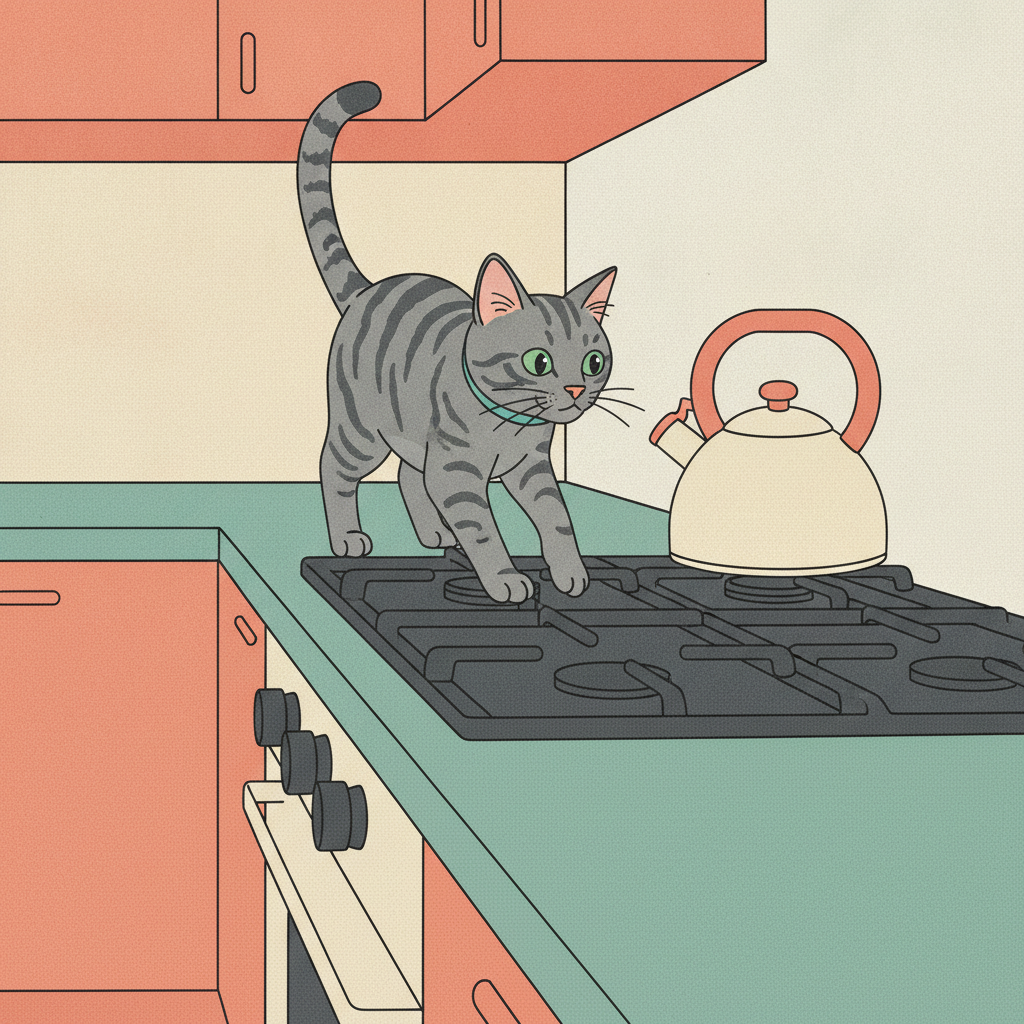
It sounds like a freak headline, and it is, but it really happened. A cat in Pennsylvania accidentally set off an apartment fire that killed two other cats in the building. If you have a cat who treats your countertops like personal real estate, the story is worth a closer look, not to panic you, but to help you prevent it.
What happened
The fire broke out on a Wednesday afternoon at a small apartment complex in Greensburg, Pennsylvania. After an automatic alarm tripped, crews arrived around 4 p.m. and found flames in the kitchen of a ground-floor unit. The fire burned hot enough that the surrounding area was shut down for over an hour, and several residents had to evacuate.
Two cats died in the blaze. No people were hurt, and remarkably, the cat that started the fire survived. The four-unit building took some interior damage but is expected to be livable again once repairs are done. All the tenants were displaced in the meantime, with the local Red Cross stepping in to help.
The cause was caught on camera. Investigators reviewed nanny-cam footage within a day of the fire and saw a cat jump onto the stove and accidentally switch on the burners. The local fire chief confirmed it was ruled accidental, caused by a pet igniting the stovetop. He noted that he has seen pets start fires before across his career, and stressed how important it is to keep animals away from fire hazards.
How likely is this, really?
Vanishingly rare, and it is worth holding onto that. This is the kind of headline that makes every cat owner suddenly suspicious of their stove, but a cat torching the kitchen is an extreme outlier. Still, the broader category is not as fringe as it sounds. The National Fire Protection Association estimates that pets are involved in setting roughly a thousand home fires in the United States each year, and it specifically flags stove or cooktop knobs as the number-one hazard, because they are exactly at paw height and turn with almost no force. Knowing that, if your cat is a committed counter-and-stove explorer, a few cheap precautions are more than paranoia.
If your cat already has a habit of getting on the stove, you don’t want to rely on luck. Childproof knob covers are cheap, and an induction range simply will not turn on for a paw. Both remove the danger entirely instead of asking your cat to behave perfectly forever.
Why cats love the stove, and what to do instead
Cats jump on counters and stovetops for three basic reasons: height, snacks, and warmth. The most effective strategy is not punishment, it is giving them better options for each of those needs.
- Height. Cats want to survey their kingdom, and that often includes “managing” you while you cook. Set up cat trees or wall shelves nearby, ideally within sight of the kitchen, so they can perch without landing on the burners.
- Snacks. Keep counters and the stovetop clean and clear of food and dirty dishes when they are not in use. A spotless surface is a boring surface, and a cat with nothing to lick has little reason to climb up.
- Warmth. Cats love heat more than we do, and many of them gravitate to the stovetop simply because the pilot light underneath keeps it toasty. A heated cat bed scratches that itch far more safely. Just be sure to keep your cat from chewing the cord and follow the manufacturer’s safety guidance, so you are not trading one fire risk for another.
One more tip: reward the behavior you want. When your cat heads to their tree or shelf instead of the counter, give them a treat there. That keeps drawing them back to the safe spot.
If you want the single most bulletproof fix, remove the stove knobs entirely when you are not cooking. Most modern ranges have knobs that pull straight off the stem, and a cat cannot turn a burner on that is not there. It is free, it takes five seconds, and it is the one measure that does not rely on your cat cooperating.
It is a scary story, but a preventable one. A clean stovetop, a couple of perches, a warm bed of their own, and pulled or covered knobs, and your kitchen stops being a hazard your cat keeps trying to climb.
References
- National Fire Protection Association. “Pet Fire Safety Tip Sheet.” https://www.nfpa.org/downloadable-resources/safety-tip-sheets/pet-fire-safety-tip-sheet
- American Humane. “Pet Fire Safety.” https://www.americanhumane.org/public-education/pet-fire-safety-2/
- “How to Train a Cat to Stay Off Counters.” The Humane Society of the United States. https://www.humanesociety.org/resources/how-train-your-cat-stay-counters
Not a substitute for your vet. Our guidance is educational. For urgent symptoms, contact a vet or emergency clinic right away. Editorial standards
Dr. Solis is a board-certified veterinary dermatologist with over twelve years of clinical experience. She advises on skin conditions, allergies, and grooming practices that affect coat and skin health. All dermatology and allergy content at The Pet Times is reviewed by her team before publication.
Meet our experts ↗Keep reading
 Health & WellnessNot All Toxic Succulents Are Equal: The One Cat Owners UnderestimateDr. Priya Nair · 7 min
 Health & WellnessRingworm Isn't a Worm. It's a Fungus That Can Jump to You.Dr. Priya Nair · 6 min
 Health & WellnessNeosporin's Third Ingredient Is the One That Can Kill Your CatDr. Amara Solis · 8 min
 LivingA Robotaxi Killed a Beloved Bodega Cat. Five Weeks Later It Ran Over a Dog.Nina Vasquez · 4 min
 Health & WellnessCats Are America's Most Rabid Pet. The Indoor Ones Aren't Exempt.Dr. Ravi Mehta · 8 min
 FoodThe 'Natural' Raw Diet Is Failing Cats on Two FrontsDr. Amara Solis · 7 min