


Your Cat's Pink Eye Probably Isn't an Infection You Can Cure. It's a Flare
For most cats, pink eye isn't a one-time bug you kill with drops. It's a flare of a virus they carry for life. Here's what that changes about treatment, triggers, and when a goopy eye becomes an emergency.

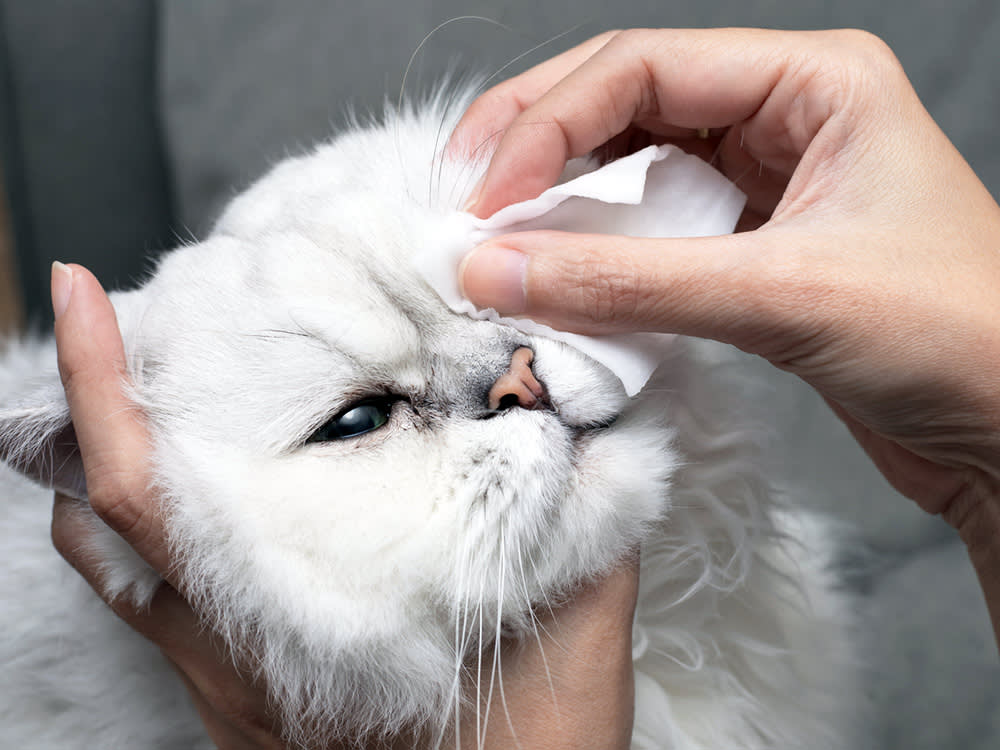
Most advice about cat pink eye treats it like a splinter: a problem that arrives, gets removed, and is gone. For a lot of cats, that framing is simply wrong, and it sets owners up to feel like they failed when the red, weepy eye comes back a few months later.
Here’s the more useful truth. Conjunctivitis, the clinical name for pink eye, is inflammation of the conjunctiva, the thin pink tissue lining the inner eyelids and the whites of the eyes. It’s one of the most common eye problems vets see in cats. And in the majority of cases the underlying cause is a virus your cat will carry for the rest of their life. So the goal usually isn’t to cure an infection once. It’s to calm the current flare and stretch out the time until the next one.
That single shift, from “kill the bug” to “manage the flares,” changes almost everything about how you handle it.
Owners often blame themselves when the eye flares again, and they really shouldn’t. With most of these cats we’re not chasing a cure, we’re keeping the eye comfortable during a bad stretch and giving it long, quiet gaps in between. A recurrence isn’t a treatment that failed. It’s the nature of the virus.
The virus most cases trace back to
The biggest driver of feline conjunctivitis is viral, and feline herpesvirus type 1, usually shortened to FHV-1, leads the pack. Feline calicivirus is a close second. What makes herpesvirus different from a passing bug is that it doesn’t fully leave. After the first infection it settles into the nerves and goes dormant, and then reactivates later, often when your cat is stressed. That’s why an indoor, healthy cat can suddenly develop a goopy eye out of nowhere: the virus was already there, waiting.
This is the whole reason the “flare” mindset matters. You’re not re-catching pink eye from the outside world every time. You’re seeing the same lifelong resident wake back up.
But not every case is that virus
Viral is the most common story, not the only one, and the cause changes the fix.
Bacteria can cause conjunctivitis too, most often Chlamydophila felis and Mycoplasma, with chlamydia especially common in young kittens. Cats with a viral flare frequently pick up a secondary bacterial infection on top, which is part of why some cases need more than one medication. Less commonly, parasites are to blame, including Cuterebra (rodent bot fly) larvae, Leishmania, and Thelazia eye worms. And plenty of cases aren’t infections at all. Dust, smoke, potpourri, spray cleaners, and other chemicals can inflame a cat’s eyes, and so can a scratch or a foreign object. Pink eye can also ride along with another problem entirely, like glaucoma, dry eye, or trauma.
The practical point: a single red eye after a dusty afternoon is a different animal from a weepy eye during a stressful move, which is different again from a kitten with sticky eyes. Your vet sorts out which one you’re dealing with, and that determines whether the answer is drops, an antiviral, treating an irritant, or something else.
What a flare actually looks like
Conjunctivitis can hit one eye or both, and it often travels with signs of an upper respiratory infection, since the same viruses cause both. Watch for:
- Eye discharge that’s clear, mucoid, or green
- Swelling around the eye
- Squinting
- Redness of the sclera, the whites of the eyes
- A red, swollen third eyelid
- Rubbing or pawing at the eye
- Excessive tearing
- Excessive blinking
- Sneezing
- Nasal discharge
One or two of these on their own may be minor. Several together, or any of them lasting more than a day, is your cue to call.
Treating a flare without making it worse
Because most cats have an underlying chronic virus, treatment usually aims at settling the acute inflammation and easing discomfort rather than “curing” anything for good. Depending on the cause, your vet may reach for:
- Antibiotics, oral or topical, for bacterial involvement
- Antiviral medication, oral or topical
- Artificial tears
- Stress reduction
- Steroids, but only in specific cases and only when a vet directs it
- A warm compress to soften and wipe away the crusty discharge
- An Elizabethan collar, the cone, to stop rubbing that damages the eye
- Environmental adjustments to remove irritants
A word of caution that owners often miss: never reach for a leftover or human eye medication, especially a steroid drop. On the wrong eye, a steroid can turn a manageable herpes flare into a serious corneal ulcer. Medication for an eye always goes through your vet.
Giving drops to an unwilling cat is its own challenge. Wipe the eye clean first, wrap your cat gently in a towel, hold the lids open, and aim one drop toward the eye, then let them blink. It’s a skill, not a talent, and your vet’s team can coach you through a hold that works.
Your real job: managing the triggers
If the cause is herpesvirus, prevention isn’t about avoiding a germ. It’s about not waking the one your cat already carries, and about protecting other cats in the home. This is where an owner has the most leverage.
- Lower the stress. Stress is the single biggest trigger for herpes flares. Big changes, a new pet, travel, boarding, or a chaotic household can all set one off. Predictable routines, safe hiding spots, and easing big transitions genuinely reduce flares.
- Stay current on vaccines. The calicivirus (FCV) and herpesvirus (FHV-1) vaccines are core for cats. They don’t guarantee a flare-free life, but they lower the risk and can soften the episodes.
- Isolate a sick cat. Infectious conjunctivitis spreads fast in close quarters like shelters, catteries, and multi-cat homes. Keep a cat with a runny eye or respiratory signs separated until they’re clear.
- Practice good hygiene. Wash your hands after handling a sick cat, and in multi-cat homes clean shared litter boxes, bowls, and objects regularly.
- Clear out irritants. Keep smoke, dust, and chemical sprays away from your cat’s spaces.
When a goopy eye becomes an emergency
Here’s the threshold list worth keeping in your head, because this is the part that protects your cat’s sight. Call your vet promptly, not eventually, if you notice any of these:
- A cloudy, filmy, or bluish look to the eye’s surface
- Your cat holding the eye clamped shut or clearly in pain
- Green or thick discharge, or discharge that’s rapidly getting worse
- A visible scratch, wound, or bulging on the eye
- Swelling that spreads or a cat who suddenly seems unwell overall
- Any eye change in a very young kitten, who can lose an eye fast
The reason for urgency is real. Left untreated, feline conjunctivitis can progress to deep corneal ulcers, and those can end in blindness or the removal of the eye. Most cases, caught early, clear up quickly with the right care. Even a cat with recurring flares deserves a vet’s eyes on each one. Herpesvirus may be forever, but a flare doesn’t have to be.
What newer research adds
For years the standard home advice for herpes cats was to add the amino acid L-lysine, sold as a powder or paste, to blunt flares. Newer evidence has muddied that. A systematic review of the published studies concluded that lysine is not effective at preventing or treating feline herpesvirus infection, and some researchers have argued it should no longer be routinely recommended.
That doesn’t make lysine dangerous, and a few vets still use it case by case. But if you’ve been dutifully dosing lysine and still seeing flares, the science suggests you weren’t doing it wrong, the supplement just may not do much. The tools with the best support are unglamorous: treat each flare promptly, keep vaccines current, and above all keep your cat’s stress low. Ask your own vet what’s worth your effort for your particular cat rather than leaning on a supplement to carry the load.
References
- Cornell Feline Health Center, Feline Herpesvirus (Rhinotracheitis)
- Bol, S. & Bunnik, E.M., Lysine supplementation is not effective for the prevention or treatment of feline herpesvirus 1 infection in cats: a systematic review, BMC Veterinary Research
- MSPCA-Angell, Feline Herpesvirus: Therapeutic Review
- Gray, C., Is Chlamydophila felis a significant zoonotic pathogen?
- American College of Veterinary Ophthalmologists, Conjunctivitis in Cats
Common questions
Can I catch pink eye from my cat?
It's very rare. You cannot catch feline herpesvirus or calicivirus, since those are cat-only. The bacteria Chlamydophila felis and Mycoplasma can, uncommonly, pass to people, with a higher risk for anyone immunocompromised. Wash your hands after handling a cat with a runny eye and it's rarely an issue.
Can my dog catch pink eye from my cat?
The viruses behind feline conjunctivitis are species-specific, so your dog won't catch viral pink eye from your cat. Basic hygiene and separating a sick cat are still smart, especially if your dog's immune system is compromised.
How do I get eye drops into a cat who hates it?
Gently. Wrap your cat in a towel for light restraint, wipe away crusty discharge first, hold the eyelids open with your fingers, and squeeze one drop toward the eye, then let your cat blink and rest. If it feels impossible, your vet's team can show you a hold that works, and that request is completely normal.
Will my cat's pink eye keep coming back?
It can. If the cause is feline herpesvirus, the virus stays in your cat's body for life and can flare during stress. The flares are manageable, and treating each one promptly plus lowering stress is what keeps them shorter and further apart.
Not a substitute for your vet. Our guidance is educational. For urgent symptoms, contact a vet or emergency clinic right away. Editorial standards
Dr. Chen is a small-animal veterinarian who leads health and safety coverage at The Pet Times. She writes and reviews the bulk of our illness, condition, and safety content, translating clinical guidance into clear, practical advice owners can act on at home.
Meet our experts ↗Keep reading
 LivingHe Fostered Six Kittens. Two Died in His Hands. He Kept Fostering.Dr. Amara Solis · 8 min
 Health & WellnessThe Hungriest Cat in the House Might Be the SickestDr. Lena Park · 9 min
 Health & WellnessA Kitten Sneeze Is Cute Once. Here's the Line It Shouldn't Cross.Dr. Mara Chen · 8 min
 Health & WellnessYour Cat's Litter Box Is a Daily Health Report. Learn to Read It.Dr. Nina Kohl · 8 min
 Health & WellnessTwo Myths Are Getting Cats Killed by Heartworm. Here's the TruthDr. Priya Nair · 9 min
 Health & WellnessYour Cat's Drool Is Only Cute If Your Hand Is on ThemDr. Lena Park · 8 min