


Coffee-Ground Ears? Your Cat Has Company, and It Spreads
Those crumbly black specks in your cat's ears are often ear mites, a contagious parasite that can do real damage if ignored. The good news: modern treatment is a world away from the old mineral-oil ordeal.

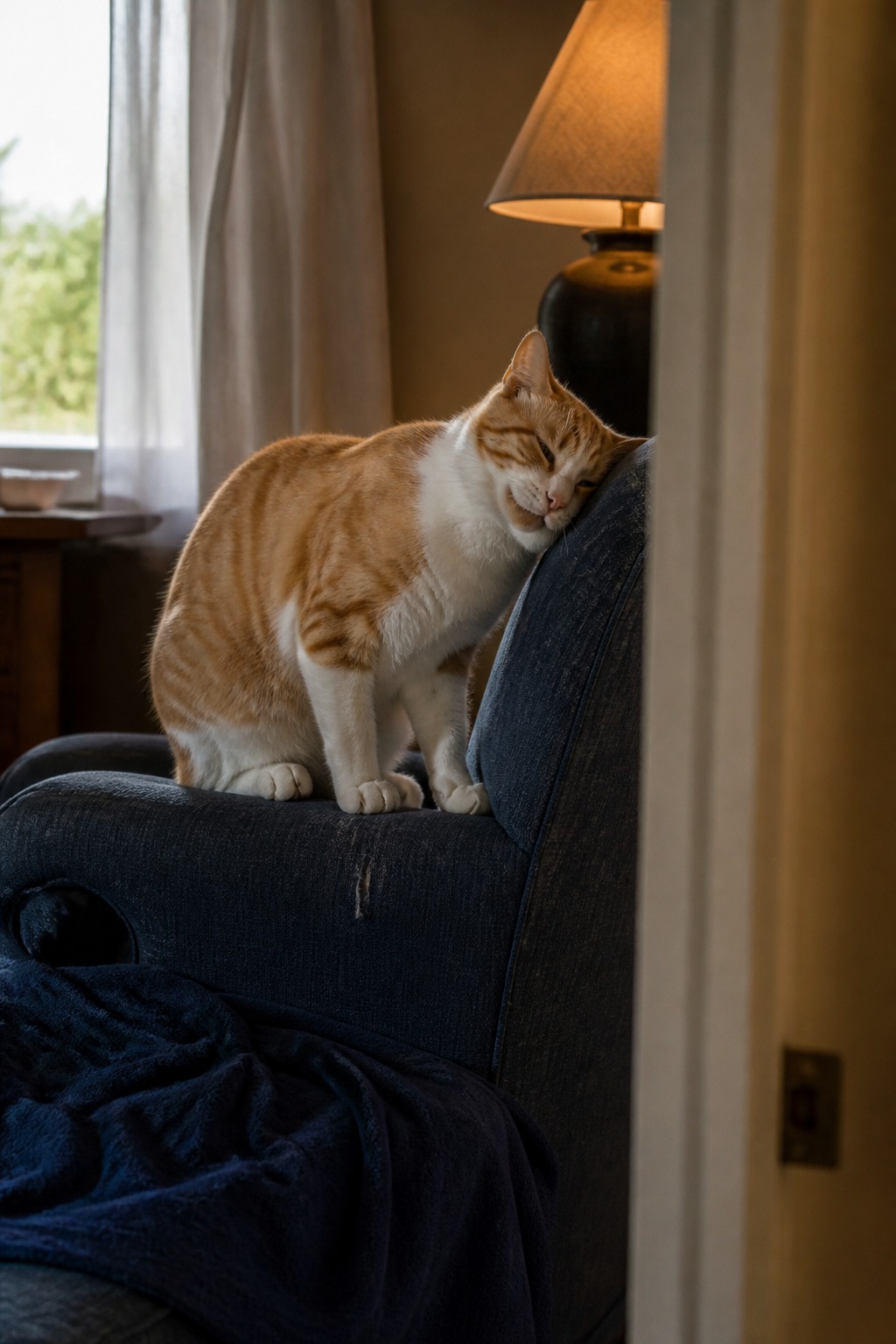
There’s a specific sound every cat owner knows: the frantic thump-thump-thump of a back foot going after an ear, usually at 3 a.m., usually on your bed. An occasional scratch is nothing. But persistent digging at the ears, paired with head shaking and a dark, gritty gunk that looks unsettlingly like spilled coffee grounds, is worth taking seriously. More often than not, that combination means ear mites.
Among the many things that make a cat dig at its ears, mites rank near the top, and the two things worth knowing up front are that they’re contagious to your other animals, and that treating them today is genuinely easy. It wasn’t always.
What you’re actually looking at
The culprit is Otodectes cynotis, a tiny eight-legged mite that sets up shop in the ear canal. Females are the larger sex and still top out at under half a millimeter, so while they’re technically visible, you shouldn’t count on spotting one at home under all that debris. What you’ll notice instead are the effects.
Mites feed on ear secretions and skin cells, and their presence inflames the canal and cranks up discharge, which conveniently gives them more to eat and more room to multiply. That inflammation is what drives the classic signs:
- Relentless ear scratching. Some cats are so itchy they’ll show a pinnal-pedal reflex, kicking at the ear with a hind leg the moment you rub the ear canal.
- Head shaking, both to relieve the itch and to fling out debris. Cats can send that crumbly black gunk surprisingly far.
- Dark, coffee-ground discharge, the most recognizable clue.
- Red, thickened ears, sometimes with irritation on the outer ear from constant scratching.
- Hair loss around the ears if the infestation is heavy, and occasionally around the tail base, where mites sometimes wander.
Here’s the catch: those symptoms overlap with allergies, mange, fly bites, lice, fleas, and ordinary bacterial or yeast ear infections. You can’t reliably diagnose ear mites by eye alone, which is why a quick vet visit matters.
How your cat picked them up
A cat picks up mites from another animal that already carries them, almost always through direct contact. That makes indoor-only cats with no contact with outdoor pets very low-risk, and outdoor cats and kittens the usual patients. Mother-to-kitten spread is especially common.
One sneaky detail: roughly 1 in 10 cats carries ear mites with no obvious symptoms at all. These silent carriers are how a “treated” household gets reinfested, and it’s the main reason vets treat every pet in the home, not just the itchy one. The saving grace is that mites don’t survive long once they’re off a host, and their whole life cycle, egg to adult, runs about three weeks inside the ear.
Why you shouldn’t just wait it out
Left alone, a serious or long-running infestation does real harm. Beyond the raw, self-inflicted scratches, cats can develop an aural hematoma, a painful blood-filled swelling of the ear flap caused by ruptured vessels from all that head shaking and scratching, which can scar the ear permanently if untreated. All that inflammation and debris also disrupts the ear’s normal defenses, opening the door to secondary bacterial or yeast infections that pile on more discharge and irritation.
In the worst cases, cats become so miserable they stop eating and lose weight, and untreated infestations can lead to ruptured eardrums and neurological signs like a head tilt or loss of balance. It rarely gets that far, precisely because the fix is now so simple.
The mites themselves are almost the easy part now. What I don’t want people doing is treating an itchy ear blind at home for weeks. By the time a secondary infection or a hematoma sets in, you’ve turned a two-dose problem into a much bigger one.
How vets confirm and treat it
Diagnosis is fast. Your vet will look into the canal with an otoscope, swab out some discharge, and check it under a microscope for mites, while also screening for any secondary infection.
Treatment has come a long way. The old approach, cleaning the ears and then applying mineral oil repeatedly, or using low-grade pesticides that could be toxic to cats, was slow, fussy, and risky. Modern options are safer and far more convenient. Topical ear drops applied after cleaning may need only two applications, two weeks apart. Even better for many households, several spot-on flea-and-tick products also wipe out ear mites, so one small dose between the shoulder blades treats the mites and prevents reinfestation at the same time. If a bacterial or yeast infection has moved in alongside the mites, your vet will add an antibacterial or antifungal ear medication, often applied daily for a stretch.
Protecting the whole household
Two moves keep mites from coming back:
Treat every animal in the home. If one pet is diagnosed, cats, dogs, and ferrets all get treated, symptoms or not, because of those silent carriers. Ask your vet about any other species you keep.
Clean the environment. Wash bedding, toys, and anything your cat lounges on. Mites don’t last long off a host, but a scrub-down clears out stray mites and the waxy mess they leave behind. Skip the DIY “natural” cures; outdated home remedies like mineral oil mostly just prolong your cat’s discomfort without reliably killing the mites.
What’s new in treatment
The shift toward single- or double-dose spot-ons is the biggest change in ear-mite care, and it keeps expanding. Products combining fluralaner and moxidectin (Bravecto Plus for cats) have been shown to clear Otodectes infestations, with mites gone on otoscopic exam by two weeks after a single application, and they cover fleas, ticks, heartworm, and intestinal worms in the same dose. Selamectin (Revolution) and the selamectin-plus-sarolaner combination (Revolution Plus) are also established, vet-prescribed options that treat mites while handling broader parasite prevention. The practical result: for most cats, “getting rid of ear mites” now means one vet visit and one product, not weeks of nightly ear drops.
References
- Ear mites: uncovering, treating, and preventing infestations — Today’s Veterinary Practice
- Efficacy of fluralaner plus moxidectin (Bravecto Plus spot-on solution for cats) against Otodectes cynotis infestations in cats — Parasites & Vectors
- Efficacy and safety of selamectin plus sarolaner for the treatment of ear mites in cats — peer-reviewed trial
- Comparison of three methods for the diagnosis of Otodectes cynotis in dogs and cats — diagnostic study
Common questions
Can I still touch my cat if it has ear mites?
Yes. Just wash your hands and any skin your cat contacted afterward, which helps keep the mites from hitching a ride to other pets or, rarely, to you.
Can humans catch ear mites from cats?
It's possible but uncommon. People aren't natural hosts, so infestations tend to be brief and self-limiting, though they can cause temporary local itching. Good hand hygiene handles it.
Not a substitute for your vet. Our guidance is educational. For urgent symptoms, contact a vet or emergency clinic right away. Editorial standards
Dr. Nair is a veterinarian focused on diet and feeding. She covers everyday nutrition, treats, and the many "can they eat this?" questions owners ask, grounding each answer in what is actually safe and sensible for dogs and cats.
Meet our experts ↗Keep reading
 Health & WellnessWhy Does My Cat Snore? When It's Adorable and When to Call the VetTom Hadley · 7 min
 Health & WellnessMost Cat Colds Are Harmless. Learn the One Kind That Isn't.Dr. Mara Chen · 7 min
 Health & WellnessYour Cat's Litter Box Is a Daily Health Report. Learn to Read It.Dr. Nina Kohl · 8 min
 Health & WellnessYour Cat Probably Has Herpes. The Go-To Remedy Doesn't Work.Dr. Lena Park · 6 min
 Health & WellnessYou Can't Feel a Cat's Fever. You Can Only Measure ItDr. Lena Park · 7 min
 Health & WellnessThe Twitchy Back Is Usually Nothing. The One Time It Isn't Has a Name.Dr. Lena Park · 8 min