


'Is My Cat Depressed?' Is the Wrong First Question
The signs of a sad cat and a sick cat are nearly identical. A vet explains why illness gets ruled out first, what actually triggers feline depression, and how to help a withdrawn cat feel like themselves again.

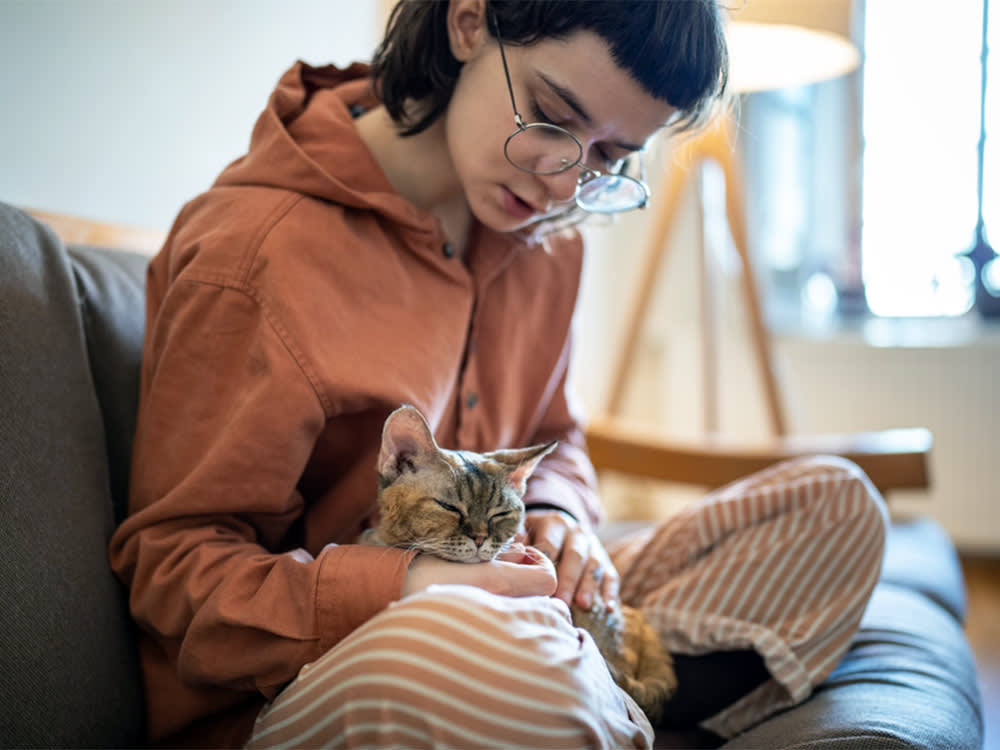
The internet is full of quizzes to tell you if your cat is depressed. Skip them. Not because cats cannot get depressed (they can), but because “is my cat sad?” is the wrong question to lead with. The behaviors that make a cat look depressed, hiding, not eating, sleeping all day, losing interest in everything, are the exact same behaviors a physically sick cat shows. Read them as a mood problem and you can miss a medical one.
So the right first question is not “is my cat sad?” It is “is my cat sick?” You answer that with a vet, not a quiz. Only once illness is off the table does the emotional explanation move to the front. That sequence is the whole point of this piece, and it is what keeps a treatable disease from getting mistaken for the blues.
Yes, cats can get depressed
In veterinary medicine we focus on what we can observe and measure, because a cat cannot tell us it feels sad. What we watch for are behavior changes consistent with distress, anxiety, and fear. And those changes can have emotional roots, physical roots, or both, which is exactly why close observation and honest reporting to your vet matter so much.
Cats commonly become depressed in response to their surroundings. A new pet or person in the home, a move, a shift from outdoor to strictly indoor life, or the loss of a companion can all trigger it. Really, any ongoing source of distress can produce the behavior changes we associate with depression.
The signs, and why they are tricky
The biggest tell is change. A cat that has always slept 10 hours a day curled in a paper bag and is otherwise active and playful is not depressed; that is just their normal. But a cat that used to demand chin scratches and wake you at 4 a.m. for breakfast, and is now hiding under the bed all day, flinching from touch, and silent about food, is waving a red flag.
Common signs of a depressed cat include a decreased appetite, hiding or avoiding contact, lost interest in toys and activities they used to love, sleeping more, temperament changes like new aggression, going outside the litter box, and reduced self-grooming.
Now the catch: an identical list describes a cat that is physically ill. Never assume these changes are purely behavioral until a vet has checked your cat out and confirmed the body is fine. This is the crux of the whole matter.
I’ve watched too many ‘my cat is just sad’ visits turn into a kidney or thyroid diagnosis on the bloodwork. A cat can’t tell us where it hurts, so a withdrawn, off-its-food cat gets the same physical workup first, every time. If the body checks out clean, then I’m glad to talk about mood, and there’s a lot we can do.
Anxiety rides along
Anxiety and depression often travel together in cats the way they do in people. Long-term fear and helplessness can produce both. Many anxiety signs overlap with depression: appetite changes in either direction, loss of interest in play, hiding, staying awake more, hypervigilance about new sounds or smells, changes in grooming (too little or obsessively too much), and temperament shifts toward aggression or fearfulness. If you can see a stressful event coming, you may be able to take the edge off before it lands.
What actually triggers it
Feline depression usually traces back to a change in the home or the social world. The common ones:
A new pet or person. A rambunctious puppy or kitten, or a new baby, brings new smells, new sounds, and disrupted routines, and often less attention for the resident cat.
Moving. Whether it is a new home or a shift from outdoor to indoor life, losing familiar safe spots and routines can throw a cat off.
Routine changes. A new job, different hours, or more travel can be distressing to a creature that runs on predictability.
Loss of a companion. The hardest one. Cats can mourn the loss of a bonded animal or person and be deeply affected by it.
Boredom. Thin mental and physical enrichment can tip a cat into depression. Healthy outlets for body and brain are not optional extras; they are part of wellbeing.
How to help a withdrawn cat
Again, step one is the vet if your cat is showing any of these signs. Often there is an underlying medical problem, and treating it brings your cat back to their weird, wonderful self. If the body checks out and the cause is emotional, here is what actually helps at home.
Enrichment. Mental and physical stimulation are central to a cat’s emotional health. If your cat is very withdrawn, start small and keep expectations low, a little brushing, a wand toy, a food puzzle, and build from there with climbing surfaces, scratching posts, and interactive toys.
Calming pheromones. Synthetic versions of cats’ natural facial pheromones come as sprays and diffusers and can create a calmer atmosphere, useful during inter-cat tension, in unfamiliar places, or when a cat is fearful or withdrawn.
Safe spaces. A scared cat needs somewhere to retreat, a high shelf, a quiet room with a cat door, or a big box. Ideally give them food, water, and a litter box nearby so they can stay as long as they need.
Positive reinforcement. Reward small brave steps, coming out of hiding, approaching a new person, with a favorite treat, catnip, or toy. Clicker training can reinforce this. The more good experiences stack up, the more your cat’s confidence and trust rebuild.
When to call the vet: always, first
Seeking veterinary care is the essential first step any time you notice a big behavior change, especially with physical signs like changes in appetite, weight, or bathroom habits. Because any of these can be rooted in a medical problem, you rule that out first. Often, once the medical issue is treated, the behavior resolves too.
Treatment options
Depending on severity and trigger, treatment ranges from simple home adjustments to work with a veterinary behaviorist and, sometimes, medication. The most urgent cases are cats that stop eating, because they can get very sick very fast, and some develop hepatic lipidosis (fatty liver), which is life-threatening. If your cat goes more than 24 hours without eating anything, contact your vet. These cats may need appetite stimulants or anti-anxiety medication to get through the crisis, and many can be weaned off once they are eating and settled.
For milder distress, the home strategies above plus a consistent daily routine go a long way. And if you know a disruptive event is coming, a move, a new pet, new people, travel, ask your vet in advance about easing the transition, whether through gradual desensitization or short-term calming medication. Most cats respond well.
What newer research adds
For a long time the idea that cats grieve was dismissed as owners projecting. A 2024 study pushed back on that. Surveying the caregivers of hundreds of cats who had lost a companion animal, researchers found consistent behavior changes in the survivors: roughly 46 percent ate less, many slept more (a few slept less), and about 70 percent changed how much they vocalized, some meowing more, some going quiet. Notably, the longer a cat had lived with the animal that died, the more the survivor sought attention afterward.
The researchers were careful, and you should be too. They hesitated to call it “grief” outright, partly because owners with stronger attachments were more likely to read grief into their cat’s behavior, so some of it may be human projection. But the behavioral pattern was real and measurable. The practical lesson: if your cat withdraws, eats less, or vocalizes differently after losing a companion, you are not imagining it, and the same playbook applies, rule out illness first, then support them through it with routine, patience, and extra gentle attention.
References
- American Association of Feline Practitioners. “Feline Behavior Guidelines.” catvets.com.
- Greene, B., Delgado, M.M., et al. “Responses of domestic cats to the loss of another companion animal.” Applied Animal Behaviour Science, 2024.
- Ohio State University. “Life Stressors of Cats.” Indoor Pet Initiative.
- Rodan, I., et al. “Understanding Feline Behavior and Emotional Health.” Journal of Feline Medicine and Surgery.
Common questions
Can a cat die from depression?
Not from sadness itself, but from its consequences. A cat that stops eating due to distress can develop hepatic lipidosis, a life-threatening liver condition. Any cat that goes more than 24 to 36 hours without eating needs to see a vet.
Can cats sense depression and anxiety in their humans?
Yes. Cats become experts on their own people and pick up on changes in your routine, behavior, and mood. A stressed household can affect a sensitive cat.
Not a substitute for your vet. Our guidance is educational. For urgent symptoms, contact a vet or emergency clinic right away. Editorial standards
Dr. Park is a board-certified emergency and critical care specialist. She reviews our health and safety content for clinical accuracy and contributes guides on recognising urgent conditions. Her focus is helping owners act quickly and correctly when it matters most.
Meet our experts ↗Keep reading
 Health & WellnessYour Dog's Anxiety Might Start in the Gut, Not the BrainDr. Mara Chen · 5 min
 TrainingThe 'Mlem' Means Nothing. The Lick Underneath It Can Mean a Lot.Dr. Nina Kohl · 8 min
 Health & WellnessBringing an Outdoor Cat Inside Isn't Cruel. Doing It All at Once Is.Dr. Nina Kohl · 8 min
 Health & WellnessYour Cat Peeing on Your Bed Isn't Spite. It's a Symptom.Dr. Priya Nair · 8 min
 TrainingYour Cat Is Trying to Bury Something. The Question Is What.Dr. Lena Park · 8 min
 TrainingYour Cat Isn't Being Naughty. The Chewing Is a MessageDr. Nina Kohl · 9 min