
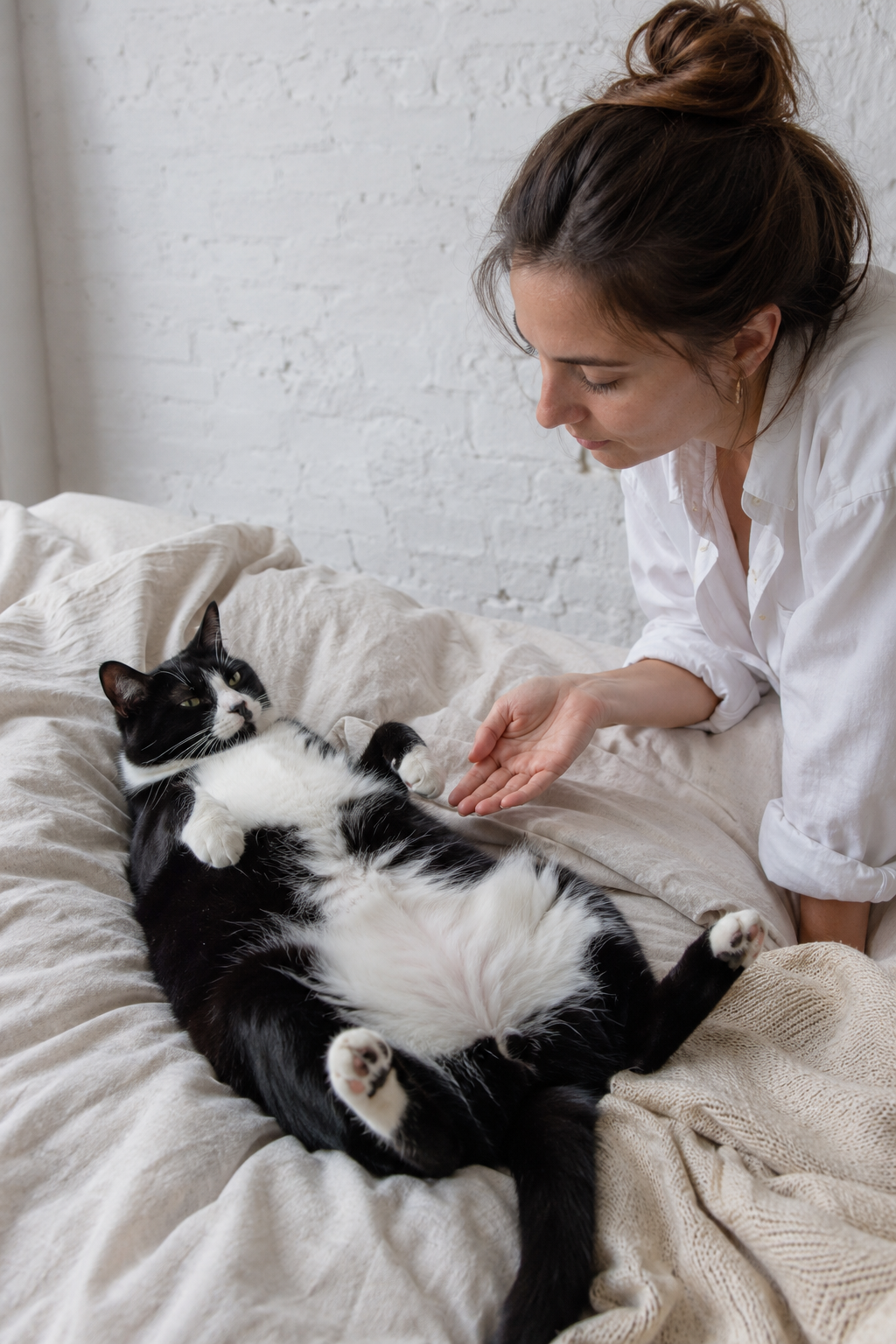
Here is the most common physical misunderstanding between humans and cats, in three acts. The cat flops over and shows you a soft, perfect belly. You, a reasonable person, read this the way you would read it from a dog: an invitation. You reach in. The trap closes, back feet first.
Nobody misbehaved in that exchange. You just read a message in the wrong language. A dog rolling over is often requesting contact. A cat rolling over is usually announcing something much bigger, and much less transactional: I trust you enough to be this vulnerable near you. The display is the gift. The rub was never part of the offer.
“A rolled-over cat is showing you the result of trust, not requesting a transaction,” says Dr. Lena Park. “Take it as a compliment, and keep your hand where it was.”
Why the belly is guarded real estate
A cat’s belly is doubly protected by evolution. First, it is where the vital organs sit, shielded by the primordial pouch, that loose swing of skin, fat, and muscle along the underside that so many people mistake for pudge. In a fight or an ambush, the abdomen is the worst place for a predator’s teeth to land, so cats are wired to defend it. Second, the hair follicles on the belly are more sensitive to touch than those on the back or head, so even a well-meant rub can tip quickly from pleasant into overwhelming.
Put those together and the default cat setting is belly-protective. The exceptions, and there are real exceptions, tend to be cats with generous early socialization and a high overall appetite for handling. Some cats genuinely enjoy a belly rub. They are the minority, and the only way to find out safely is to let the cat tell you.
Not every flop means the same thing
Before you even think about touching, decode the display, because a shown belly has at least four different meanings:
- The trust display. Loose body, slow blink, maybe a purr. This is the compliment described above. Admire it, talk to them, and let them decide what happens next.
- The stretch. Sometimes a belly is just a byproduct of a good spine-lengthening sprawl or an itch against the carpet. No message for you at all.
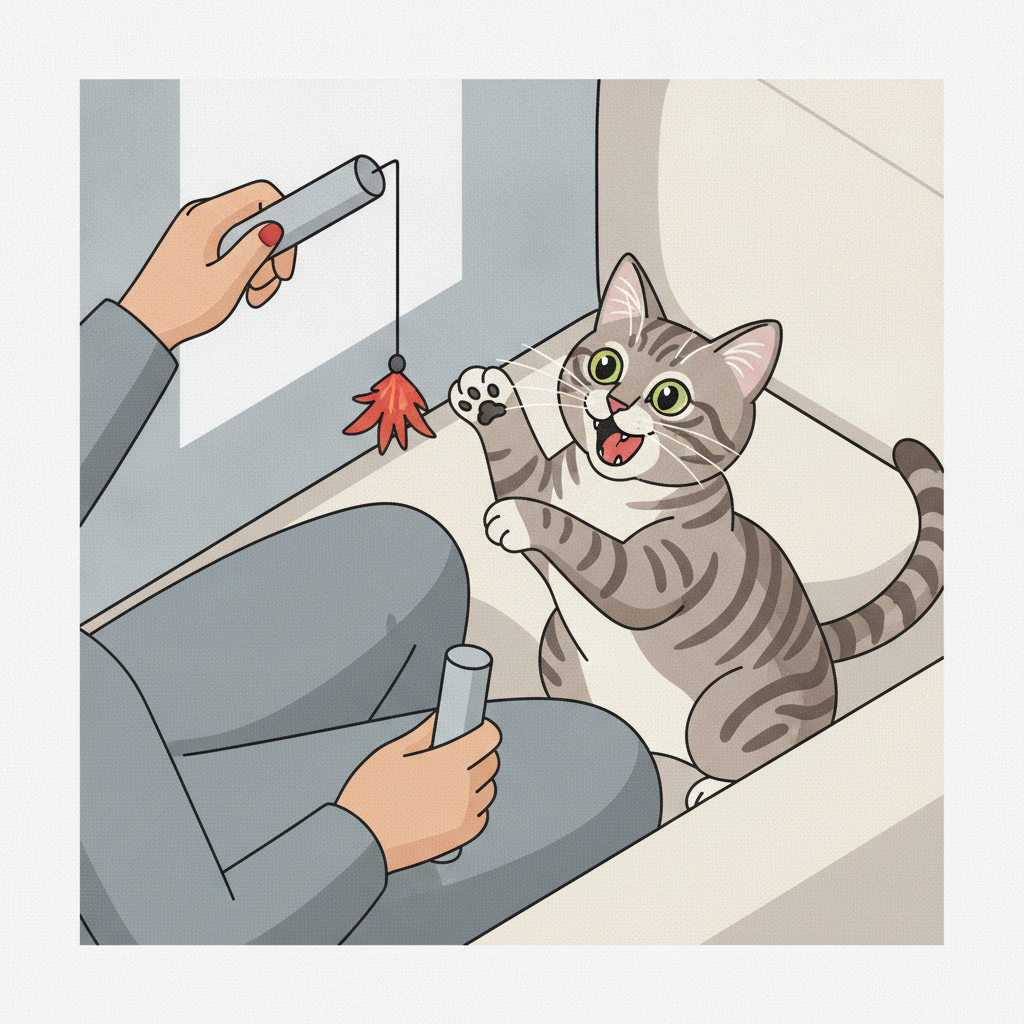
- The hunting lure. A belly-up cat with locked-on eyes and a twitching tail near a toy (or your hand) is in ambush mode. All four paws and the mouth are armed. Do not feed the machine your fingers.
- The defensive sprawl. Belly up with all four legs cocked and ears back is a fighting posture, the position from which every weapon points outward. This one means back off.
The consent test, straight from the research
The best part of modern cat science is that “let the cat decide” is no longer just folk wisdom. In a 2021 study published in Frontiers in Veterinary Science, researchers working with the shelter charity Battersea had people follow a simple interaction protocol with the acronym CAT: give the cat Choice and control, pay Attention to their body language, and Think about where you are touching. When people followed those guidelines, cats across the board showed more affection and less aggression than when people petted freestyle.
Translated to the belly question, the protocol looks like this:
- Offer, don’t impose. Extend a relaxed hand near the cat and let them close the distance. A cat who rubs into your hand is opting in. A cat who sniffs and withdraws has answered too.
- Start in the yes zones. Cheeks, chin, and the base of the ears are where most cats prefer touch. Warm up there and watch the response.
- Approach the belly gradually, reading as you go. If your cat rolls over mid-pet and stays loose as your hand drifts toward their side, try a gentle, brief touch. If it lands well, they will make that clear.
And know the “no” signals cold: skin rippling or twitching along the side, a tail that starts lashing, ears rotating back, the body going still and tense, or the direct veto of a swat, hiss, or nip. Any one of those ends the session.
“Start at the cheeks and let the cat lean into the touch,” Dr. Park says. “The moment the body goes still or the skin starts to ripple, you’re done, no matter how soft that belly looks.”
Can you teach a cat to enjoy belly rubs?
Sometimes, within limits. The technique is desensitization and counterconditioning, the same approach behavior professionals use for handling problems. Find your cat’s current comfort boundary, perhaps a touch on the side, and pair that touch with something excellent, like a lick of a high-value treat. Reward calm, end the session early, and over many short sessions inch the touch closer to the belly, never past the point of tension.
Two honest caveats. Progress is measured in weeks, not days. And some cats will simply never sign up, no matter how skilled the trainer, which is a preference to respect rather than a problem to fix. Those cats still want your hands, just elsewhere: behind the ears, under the chin, along the cheeks, down the back. A cat with a hard no on belly rubs can still be a deeply affectionate cat.
What newer research adds
Two recent studies sharpen this picture. The 2021 Battersea CAT study mentioned above put numbers behind the hands-off approach: cats gave measurably more affection to people who let them control the interaction, which is the strongest argument yet that the “consent test” is not just polite but effective.
Then a 2025 study in Frontiers in Ethology revealed how often we get it wrong anyway. Researchers showed 368 adults videos of human-cat interactions and found that roughly one in four misread negative feline body language, and many of those who read it correctly kept engaging with an uncomfortable cat regardless. Misreading the belly display, in other words, is not a beginner mistake. It is a population-wide habit, which is all the more reason to run the consent test instead of trusting your gut.
References
- Providing Humans With Practical, Best Practice Handling Guidelines During Human-Cat Interactions Increases Cats’ Affiliative Behaviour and Reduces Aggression and Signs of Conflict — Frontiers in Veterinary Science (2021)
- Do you speak cat? Assessing the impact of a training video on human recognition of cat emotions and behaviours during play interactions — Frontiers in Ethology (2025)
- Let cats decide when to be petted to avoid them becoming hostile, study suggests — Nottingham Trent University