


The Barrier Between People and Their Pets Isn't the Animals. It's the System
The BIPOC-led nonprofit CARE argues that most pet surrenders are a human problem, not a care problem. By treating animal welfare as human welfare too, it's working to keep families and their pets together, and to diversify a field that's overwhelmingly white.
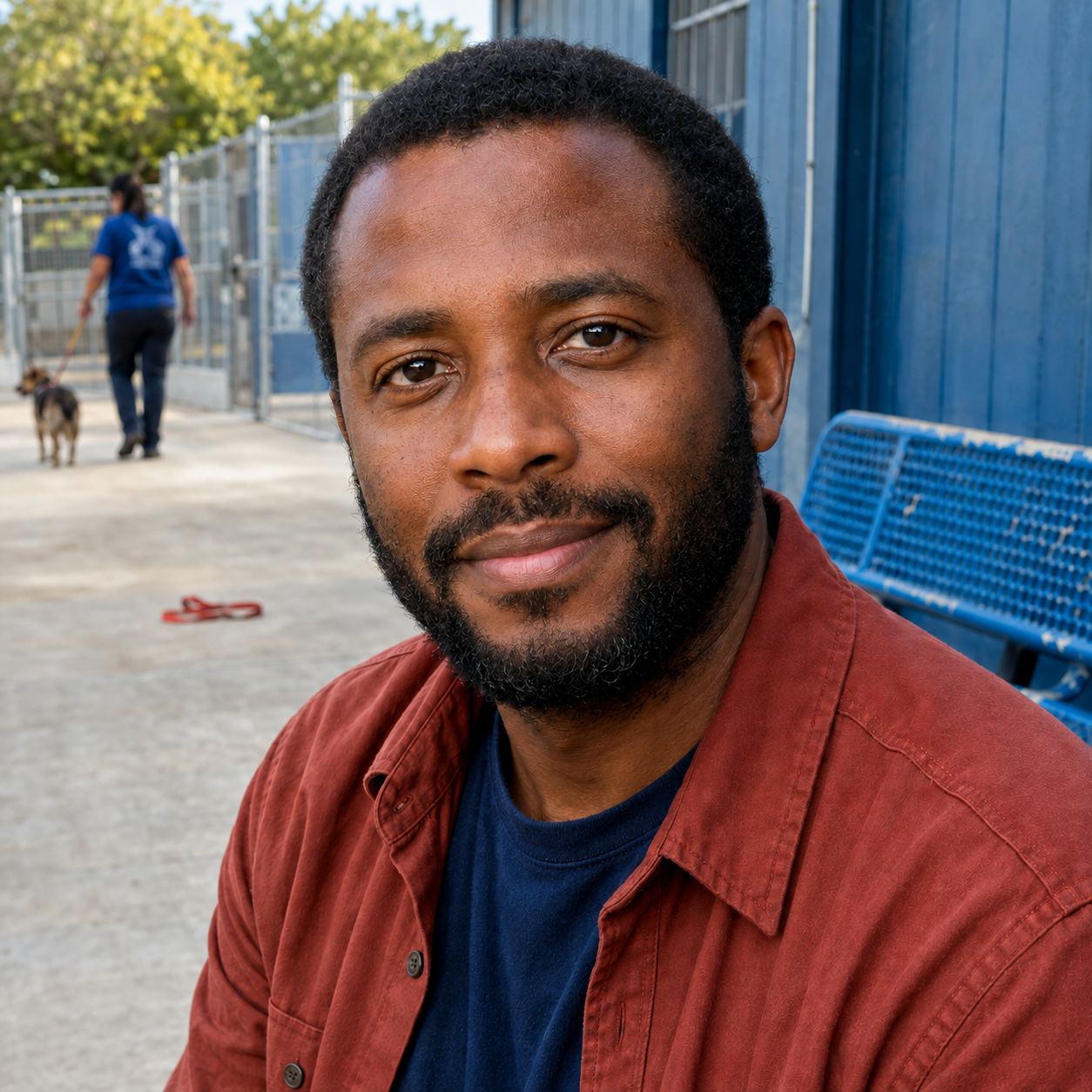
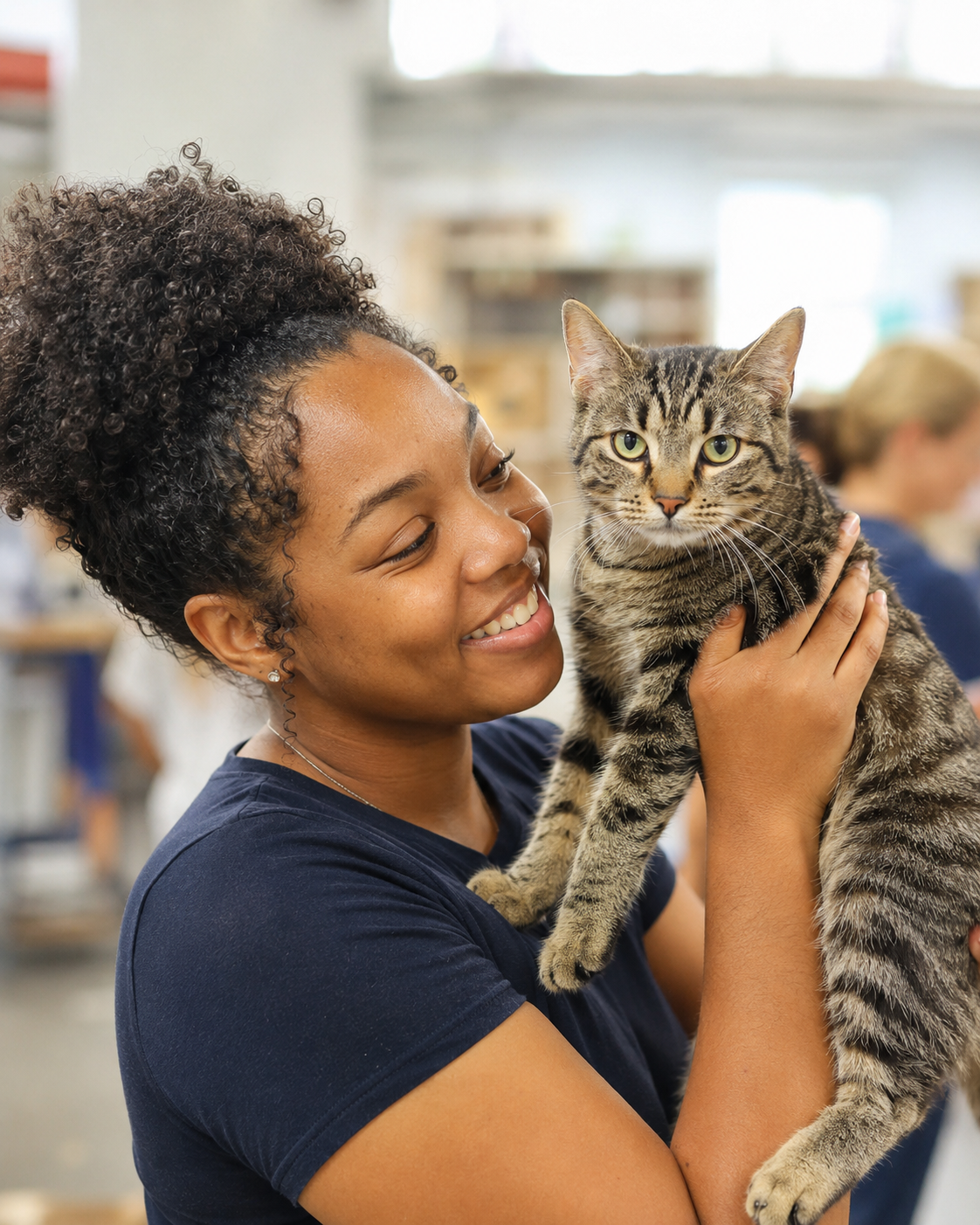
Run through the animal movies in your head, the family-dog comedies and the dog-show mockumentaries, and notice who is in them. Almost everyone is white. That pattern is not confined to the screen. From entertainment and advertising to shelters, rescues, and grooming salons, the pet world is one of the least diverse corners of American life, and the BIPOC-led nonprofit CARE, short for Companions and Animals for Reform and Equity, has built its entire mission on a sharp reframing of what that means. The problem keeping people and their pets apart, CARE argues, is rarely the animal. It is a human-facing system designed by and for one demographic.
The numbers behind the argument
The scale of the imbalance is stark. By CARE’s accounting, the animal-welfare field is roughly 84 percent white, and less than 1 percent of its leadership is Black. Current national data tells the same story from another angle: as of 2021, about 93 percent of U.S. veterinarians were white and only around 1 percent were Black, according to Bureau of Labor Statistics figures, a share that has barely moved in years. The broader animal-protection workforce, from behaviorists to shelter staff, skews overwhelmingly toward white women.
That homogeneity is not just a representation problem. It means the biases baked into these institutions go unexamined, and it means the “culturally responsive” knowledge that would help diverse communities care for their pets is often missing entirely. Implicit-bias research documents the negative stereotypes directed at Black Americans in particular, and in practice, an adoption process that is merely daunting for many applicants can become effectively impossible for BIPOC adopters, who are sometimes denied outright.
Reframing the whole mission
CARE’s central move is to refuse the usual framing.
When you define the job as saving animals, you miss half the picture. CARE defines it as keeping households whole, which turns a surrendered dog from a rescue statistic into a sign that a family hit a barrier we could have removed. That shift changes what you build.
As the organization’s leadership puts it, they do not consider what they do animal-welfare work so much as human and animal well-being work, taking a holistic approach to the entire household rather than the animal in isolation. Johnny Jenkins, CARE’s Chief of Staff and head of Research and Development, frames the surrender problem not as owners who failed their pets but as systems that failed both. Fix the human barrier, and the animal never needs rescuing in the first place.
How CARE actually works
The organization is deliberately structured around that idea. A dedicated research division documents and quantifies injustices in the field, while a narrative team ties those statistics to the real animal lovers living them. In the Little Earth Indigenous community in Minneapolis, CARE’s researchers worked alongside residents to understand the community’s needs, making sure locals were involved in gathering the data at every step rather than being studied from the outside.
That collaborative model is the real engine. CARE identifies and lifts up “proximate” leaders, local activists close to the communities being served, most of whom had little prior exposure to organized animal welfare. The nonprofit backs them with small grants, networking, and valuable legal assistance, effectively building a pipeline of new leaders the field would otherwise never reach.
The direct services are just as concrete. CARE’s CARE Center division has become an environmental-justice force, serving communities hit hardest by climate change and disaster, most recently in tornado-devastated parts of Kentucky. The centers help people with pet food, cat litter (including DIY-litter workshops led by activist Sterling “TrapKing” Davis), and spay-and-neuter clinics, all designed to knock down the two obstacles, money and a ride, that most often force a family to surrender a pet it loves. Funding comes in part from partners including Maddie’s Fund, PetSmart Charities, and Tito’s Vodka. To reach new audiences, CARE has also gotten creative: it teamed up with rising rapper Dapper Dan Midas on the music video “That’s My Dog,” a celebration of people and the dogs they love.
Building the next generation
CARE also invests directly in changing who gets to work in the field. For Black History Month, it created a scholarship fund named for Dr. Jodie G. Blackwell that backs African American veterinary students, a pointed response to the fact that African Americans make up only about 2 percent of the veterinary profession. It is a long game, but it targets the root of the representation gap rather than its symptoms. As Jenkins puts it, there are “a lot of exciting opportunities to connect animal well-being to human well-being and improve the quality of life across the country.”
What you can do
CARE makes participation easy at several levels. Organizations can apply for CARE’s Racial Equity, Diversity and Inclusion (REDI) certification to examine their own practices. Individuals can join the organization’s action arm, the Changemaker’s Circle, or donate directly, with the option to specify which division your funds support. And the broader shift CARE helped push has started to land: more mainstream shelters and national groups are now reexamining adoption policies that disproportionately screen out qualified BIPOC adopters, and the “keep families together” framing, addressing the human causes of surrender, has become a growing priority across the field. CARE’s insistence remains the throughline: caring for animals and caring for people are not two jobs. They are the same one.
References
- Companions and Animals for Reform and Equity (CARE). https://careawo.org
- U.S. Bureau of Labor Statistics. “Labor Force Statistics from the Current Population Survey: Employed Persons by Detailed Occupation, Sex, Race, and Hispanic or Latino Ethnicity.” https://www.bls.gov/cps/cpsaat11.htm
- American Veterinary Medical Association. “Being Black in a White Profession.” https://www.avma.org/javma-news/2021-05-01/being-black-white-profession
James Okafor covers rescue, adoption, and the causes shaping animal welfare. His work follows the people and organisations working to give more pets a home, and the issues owners and advocates care about most.
Meet our experts ↗Keep reading
 LivingOne Tourist, 6,000 Spayed Strays, and an Island That ChangedLeila Torres · 6 min
 LivingWhen Fiona Drowned the Power Grid, Puerto Rico's Dog Rescuers Got in the WaterJordan Ellis · 5 min
 LivingOne Shelter Took In 800 Animals While LA Burned. Here's How to Repay Them.Nina Vasquez · 5 min
 LivingYou Don't Have to Adopt a Dog to Get the BenefitClaire Sutton · 6 min
 LivingLA's Big Shelter Idea: Pay People to FosterMarcus Webb · 4 min
 LivingNew York Is Handing Shelters $10 Million. The Real Story Is the Deadline Next Month.Nina Vasquez · 4 min