


'All-Natural' Is Just a Word on the Bag. Read the Ingredients Instead.
Nothing on a cat-treat label stops a company from stamping 'natural' or 'organic' on filler. What actually matters is a short, meat-first ingredient list you can pronounce. Here are 10 treats that pass that test, and how to judge any bag yourself.

Affiliate disclosure. This article contains affiliate links. We may earn a small commission if you buy through a link, at no extra cost to you. How we handle recommendations.
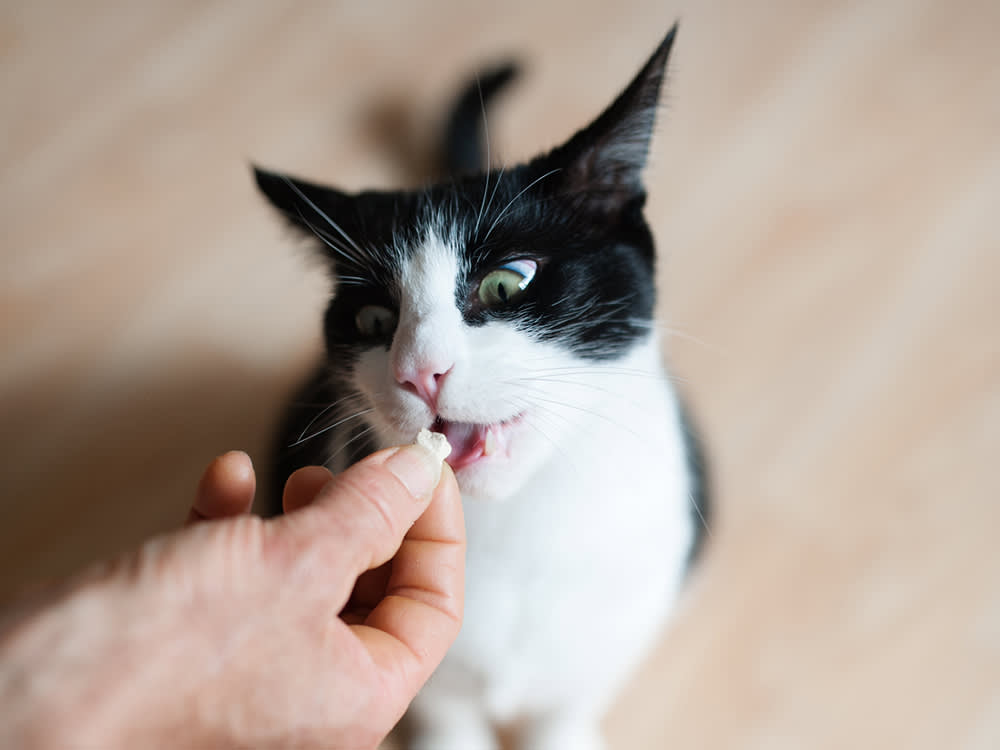
Here is the uncomfortable truth about “natural” and “organic” on a bag of cat treats: for treats, those words are barely policed. A company can splash them across the front while the back lists a wall of fillers, dyes, and additives your cat never needed. The marketing is doing a job, and the job is to make you stop reading the ingredients. So don’t stop reading the ingredients.
That’s the whole game with treats, and it’s genuinely simple once you know what you’re looking at. Cats are obligate carnivores, which means their bodies are built to run on meat. The best treat is one where meat comes first, the list is short, and every item on it is something you could point to and name. Everything below clears that bar. But the more useful skill is learning to judge a bag yourself, so we’ve built this less as a shopping list and more as a lesson with ten worked examples.
The one rule that replaces every buzzword
Before the treats, the test. When you turn a bag over, you want to see a named animal protein in the first slot (“chicken,” “salmon,” “beef liver,” not “meat by-product” or “animal digest”), a list short enough to read in one breath, and ingredients you recognize as food. Fewer, plainer components mean fewer of the cheap fillers and mystery additives companies use to pad volume and cut costs. If you can’t identify half the words, that’s your answer, no matter what the front of the bag promises. Treats should also stay a small share of your cat’s daily calories, roughly ten percent or less, so a great treat is one you feel good handing over in small amounts.
There’s a bigger-picture layer, too, if you want it: where the protein comes from. Pet food has a real environmental footprint across sourcing, packaging, and shipping, so a company that’s transparent about where it gets its ingredients is usually a company worth trusting with what’s inside the bag.
10 treats that pass the label test
Prices are what we saw at publication and can shift; the ingredient logic is what lasts.
New Zealand Natural Pet Food Co. Meow Freeze-Dried Raw Cat Treat
A single-ingredient, freeze-dried raw treat, which is about as close to “just meat” as a shelf-stable snack gets. Freeze-drying keeps the protein intact without cooking off nutrients or needing preservatives, and New Zealand’s pasture-raised sourcing is a genuine transparency point. Right for the purist who wants nothing on the label but the animal. $11 at Amazon
Orijen Original Grain-Free Freeze-Dried Cat Treats
Nutrient-dense and high-protein, made with about 99 percent fresh and raw animal ingredients, so the meat-first rule is met emphatically. These win over famously picky cats, which is the real-world test that matters, and the grain-free formula keeps the filler count near zero. Right for the fussy eater you’ve struck out with before. $7 at Amazon
Buddy Biscuits Grain-Free Cat Treats
Proof that “clean label” doesn’t have to mean expensive. At a few dollars a bag, these grain-free bites keep the ingredient list short and skip the grains that pad cheaper treats. Right for the multi-cat household that goes through treats fast and needs the math to work. $3 at Amazon
Primal Beef Liver Munchies Freeze-Dried Treats
Single-source organ meat, freeze-dried, and rich in the nutrients cats actually crave, liver is one of the most nutrient-packed things you can hand a cat. Works for both cats and dogs, which is handy in a mixed household. The tradeoff: organ treats are potent, so keep the portion genuinely small. $10 at Chewy
White Fish
Human-grade white fish in a simple, dehydrated bite from a company that built its name on ingredient transparency. “Human-grade” is a meaningful, regulated claim here, not just a vibe, and the fish-forward recipe suits cats who turn up their noses at poultry. Right for the fish devotee. $8 at The Honest Kitchen
Public Goods Freeze-Dried Duck Nibs
A novel single protein, duck, which is useful if your cat has developed a sensitivity to the usual chicken and fish. Freeze-dried and short-listed, from a brand with a sustainability bent. Pricier per bag, so this is more of a special-occasion or rotation treat than an everyday one. $20 at Public Goods
Shop Grace Co Floris Naturals Artisan Cat Treats
Small-batch and artisan-made, which usually means a shorter supply chain and a maker who can tell you exactly what’s inside. The appeal here is knowing the source, the opposite of a mystery mega-brand. Right for the shopper who likes buying from an actual person. $10 at Shop Grace Co
Freeze-dried chicken breast (any single-ingredient bag)
The category, not one brand, because it’s the treat we’d tell almost anyone to start with. A bag whose only ingredient is “chicken breast” is inexpensive, near-universally loved, and impossible to get wrong. Any reputable single-ingredient version earns a spot; this is the safe default when a fancy bag intimidates you.
Freeze-dried salmon or minnow treats
Also a category: tiny, whole, oily-fish treats deliver omega-3s alongside the protein, which supports skin and coat. Look for a bag listing only the fish. Right for a cat whose coat could use help, and for anyone who wants a nutritional bonus baked into the snack.
Plain cooked meat from your own kitchen
The most natural treat of all, and free. A little unseasoned cooked chicken, turkey, or fish, no salt, no oil, no garlic or onion, is a perfectly legitimate treat and sidesteps every label question entirely. The catch is discipline: keep pieces tiny and occasional so treats stay a small slice of the day’s calories. Right for the cook who’d rather trust their own pan than a bag.
Reading the bag beats trusting the front
Notice what the strong picks have in common: a named meat up top, a list you could recite, and a company that will tell you where the protein came from. That pattern, not the word “natural,” is the thing to shop for. Learn it once and you’ll never be at the mercy of a marketing team again, whether you’re standing in a pet store or scrolling at midnight.
When a client asks me which treat is best, I turn the bag over with them instead of answering. If a real, named meat is the first ingredient and the list is short enough to read out loud, you’re usually in good shape. The word on the front of the package tells you what the brand wants you to feel. The back of the package tells you what your cat is actually eating, and that’s the only part I trust.
References
- Association of American Feed Control Officials. “Understanding Pet Food Labels.” AAFCO, aafco.org.
- U.S. Food and Drug Administration. “Pet Food Labels — General.” FDA, fda.gov.
- National Research Council. Nutrient Requirements of Dogs and Cats. National Academies Press, nap.nationalacademies.org.
Not a substitute for your vet. Our guidance is educational. For urgent symptoms, contact a vet or emergency clinic right away. Editorial standards
Dr. Nair is a veterinarian focused on diet and feeding. She covers everyday nutrition, treats, and the many "can they eat this?" questions owners ask, grounding each answer in what is actually safe and sensible for dogs and cats.
Meet our experts ↗Keep reading
 FoodCats Can Eat Eggs. Just Never Raw.Dr. Mara Chen · 4 min
 FoodYour Carnivore Cat Craves Grass. The Reason Is Older Than You Think.Dr. Amara Solis · 5 min
 FoodCats Can Eat Pineapple. They Literally Can't Taste the Point.Dr. Ravi Mehta · 3 min
 FoodYour Cat's Plate-Begging Isn't Always Wrong. 8 Foods You Can Share.Dr. Mara Chen · 8 min
 FoodThe Real Question About Cats and Cheese Isn't Whether, It's WhichDr. Mara Chen · 6 min
 FoodCats and Marshmallows: The Bag Your Dog Should Worry About MoreDr. Priya Nair · 6 min