


Shelters Didn't Refill Because Adopters Vanished. Three Faucets Were Left Running
The pandemic-return story is the small part. The real reason U.S. shelters stayed overcrowded is a math problem, intake from three sources kept climbing while the exits dried up. Here is the arithmetic, with the latest national numbers.

Affiliate disclosure. This article contains affiliate links. We may earn a small commission if you buy through a link, at no extra cost to you. How we handle recommendations.
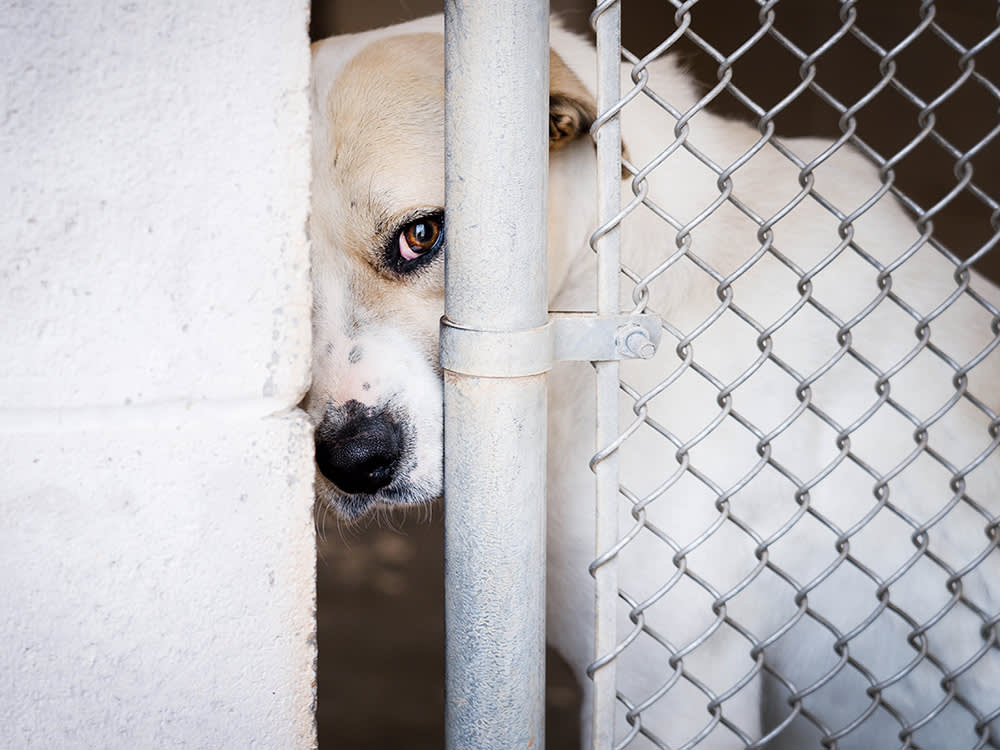
The popular explanation for crowded shelters is a guilt story: people adopted dogs in the pandemic, then handed them back when offices reopened. It is true, and it is the least important part of what happened. Returns of pandemic dogs held steady at roughly 10 percent, the same return rate as always, so they cannot, by themselves, explain a years-long overflow. The honest picture is a plumbing problem. A shelter is a tank with intake faucets pouring in and adoption drains letting out. Beginning in 2020, three separate faucets were turned up at once while the main drain slowed to a trickle. The water had nowhere to go. That is the story, and the math holds up better than the blame.
The most recent national accounting backs it. According to Shelter Animals Count, the nonprofit that aggregates intake and outcome data from thousands of U.S. facilities, about 5.8 million animals entered shelters in 2024 while only around 4.1 million were adopted. That gap, more coming in than going out, is the overflow in a single sentence. Strays accounted for 59 percent of intake nationally and owner surrenders for about 30 percent. Euthanasia, though still falling overall, claimed an estimated 607,000 animals. Those are not pandemic-return numbers. They are the three faucets.
Faucet one: owners surrendering pets they can no longer keep
The biggest, most painful faucet is people giving up animals they love. At Big Dog Ranch in Florida, staff who once took in a single owner surrender a day reported taking in about seven. Multiply that across the country and you get a flood.
The driver is rarely indifference. It is money and housing. Families surrender because rent rose, a job vanished, or they were evicted, and “no pets” is a line item in too many leases. At Gastonia Animal Care and Enforcement in North Carolina, staff braced for a surge of surrenders after learning the sheriff’s department would serve 300 eviction notices in one wave. When you make pet ownership unaffordable, surrenders are not a character flaw. They are a predictable output.
Some of these dogs are also young purebreds bought on impulse in 2020 whose breed-specific needs, energy, grooming, training, outran what a new owner expected. That overlap with the pandemic is real. It is just one stream feeding a much larger pool.
Faucet two: a spay-neuter backlog that never fully cleared
This is the faucet almost nobody talks about, and it may be the most consequential. Through 2020 and well into 2021, veterinary clinics closed or paused elective surgeries, and thousands of spay and neuter procedures were canceled or postponed. Even after clinics reopened, appointments were scarce, and the low-cost shelter and rescue programs that depend on discounted surgeries sat at the bottom of the waitlist.
Unaltered animals do what unaltered animals do. The result, with a biological lag, was more litters of puppies and kittens arriving at shelters a year or two later. A canceled surgery in 2020 becomes a litter in 2021 and six adolescent dogs needing homes in 2022. The faucet was turned up quietly, and it kept pouring long after the lockdowns ended.
Faucet three: the intake that never stopped at all
The third faucet was never turned off in the first place, it just got forgotten in the viral photos of empty kennels. Animals turn up as strays, get seized in abuse, neglect, or abandonment cases, are held as evidence in court proceedings, or are left behind when an owner dies. None of that paused for the pandemic.
And much of it is legally stuck. Strays must be held for a “stray hold,” usually five to 10 business days depending on the jurisdiction, during which they cannot be adopted out or transferred to rescue. Dogs seized for legal reasons must be held until their case is resolved, sometimes for months, also off-limits for adoption or transfer. Those animals were occupying kennels the whole time, even when they didn’t appear in any feel-good headline.
The drain that slowed: where the adopters went
Three faucets up would still be survivable if the drain ran fast. It didn’t. “During the pandemic, rescues were begging us for dogs,” said Jo Anne Harding, who coordinates rescue transports from Lee and Dickson County, Virginia. “Now I’m struggling to find rescues for puppies.” Adoptions slowed, foster homes filled, and the rescue partners who normally pull animals from overwhelmed shelters had no room left.
When the drain slows, the hardest-to-place animals back up first, bully breeds, hound dogs, heartworm-positive dogs, and medical cases. But the clearest warning sign was the opposite: small dogs, purebreds, and puppies, the animals shelters almost never struggle to move, sitting unadopted. That was the canary in the coal mine. At one shelter in Simpson County, Kentucky, a Husky paced his kennel; in Cowen, West Virginia, at Saving Webster Dogs, a Basset Hound puppy wandered a muddy run while a scruffy terrier threw himself at the fence. When even the easy dogs sit, the drain has stopped.
The reason this is fixable is that none of these faucets are mysterious. Where communities have low-cost spay and neuter, sane housing rules, and strong rescue transport, the tank stays balanced. The overflow is a policy failure, not a public one.
The hopeful part: this is a fixable problem
It is worth holding both truths at once. The strain is real and concentrated in the South, but the long arc is genuinely encouraging. Euthanasia has fallen sharply over the past decade as more communities adopted the exact fixes above, accessible spay and neuter, better shelter funding, robust transport networks moving animals from crowded regions to emptier ones, and community engagement. It is possible to save every adoptable dog. The faucets just have to be turned down and the drain reopened, deliberately, with money and policy behind it.
How to actually help
Volunteer
Help at your local shelter or rescue. No nearby option? You can support struggling shelters remotely, many need help with social media, fundraising, and record-keeping. Who Will Let the Dogs Out matches volunteers to shelters in need.
Adopt
Look for a dog that fits your household regardless of breed, and steer friends toward shelters and rescues. Prioritize organizations working in the hardest-hit regions, and back them with donations and word of mouth.
Foster
Fostering saves two lives at once: the dog you take in and the dog whose kennel you free up. It is the single most direct way to reopen the drain.
Educate
A few worthwhile reads on how this system works:
- Rescue Road: One Man, Thirty Thousand Dogs, and a Million Miles on the Last Hope Highway by Peter Zheutlin
- The Dog Merchants: Inside the Big Business of Breeders, Pet Stores, and Rescuers by Kim Kavin
- One Hundred Dogs & Counting: One Woman, Ten Thousand Miles, and a Journey Into the Heart of Shelters and Rescues by Cara Sue Achterberg
References
- Shelter Animals Count. “2024 Statistics.” shelteranimalscount.org.
- ASPCA. “Pet Statistics: Shelter Intake and Surrender.” aspca.org.
- “Animal Shelters Are Filling Up During the Coronavirus Pandemic.” The Washington Post, 6 Jan. 2021, washingtonpost.com.
Leila Torres leads our Living coverage, from home life and travel to the products and rescue stories that come with sharing a life with animals. She edits and writes across the section, with a soft spot for pieces about the bond between people and their pets.
Meet our experts ↗Keep reading
 Living27 Golden Retrievers, One Backyard: Inside a Rhode Island RescueNina Vasquez · 4 min
 LivingThe Blue Dogs of Chernobyl Aren't Radioactive. The Truth Is Grosser.James Okafor · 5 min
 LivingNobody Meant to Have 100 Dogs. That's How It Always Starts.Nina Vasquez · 5 min
 LivingShe Called the Sheriff to Approve Her Dog 'Rescue.' Over 100 Dogs Were Already Dead.James Okafor · 4 min
 LivingThis Pit Bull Documentary Isn't Really About DogsJames Okafor · 6 min
 Living300 Dogs, Four States, One Month: The Rescue Machine Behind the HeadlinesLeila Torres · 5 min