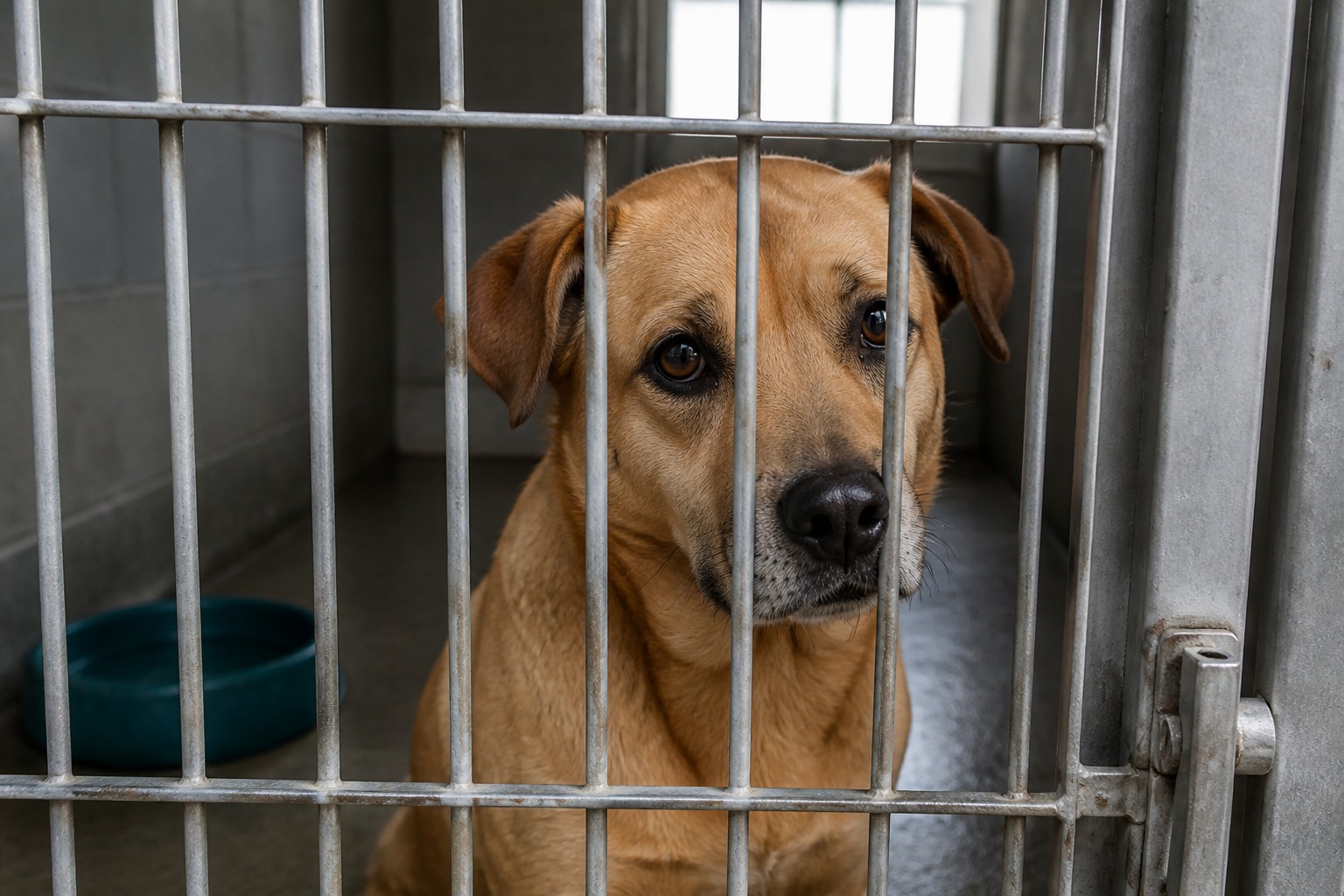

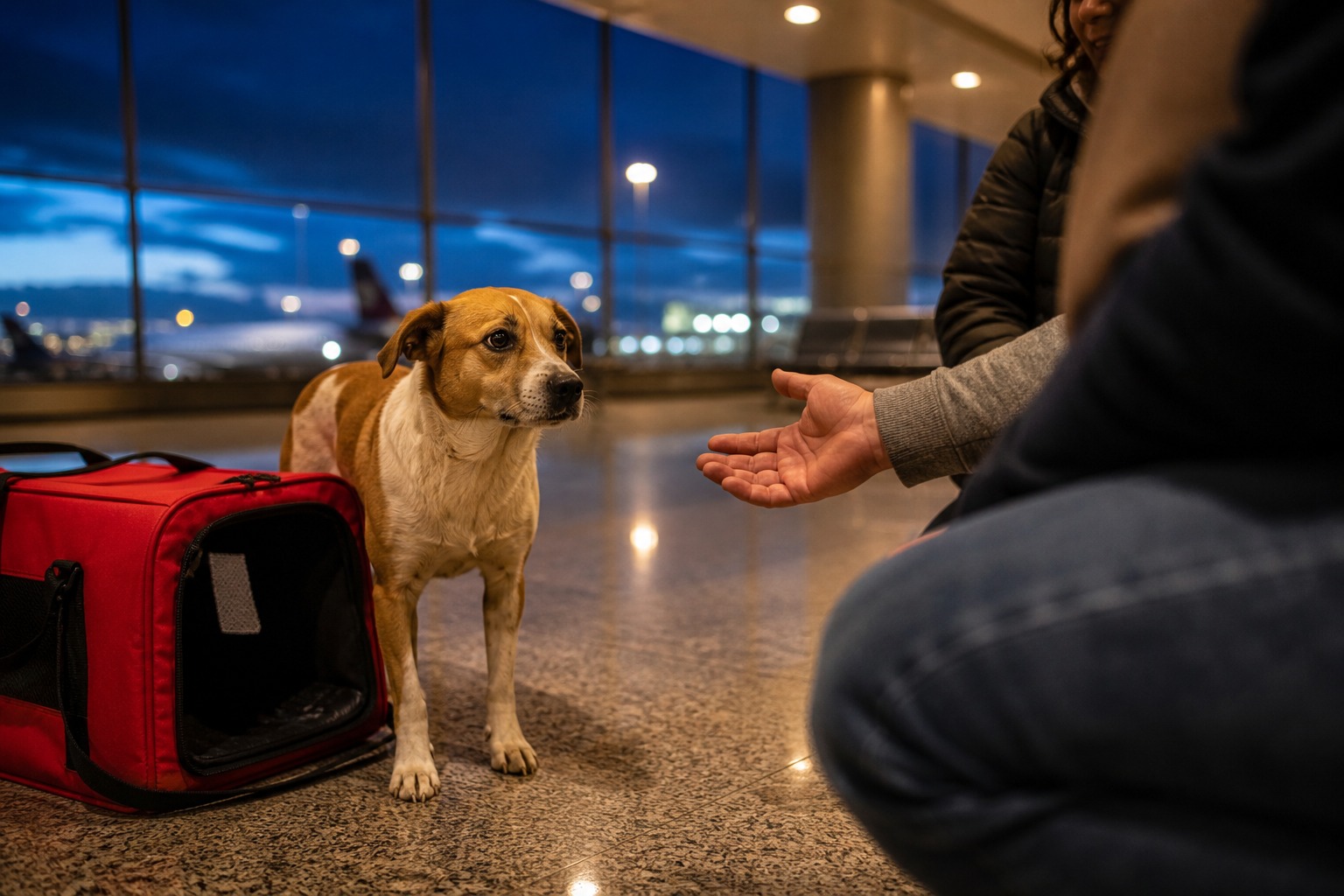
The emotional case for adopting a dog from another country makes itself. A dog pulled from a war zone, a flooded street, or a country with no animal-protection laws and then flown across the world to your door is a genuinely moving thing to be part of. What gets less attention, and matters far more if you are actually considering it, is the practical case: how to tell a legitimate rescue from a scam, what the recently changed US rules require, and how to make sure the dog who arrives is set up to succeed. This guide is about that part, the doing-it-right part.
To ground it, consider the scale of what these operations involve. In March, SPCA International pulled off its largest US-based international rescue ever, transporting 70 dogs out of war-torn Palestine, 10 from Bethlehem Animal Shelter and 60 from Daily Hugz Animal Sanctuary, on a 35-hour flight to American soil. The effort took, in the words of the Detroit Free Press, “the tenacity of nearly 100 people and $275,000.” That is the machinery behind a single rescue flight, and it is why these organizations depend so heavily on adopters and donors who understand what they are signing up for.
First, what these dogs are actually like
The biggest barrier to international adoption is a stigma, and it is worth dismantling before anything else. A dog rescued abroad is not a different kind of animal. They are loyal, often strikingly grateful, and frequently smart and trainable thanks to the survival instincts that kept them alive on the street.
Helen Summerfield-Brown, who runs the Wisconsin-based nonprofit Stray Dog Support and has rescued dogs from India, Mexico, Thailand, the Philippines, Brazil, Pakistan, and Iraq, has watched this pattern for years. She points out that the incidence of these dogs hurting people is very low, even among dogs who were badly mistreated, because survival on the street usually meant relying on the kindness of human strangers. What you may see early on, she notes, is some resource-guarding or wariness around other dogs, the understandable residue of a hard start, not aggression toward people. (Summerfield-Brown is herself a parent to four former strays, three from India and one from Thailand.)
A reputable rescue does not just ship a dog and hope. In Stray Dog Support’s process, a rescued dog first lives at a sanctuary near where they were found, where they are medically evaluated, treated, spayed or neutered, vaccinated, and placed in local foster homes to get used to domestic life. By the time a dog is cleared to travel, the organization has worked hard to confirm the dog’s behavior is suitable for a home, and they handle the paperwork to bring the dog in legally.
The part that changed: US import rules in 2024
This is the most important practical update, and it post-dates a lot of older advice floating around online. As of August 1, 2024, the CDC overhauled the rules for bringing any dog into the United States, including rescue dogs, in order to keep canine rabies, eliminated here in 2007, from coming back. Every dog entering the country now must:
- Be at least 6 months old at the time of entry
- Have an ISO-compatible microchip implanted before any rabies vaccination
- Appear healthy on arrival
- Arrive with a CDC Dog Import Form receipt, submitted online in advance
Dogs coming from countries the CDC classifies as high-risk for rabies, which includes many of the places international rescues operate, face additional requirements: a valid rabies vaccination and, in most cases, a rabies serology (titer) test proving immunity, plus entry through specific airports. Dogs from rabies-free or low-risk countries need far less, often just the import form.
The takeaway for an adopter is not that you have to master these regulations yourself, but that you must confirm the organization handles them correctly. A legitimate rescue will know these rules cold and build them into the dog’s timeline. If a group is vague about microchipping, rabies titers, the six-month age minimum, or the CDC import form, that is a serious red flag.
How to vet an organization (and avoid scams)
International rescue runs almost entirely on donations, which unfortunately makes it a target for fraud. Summerfield-Brown, who estimates the true cost of rescuing and transporting one dog can run up to $5,000 and charges only a $500 adoption fee to cover a crate, vaccines, and records, has seen plenty of fakes. Her advice, and standard nonprofit-vetting practice, comes down to a few concrete checks:
- Verify the nonprofit status. Confirm the group is a legitimate 501(c)(3) using the IRS’s Tax Exempt Organization Search or a watchdog like Charity Navigator. These weed out outfits that just want your money.
- Look at where the money goes. Donation links that point to a personal PayPal account, rather than the organization’s, are a classic scam tell. So are accounts that post nothing but “give me money” appeals with no updates on the animals.
- Check the account’s history and transparency. A real rescue documents its work: the dogs, the sanctuary, the vet care, the outcomes. A page created recently that is light on actual animals and heavy on urgency should make you pause.
- Ask about the ground operation. Legitimate international rescues work with trusted local partners, vets, and fosters in the source country. Summerfield-Brown describes aligning herself with reliable people on the ground, the kind who can arrange medical care in places where, as she puts it, getting an X-ray sometimes means sneaking an animal into a hospital at night. A group that can clearly explain its in-country network is more trustworthy than one that cannot.
- Confirm the import and behavior process. A good rescue evaluates each dog’s temperament before placement and manages all the CDC paperwork. If they cannot describe either, keep looking.
What adoption is actually like for you
Once you have chosen a reputable organization, the heavy lifting is theirs, not yours. The rescue typically covers fundraising for the rescue and transport, the in-country medical care, the foster period, and the import logistics. Your job is mostly to welcome a well-traveled dog into your home and give them time to settle, which a dog who has already been fostered and vetted abroad tends to do well.
What adopters consistently describe is less a transaction than an experience. You often follow your dog’s story from rescue through recovery to arrival, and you become part of the arc of an animal who overcame real adversity. For most people, the everyday reasons to adopt, companionship, emotional support, the daily reminder of something good, are exactly what an international rescue delivers, with the added weight of knowing you closed the loop on a hard story.
The honest bottom line
International rescue is real, valuable work, and these dogs make wonderful pets. But “rescue a dog from abroad” is not a single decision; it is a process with rules that changed in 2024 and a field that includes bad actors. Do the diligence. Vet the organization the way you would vet any charity, confirm they handle the new CDC requirements correctly, and choose a group that is transparent about its dogs, its money, and its process. Get those things right, and you give a dog with no advocates in their own country the thing they needed most: a home.
References
- “CDC Updates Dog Importation Process.” Centers for Disease Control and Prevention, Newsroom, 22 July 2024. cdc.gov
- “Bringing a Dog into the U.S.” Centers for Disease Control and Prevention, Importation. cdc.gov
- “SPCA International Partners With West Bank Animal Shelters for Evacuation Flight and Rescue of 70 Dogs in the U.S.” SPCA International. spcai.org
- “Dogs Saved From West Bank Are Up for Adoption in Detroit.” Detroit Free Press, 15 April 2024. freep.com