


Most Dog Car "Restraints" Are Theater. Here's the One That Isn't
Pet car restraints are unregulated, and most fail crash tests they're never required to pass. The fix isn't a longer gear list. It's one certified harness, the back seat, and knowing what every other product actually does.

Affiliate disclosure. This article contains affiliate links. We may earn a small commission if you buy through a link, at no extra cost to you. How we handle recommendations.
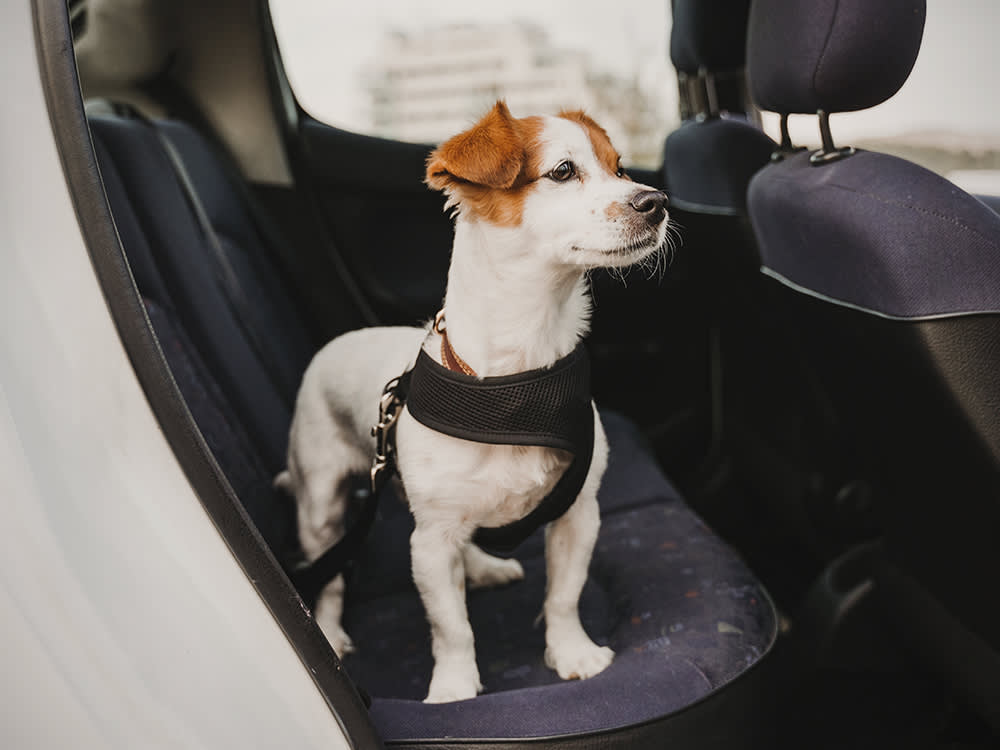
Bringing your dog along for the ride makes any trip better, whether it is a cross-country road trip or a run to the hardware store. But the moment your dog is in the car, keeping them safe is your job, exactly as it is for any other passenger. And here is the uncomfortable truth most owners never hear: a large share of the products sold to do that job do not work, and there is no law requiring them to.
Pet restraints are unregulated. They are not legally classified as consumer safety products, which means a manufacturer can make almost any claim on the box without independent proof behind it. When the nonprofit Center for Pet Safety began crash-testing dog restraints the way child car seats are tested, very few passed, and some popular designs, like zipline tethers, turned out to be actively dangerous.
So this is not going to be a long shopping list of gear. It is going to be one clear decision, plus an honest accounting of what every other “restraint” in the store actually does. Because the single most useful thing you can learn about dog car safety is which products protect your dog in a crash (almost none) and which merely keep them comfortable or contained (most of them).
Why this matters more than it sounds
It is easy to underestimate the forces involved, so here is the number that reframes everything. In a 30 mph crash, an unrestrained 60-pound dog hits whatever is in front of them, a seatback, the windshield, you, with roughly 2,700 pounds of force. That is not a typo. A loose dog is not just at risk of being hurt; they become a heavy projectile that can seriously injure or kill the humans in the car, too. “My dog is well-behaved” offers exactly zero protection against physics. A perfectly trained dog and an untrained one weigh the same in a collision.
The one decision: a certified harness in the back seat
If you do nothing else, do this. Put your dog in the back seat, restrained in a harness that is independently certified by the Center for Pet Safety, not merely “crash-tested.”
The back seat matters because the crumple zones in the front and rear of a vehicle, engineered to collapse like a soda can and absorb impact, leave the back seat as the most protected space. The front seat adds a second danger: an airbag deploys with enough force to crush a dog, just as it can a small child.
The certification matters because of the word game built into this whole category. “Crash-tested” only means a product was put through a test. It says nothing about whether it passed. “Certified by the Center for Pet Safety” means it passed independent testing to a child-safety-seat standard. Those are wildly different claims, and the packaging is designed to blur them.
As of the latest round of testing, the standout certified option is Sleepypod’s Clickit line. The Clickit Sport Plus carries the Center for Pet Safety’s 5-star certification and uses three points of contact to limit both forward and sideways motion in a collision. In early 2025, Sleepypod added the Clickit Range, certified up to about 110 pounds and specifically designed to fit harder-to-restrain body types like deep-chested sighthounds and barrel-chested bulldogs, which older harnesses tended to fit poorly. If car-crash protection is your priority, this is the category to spend your money in, and roughly the only one where the spend buys real safety.
A genuine harness also solves two everyday problems at once: it stops your dog from distracting you while you drive, and it keeps them from hanging their head out the window, which is riskier than it looks (a passing branch can strike them, and a startled dog can leap out entirely).
Everything else: useful, but not crash protection
The rest of the “restraint” aisle is not worthless. It is just mislabeled. These products manage, contain, or comfort your dog. Treat them as quality-of-life tools, and pair them with a certified harness rather than trusting them to save your dog in a wreck.
- Crates and carriers. A sturdy, appropriately sized crate (big enough to stand and turn around in) is great for confident, relaxed dogs, and a few specific carriers have actually earned Center for Pet Safety certification, so a crate can be a real safety device, but only if the specific model is certified and properly secured. Cover it with a blanket to help an anxious dog settle, and anchor it so it cannot become a projectile itself.
- Plush carry boxes / booster seats. Lovely for small, nervous dogs who want a view of you, and they pair with a harness clip. Understand that the comfort is the point; the box is not a crash structure.
- Back-seat hammocks. Perfect for older dogs who want to lie down, and they keep a dog from sliding into the footwell or climbing into the front. A non-slip backing keeps the hammock itself in place. This is containment and comfort, not impact protection.
- Dog guards and back-seat barriers. These keep a dog confined to the back of an SUV or behind the rear seats, which reduces driver distraction and stops a dog from being thrown forward into the cabin. Bolt them in properly. They limit where a dog goes in a sudden stop; they do not cradle the dog the way a certified harness does.
The throughline: if a product’s main job is to keep your dog in a zone or comfortable, it is a management tool. Only an independently certified harness or carrier is doing crash protection. Buy the comfort tools if they help, but do not let them stand in for the one thing that counts.
Prep your dog so the safe setup actually works
The best harness in the world is useless on a dog who panics in the car. Build the habit before you need it:
- Start with short test drives to get your dog used to the motion and the gear, then gradually extend the trips. Some dogs, especially puppies whose inner ears are still developing, get carsick, and slow exposure helps.
- If you use a crate or carrier, make it positive at home first. Let your dog hang out in it and feed them in it so it becomes a good place, not a trap that only appears on travel day.
- Time their meals. Feed several hours before departure, or skip the pre-trip meal, to cut the odds of motion sickness. And do not feed or hand out treats in a moving car, dogs have choked eating on the move.
Eight habits for every drive
- Schedule plenty of stops so your dog can stretch, relieve themselves, and burn off energy.
- Watch for triggers like a dog in the next car or people on the sidewalk, and manage them before your dog reacts.
- Build up trip length gradually if your dog is prone to motion sickness.
- Never feed while driving; feed at least three hours before instead.
- Never leave your dog alone in the car. Interiors heat to deadly temperatures fast, and heatstroke can kill in minutes.
- Keep heads inside. Wind-in-the-fur looks joyful but dries and damages the eyes and exposes your dog to flying debris.
- Skip treats on the move to avoid choking.
- Keep the air moving. Run the AC or keep the car well ventilated; dogs overheat faster than we do.
When carsickness is the real problem
The most common car issue is not safety gear at all, it is motion sickness, and it is especially common in puppies. The combination of physical motion and a blur of unfamiliar sights can leave a dog stressed and nauseated, leading to drooling, vomiting, or diarrhea. Short, positive trips help most dogs adjust over time. If your dog stays miserable despite gradual exposure, talk to your vet, there are effective anti-nausea medications made specifically for dogs, and it is worth ruling out anxiety as the driver.
References
- Center for Pet Safety, Crash Test Certification Program and certified product list
- American Veterinary Medical Association, “Data, safety regulations lacking when it comes to pets and vehicles”
- Sleepypod, Clickit Sport and Clickit Range crash-test certification (FMVSS 213 child-restraint standard)
- Federal Motor Vehicle Safety Standard No. 213, child restraint systems
Common questions
Is a 'crash-tested' label the same as 'crash-passed'?
No, and this is the most important thing to know. Pet products are unregulated, so a company can truthfully say a product was 'crash-tested' even if it failed. Look for independent certification from the Center for Pet Safety, which only certifies products that actually passed.
Can I let a well-behaved dog ride loose in the car?
No. Behavior has nothing to do with physics. In a crash or hard stop, an unrestrained dog of any temperament becomes a heavy projectile that can injure itself and everyone in the car. Restraint is about crash forces, not manners.
Not a substitute for your vet. Our guidance is educational. For urgent symptoms, contact a vet or emergency clinic right away. Editorial standards
Dr. Kohl is a board-certified veterinary dentist with a particular interest in preventive oral care. She reviews all dental health content at The Pet Times and contributes practical guides on home dental routines, professional cleaning, and oral disease prevention.
Meet our experts ↗Keep reading
 Health & WellnessThe Summer Dog Mistake That Lands Pups in the ERDr. Amara Solis · 10 min
 Health & WellnessWhere Dahlias Actually Rank on the Garden-Danger Scale for DogsDr. Priya Nair · 6 min
 TrainingYour Dog's Joy Sends 86,000 People to the ER Every YearDr. Nina Kohl · 8 min
 Health & WellnessNo, Ladybugs Aren't Poisoning Your Dog. One Look-Alike Can Burn Their Mouth.Dr. Lena Park · 5 min
 LivingThe Real Danger of Tying Your Dog Outside a Store Isn't Your DogDr. Nina Kohl · 6 min
 LivingCharleston Is a Dog Town on a Clock. Miss the Hours and the Trip Falls Apart.Leila Torres · 10 min