


The Freedom Paradox: A Dog With Boundaries Gets to Do More
We tend to think training fences a dog in. It is the opposite. The skills you teach are the keys that unlock a bigger, freer life. Here is what each one opens up.

People love to tell stories about their “little rascal.” The dog who outwitted the babyproofing, counter-surfed an entire roast chicken, or shredded a throw pillow into confetti while making intense eye contact the whole time. Told with a glint of pride, those stories are genuinely funny. They also quietly sell a myth: that a dog with no rules is a dog living its fullest, freest life.
It is exactly backwards. The unruly dog is usually the one whose world keeps shrinking. They get left home from the trip, shut in the back room when guests arrive, and walked less and less because walking them is miserable. Meanwhile, the dog with a handful of solid skills gets invited everywhere. Training is not a cage. It is the cover charge for a much bigger life, and once you see it that way, the question stops being “how do I control my dog” and becomes “which doors do I want to open.”
Here is what the skills actually unlock, sorted by the kind of freedom each one buys.
The freedom to be turned loose
Off-leash time is one of the richest experiences a dog can have. Running flat out, choosing their own route, lingering at a fascinating smell for as long as they please. Almost nothing else matches it for sheer quality of life. But it is the freedom that depends most completely on training. A dog who bolts, ignores recall, drifts toward roads, or hassles strangers cannot safely be unclipped, full stop.
The skill that buys this one is recall, and it is worth being honest that “comes when called” actually means “comes when called even when something more interesting is happening.” A dog who returns in the kitchen but blows you off at the sight of a squirrel does not yet have off-leash recall. Build it and the map of where your dog can run expands from a fenced backyard to open fields, quiet trails, and the beach at low tide.
The freedom to come along
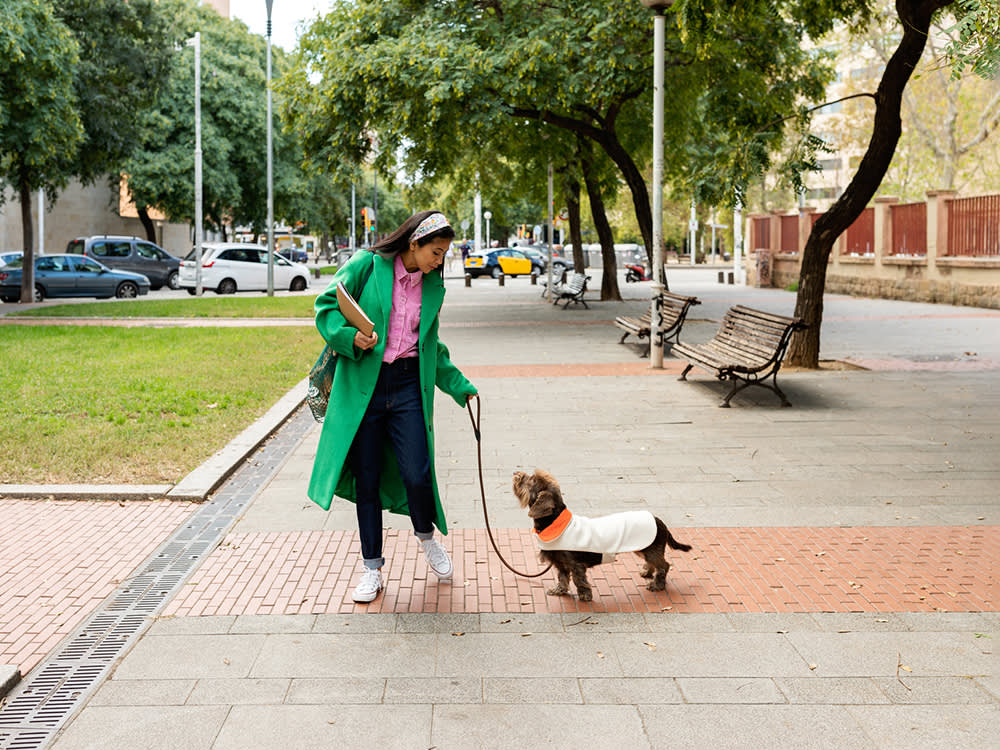
This is the freedom most owners underestimate, and it is the one a polite dog cashes in every single day. A dog who walks nicely on a leash and greets people without launching at them is the dog who gets waved into the coffee shop, the hardware store, and the pet-friendly patio. Instead of being left behind on errands, they ride along.
Stack enough of these moments and they add up to something larger: a dog who is welcome at a two-hour book club, a backyard barbecue, or a week-long family reunion. The “basic manners” that make this possible are not glamorous. Sitting, staying, leaving it, waiting at the door, walking on a loose leash, dropping things on cue, greeting politely, and stopping barking when asked. It looks like a long list. In practice it is the difference between a dog who joins the party and a dog who spends the party behind a closed door.
There is a logistical bonus hiding in here, too. When you need to travel without your dog, a trained dog is far easier to place. Plenty of dogs are perfectly content at a boarding kennel, but plenty are not, and a polite, easy houseguest is the dog a friend or neighbor will actually volunteer to take in.
The freedom to make dog friends
A dog’s social life runs on the same currency. Dogs who can greet without bowling others over, who do not body-slam every newcomer or excavate the host’s flower beds, get invited back for play dates. Good social skills are what keep a dog in the rotation. It is a quiet shame when a dog misses out on real canine friendship purely because nobody ever taught them how to behave around their own kind.
The freedom that strengthens the bond
At the center of all of this is the relationship itself, and it is worth saying plainly that chronic chaos wears on it. You can absolutely adore an impish dog. But the dog who swallows your wedding ring, plants muddy paws on your good coat, or drags you down the block on every walk is straining the bond a little each time, even if you would never admit it out loud. Training does not buy obedience so much as it buys ease, and ease is what lets affection flow freely instead of getting tangled up in low-grade frustration.
The freedom of getting walked at all
Here is the cruelest feedback loop in dog ownership. A dog who pulls relentlessly, cuts across your path, barks at everything, and lassos the leash around every mailbox is unpleasant to walk, so they get walked less. Fewer walks mean more pent-up energy, which makes the next walk even worse, which makes you dread it even more. Round and round.
A dog with real leash manners breaks the loop. Walking them is genuinely pleasant, so they go out even when the weather is bad, even after a draining workday, even when a walk is the last thing you feel like doing. And when you truly cannot manage it, a friend is far more likely to grab the leash for a dog who walks like a dream than one who hauls them down the street.
Where to actually start
If the freedoms above are the destinations, the natural question is which skill to build first. You do not teach everything at once, and the order matters more than most people realize. A simple way to prioritize:
- Start with the safety skills. Recall and a reliable “leave it” prevent the worst outcomes, a dog in the road or a dog gulping something toxic on a walk. Everything else can wait behind these two.
- Then the daily-friction skills. Loose-leash walking and polite greetings are the ones you cash in most often, so the training pays you back fastest.
- Then the comfort skills. Settling on a mat, waiting at the door, and a solid stay are what make your dog welcome to simply exist calmly in shared spaces.
- Build the hardest version on purpose. Practice each skill around the distractions you will actually face, other dogs, doorbells, food on the floor, rather than only in a quiet living room. A behavior that only works without temptation is not finished.
None of this requires a board-and-train program or a wall of certifications. It requires a few minutes most days and a willingness to reward the dog for getting it right. The payoff is not a more obedient dog so much as a dog with a far bigger world to move through.
“Owners often hear ‘boundaries’ and picture taking something away from the dog,” says Dr. Mara Chen, a veterinary behaviorist. “What I see in practice is the reverse. The dogs with clear, kind structure are the ones relaxed enough to be taken everywhere, and a dog who gets to come along simply has a richer life.”
The bottom line
A gloriously out-of-control dog is fun to read about from a safe distance. But that dog rarely gets to enjoy the wide world available to dogs whose people put in a little training time. Boundaries do not shrink a dog’s freedom. They are the thing that makes the big, joyful version of freedom possible in the first place.
References
- American Veterinary Society of Animal Behavior, Position Statement on the Use of Reward-Based Training
- American Kennel Club, AKC Canine Good Citizen Program
Claire Sutton writes about life with pets, from the first days home to the small daily routines that make a household work. Her reporting spans people-and-pet relationships, training basics, and the practical side of bringing a new animal into the family.
Meet our experts ↗Keep reading
 Training'Back Up' Is the Most Useful Trick Your Dog Doesn't KnowDr. Nina Kohl · 6 min
 First DaysEight Weeks Isn't a Feeding Milestone. It's a Behavior Deadline.Dr. Priya Nair · 9 min
 TrainingThe Viral 'Run Away From Your Dog' Trick Works. You Get to Use It Once.Dr. Mara Chen · 7 min
 Product PicksYour Tug Toy Isn't Failing at the Rope. It's Failing at the Handle.Marcus Webb · 9 min
 TrainingYour Treat Is Late. That One Second Is Costing You the Whole Lesson.Dr. Mara Chen · 8 min
 TrainingYou've Been Walking Your Dog WrongMarcus Webb · 8 min