


Design Your Yard Around What Dogs Actually Do, Not What Looks Nice
A great dog yard isn't a list of cute add-ons. It's a space that satisfies three deep instincts, to cool off, to forage, and to dig, while removing three quiet hazards. Here's how to build both halves.

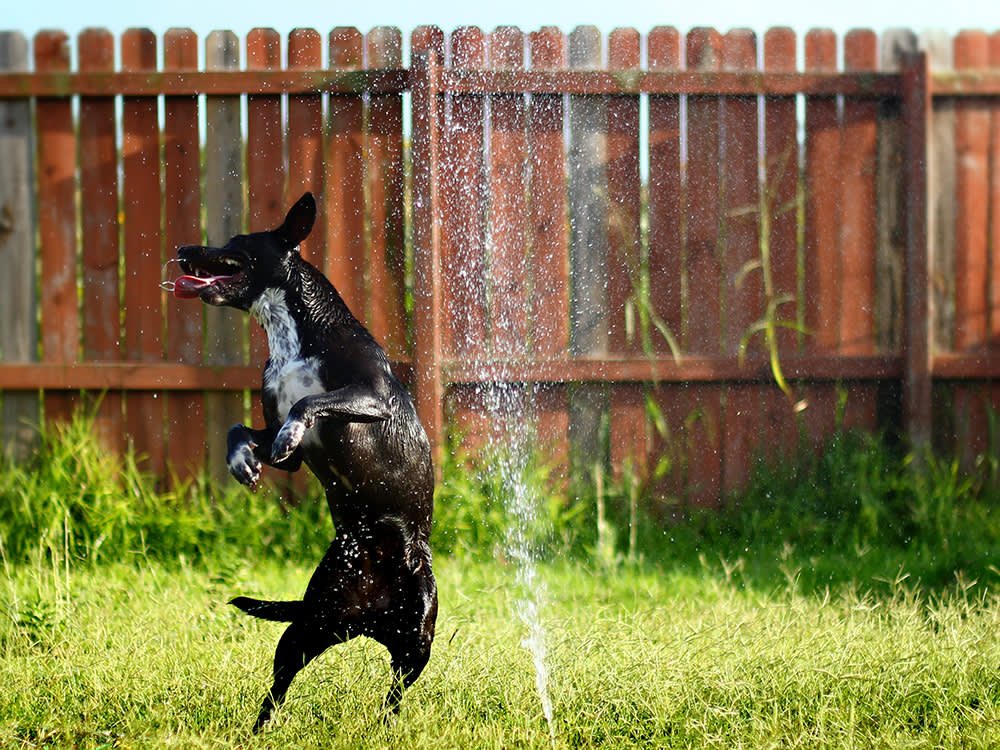
If you have ever priced out a house, even though the math feels laughable, mostly so your dog could finally have a patch of grass to call their own, you already know the dream. The trouble is that most “dog-friendly backyard” advice is a grab bag of cute add-ons that ignore the one thing that actually makes a yard work for a dog: it has to fit how dogs are wired.
So instead of a random feature list, think about a dog yard in two moves. First, design for the three things dogs are driven to do outside, cool their bodies down, forage and graze, and dig. Give those instincts a healthy outlet and most “problem” backyard behavior evaporates, because the dog is finally doing what they came out there to do. Second, subtract the three quiet hazards that send dogs to the vet, toxic plants, lawn chemicals, and foxtails. Get those two halves right and you have a yard your dog genuinely loves, not just one that photographs well.
Owners often try to train a dog out of digging or grazing, when the faster fix is giving the instinct a place to live. A yard that works with a dog’s drives is a calmer yard, and usually a less torn-up one.
Here is how to build both halves.
Build for the instinct to cool off
Dogs do not sweat the way we do. They shed heat by panting and by pressing their bodies against something cool, which is the real reason so many “problem diggers” excavate the flower beds. They are not vandalizing your landscaping, they are hunting for cool soil to lie in. Give them a better option and the flower beds are spared.
A cool-down flop spot. Build your dog a designated cool, damp spot that beats anything your garden offers, and they will choose it every time. The trick is sand, which stays cooler than packed dirt, will not turn to mud, and brushes right off a coat when dry. To make one:
- Dig a shallow pit large enough for your dog to lie in comfortably.
- Line it with a thin layer of concrete from a single bag.
- Before the concrete sets, poke a few pencil-sized drainage holes in the bottom.
- Fill it with at least six inches of clean white playground sand.
- Sprinkle until the sand is damp, and re-wet it often during summer’s worst heat.
Scatter a couple of these in shady, out-of-the-way corners and your dog has their own personal cooling stations.
A dipping pool. Few things beat splashing with your dog on a hot day. For a pool that is safe and easy to clean, skip the inflatable kind (sharp nails plus thin plastic is a losing combination) and use a sturdy molded-plastic kiddie pool, shallow enough for your dog to get in and out of unassisted. Small dogs can struggle on slick wet walls, so size it to your particular dog. To disguise it and make it last, sink it into the ground like a real pool, digging the area underneath so the rim sits an inch or two above the soil line. That protects the walls from cracking as your dog clambers in and out, discourages chewing, and keeps it from blowing around when empty. Draining is the only chore; a cheap siphon from any hardware store handles it, and a bucket handles the rest.
Build for the instinct to forage and graze
Dogs nibble greenery; it is normal, and giving them a safe target keeps them out of your ornamentals.
A grazing patch. In moderation, wheat and oat grass are good for dogs, and most will happily graze a dedicated patch rather than trample your flowers. Wheatgrass thrives in low, wide troughs, ideal for a compact city yard, and pet suppliers sell seed in small amounts. For a bigger planting, buy oat and wheat seed at a health food store, where it is chemical-free and far cheaper by volume.
A foraging or “sniffari” zone. This is the upgrade most lists skip, and it may be the most enriching of all. Sniffing is mentally exhausting for dogs in the best way, and a yard that rewards the nose is a yard that tires a dog out without a single thrown ball. Set aside a corner with varied textures, a patch of tall safe grass, a few large rocks, a log, a scattering of dog-safe herbs, and hide kibble or treats through it so your dog has to work the area like a real forage. A snuffle-friendly zone turns ten minutes outside into genuine decompression. Rotate what you hide to keep it interesting.
Build for the instinct to dig (with herbs that earn their keep)
Rather than fight digging, channel it, and choose plantings that do double duty.
A dedicated dig pit. If your dog is a committed digger, give the drive an address: a sandbox-style pit (the same sand build as the flop spot works) where digging is allowed and even encouraged. Bury toys or chews to make it the most rewarding place to dig in the whole yard, and gently redirect them there when they start excavating elsewhere. A legal dig zone protects everything else.
Herbs that fight fleas. The right herbs look lovely tucked into beds and quietly repel fleas thanks to their natural oils. Good options:
- Fleawort (Erigeron canadense), annual
- Fleabane and pennyroyal (Mentha pulegium), perennial
- Tansy (Tanacetum vulgare), perennial
- Wormwood (Artemisia absinthium), shrubby perennial
- Rosemary (Rosmarinus officinalis), shrub
- Sweet bay (Laurus nobilis), tree
For extra mileage, snip branches and strip the leaves to line a doghouse floor, or dry them and tuck them into a dog bed’s lining, where they keep working through the colder months. A bonus: several of these discourage ticks, too. (One caution: pennyroyal oil is potent, so plant it for the garden’s benefit and do not let your dog ingest concentrated amounts.)
Then subtract the hazards
A beautiful yard means nothing if it is quietly dangerous. Three things to remove or contain:
Toxic plants. Plenty of popular landscaping plants are poisonous to dogs, including sago palms (among the most dangerous, even a few seeds can cause liver failure), azaleas, and lilies. Plant around the safe list and pull the rest. The ASPCA maintains a searchable database of toxic and non-toxic plants worth checking before anything goes in the ground.
Lawn and garden chemicals. Many common products spell trouble: snail and slug bait, cocoa mulch, chemical fertilizers, fungicides, herbicides, and pesticides. Snail bait and cocoa mulch are especially risky because dogs find them palatable. If you must use any of them, store and apply them where your dog truly cannot reach, and keep your dog off treated areas for the full label-recommended interval.
Foxtails. These barbed grass seed heads are genuinely dangerous. They burrow into fur and skin and lodge there, and once dry and brown they get stiff and are easily inhaled, with tips sharp enough to pierce paws, mouths, ears, and noses. From there they can migrate through the body and cause serious infection or injury. The best defense is to pull these grasses while they are still green, before the seed heads ever form, and to check your dog’s paws and coat after time outside during foxtail season.
The takeaway
Fetch is a fine start, but a backyard can be so much more than a launchpad for tennis balls. Design it around the three things your dog is built to do, cool off, forage, and dig, then strip out the three things that can hurt them, and you end up with a space that keeps your dog cool, busy, satisfied, and safe. That is a yard a dog actually loves, and a yard that finally stops getting torn apart out of sheer unmet instinct.
References
- ASPCA Animal Poison Control Center, Toxic and Non-Toxic Plants database
- ASPCA, guidance on sago palm and cocoa mulch toxicity in dogs
- American Kennel Club, “Foxtails and Dogs: A Dangerous Combination”
Leila Torres leads our Living coverage, from home life and travel to the products and rescue stories that come with sharing a life with animals. She edits and writes across the section, with a soft spot for pieces about the bond between people and their pets.
Meet our experts ↗Keep reading
 LivingSome Dogs Aren't Built for Your Apartment. Meet the Farm Dog Who Proves It.Leila Torres · 8 min
 Living'Pet-Safe' Is a Marketing Word. Read the Label Instead.Dr. Nina Kohl · 7 min
 LivingYour Pet's Toy Pile Is Working Against YouNina Vasquez · 6 min
 LivingPet Composting: Turning Your Pet's Remains Into New LifeClaire Sutton · 9 min
 LivingPet-Safe Cleaning Is About How You Clean, Not Just What You BuyNina Vasquez · 6 min
 LivingPet-Safe Flooring, Ranked by How Your Dog Actually Uses the FloorLeila Torres · 8 min